Buying Guides
How to choose sunglasses without the marketing — face-shape fit, measuring for size, polarization, and what UV400 actually means.
Buying sunglasses well isn’t complicated, but the marketing makes it feel that way — darker lenses dressed up as safer, “polarized” sold as if it means UV protection, mystery frame materials. These guides cut through all of it. They’re the how-to layer under the product picks: the decisions that decide whether a pair actually works for you, explained once, plainly, and cited to the eye-health and standards authorities rather than to us.
Read the complete how-to-choose guide first if you want the whole framework, then dip into the specific ones — measuring your face shape, polarized versus not, and the one number that actually protects your eyes.
Everything in Guides
How to Choose Sunglasses: The Complete Guide
The five things that actually decide whether a pair suits you — shape, size, material, lens and protection — in the order that matters.
How to Measure Your Face Shape for Sunglasses
A five-step mirror-and-tape method to find your face shape, so the fit guides actually apply to you.
Polarized vs Non-Polarized Sunglasses
What polarization does, when it helps and when it hurts (screens, pilots, some winter sports), and why it is not the same as UV protection.
What Does UV400 Mean? Sunglasses UV Protection Explained
UV400 in plain terms, why it is the number that actually protects your eyes, and why a dark lens without it is worse than none.
Sunglasses Sizes Explained (52-18-145)
How to read the three numbers inside every arm, measure your own fit, and know whether a frame will sit right before you buy.
Sunglasses Lens Tint Colors: What Each One Does
Gray, brown, green, rose or yellow — what each lens tint does for contrast and color, and why tint is never a substitute for UV protection.
Are Expensive Sunglasses Worth It?
What your money actually buys as the price climbs — and the one thing that costs the same at every price. An honest look at when to spend.
How to Clean Sunglasses Without Scratching Them
The right way to clean sunglasses lenses and frames, the household mistakes that cause scratches, and a simple routine that keeps a pair clear for years.
How Should Sunglasses Fit?
Where a frame should sit, what a good fit feels like, and the signs a pair is too big or too small, so you can judge fit before you buy.
Sunglasses for a Small Face: Finding Frames That Fit
How to find frames that fit a smaller face instead of swallowing it, the measurements that matter, the shapes that work, and the frames that run small.
Sunglasses for a Wide Face: Frames That Actually Fit
Wide-face fit is about the numbers, not just the look. How to measure, the frame widths and shapes that work, and the styles to skip if a pair pinches.
Mirrored vs Gradient Lenses: What's the Difference?
What mirrored and gradient lens finishes actually do, when each one helps, and why neither is a substitute for the UV protection that matters most.
Sunglasses for a Low Nose Bridge
Why some frames slide down or leave marks, what an alternative or low-bridge fit changes, and how to spot frames that sit right on a low nose bridge.
What Does UV420 Mean on Sunglasses?
UV420 is a marketing number, not a UV standard — it reaches into visible blue light. What it really claims, and why UV400 is still the spec that matters.
How to Check If Sunglasses Really Block UV
Lens darkness tells you nothing about UV. How to verify a pair's protection from the label, the standard it cites and a free optician's meter test.
Sunglasses Lens Materials Compared
Glass, polycarbonate, CR-39 and nylon lenses compared on clarity, weight, impact resistance and scratch life — and which belongs in an acetate frame.
Do Sunglasses Expire? When to Replace a Pair
UV filters don't quietly wear out the way the internet says, but lenses and frames do fail in specific ways. The real signs it's time to replace a pair.
Our top pick
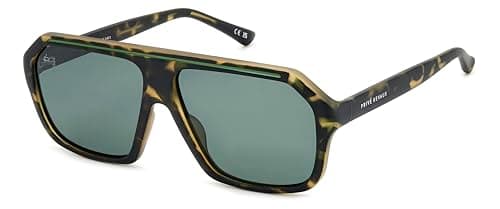
Privé Revaux Clevelander/S Rectangle
$34.43 · View on AmazonPrice as of October 17, 2026. #ad How we’re funded
How to Buy Sunglasses Online Without Trying Them On
The measurements, listing red flags and return-policy checks that make buying frames unseen a low-risk decision instead of a gamble.
Our top pick
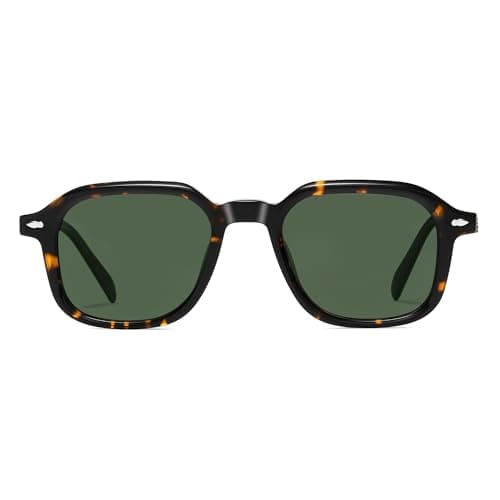
SOJOS Acetate Rectangle (Handmade, Polarized)
$39.99 · View on AmazonPrice as of October 17, 2026. #ad How we’re funded
Prescription Acetate Sunglasses: What to Know
Acetate is one of the best frame materials for prescription sun lenses. What your prescription changes about frame choice, lens options and cost.
How to Tell If Sunglasses Are Polarized
Three tests you can run in under a minute with a laptop screen or a second pair of shades - and why passing them still tells you nothing about UV protection.
Our top pick
SOJOS Acetate Rectangle (Handmade, Polarized)
$39.99 · View on AmazonPrice as of October 17, 2026. #ad How we’re funded
Keyhole Bridge Sunglasses: What It Is and Who It Fits
The notched bridge on vintage acetate frames is a fit feature, not just a look. What it does for a low or wide nose, when a saddle bridge is better, and the frames that have one.
Our top pick
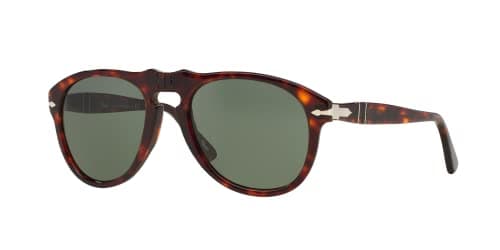
Persol 649 Original PO0649 (Havana / Green, 54 mm)
$363.00 · View on AmazonPrice as of October 17, 2026. #ad How we’re funded
Sunglasses Lens Categories, Explained
What the 0-4 filter category on a lens actually measures, the transmission band behind each number, why category 3 is the everyday standard and category 4 is not for the road - and why none of it is UV protection.
Our top pick
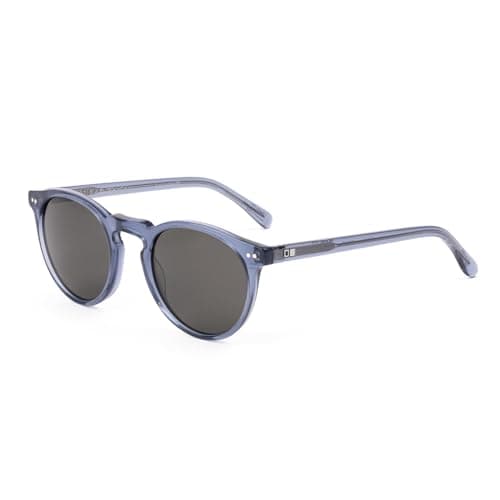
OTIS Omar x Outerknown Eco (Crystal Wave / Neutral Grey)
$149.95 · View on AmazonPrice as of October 17, 2026. #ad How we’re funded
Photochromic Sunglasses: Are They Worth It?
Lenses that darken in sun and lighten in shade, and the four things the marketing leaves out - the windshield problem, the cold, the clear-lens myth, and why almost no acetate frame offers them.
Our top pick
Serengeti Joan (Shiny Classic Havana, Mineral Polarized 555nm)
$142.22 · View on AmazonPrice as of October 17, 2026. #ad How we’re funded
Sunglasses Keep Slipping Down Your Nose?
Nine times out of ten it is the bridge, not the temples - and the fix most people try first is the one that works least well. The five fixes in order of cost, and the bridge designs that stop it.
Our top pick
CARFIA Small-Face Double-Bridge (Acetate)
Sunglasses for Sensitive Eyes
Four lens properties do the real work - filter category, polarization, coverage and tint color - and only one of them is 'dark'. What each does, and how to read the numbers sellers publish.
Our top pick
Serengeti Raffaele (Shiny Tortoise, Mineral Polarized 555nm, Cat 3)
$320.00 · View on AmazonPrice as of October 17, 2026. #ad How we’re funded
Choosing a Frame Color for Your Skin Tone
Two minutes to find your undertone, then the acetate colorways the trade pairs with it - plus an honest note on how much of this is convention rather than fact.
Our top pick
Gleyemor Vintage Round (Tortoise Acetate)
$13.99 · View on AmazonPrice as of October 17, 2026. #ad How we’re funded
Are Cheap Sunglasses Bad for Your Eyes?
No - but UNLABELLED ones are a real gamble, and price is not what tells them apart. The one line on a listing that decides it, and what the FDA says about judging a lens by how dark it looks.
Our top pick
Privé Revaux Clevelander/S Rectangle
$34.43 · View on AmazonPrice as of October 17, 2026. #ad How we’re funded
Scratched Sunglasses: What Can and Cannot Be Fixed
The AAO draws the line between a light scratch and an extensive one, and it is the line that matters: one is cosmetic, the other can cut your UV protection. Why buffing makes it worse, and what to do instead.
Our top pick
OTIS Test of Time X Eco (Havana Brown)
$155.99 · View on AmazonPrice as of October 17, 2026. #ad How we’re funded
Can You Replace Sunglass Lenses?
Physically yes, economically almost never - and a third-party lens cannot certify the filter category or UV figure the original carried. When re-lensing is worth it, and the three frames that justify it.
Our top pick
Persol 649 Original PO0649 (Havana / Green, 54 mm)
$363.00 · View on AmazonPrice as of October 17, 2026. #ad How we’re funded
Brown vs Grey Sunglass Lenses
Grey keeps colors honest, brown raises contrast by cutting blue. Which one suits driving, water and overcast light - and why neither tells you anything about UV protection.
Our top pick
Serengeti Raffaele (Shiny Tortoise, Mineral Polarized 555nm, Cat 3)
$320.00 · View on AmazonPrice as of October 17, 2026. #ad How we’re funded
Sunglasses for Night Driving: The Honest Answer
No sunglass lens is legal or safe for night driving, and the transmittance rule says why in one number. What to wear for dawn, dusk and low winter sun instead.
Our top pick
Serengeti Foyt Large (Matte Black, Mineral 555nm Photochromic, Cat 2 to 3)
$300.00 · View on AmazonPrice as of October 17, 2026. #ad How we’re funded
Why Sunglasses Give You a Headache
Four causes, and only one of them is the lens. How to tell pressure from squinting from dark adaptation - and the AAO's point about very dark glasses indoors.
Our top pick
Persol 649 Original PO0649 (Havana / Green, 54 mm)
$363.00 · View on AmazonPrice as of October 17, 2026. #ad How we’re funded
Do Sunglasses Block Blue Light?
Yes - and the AAO's point is that the sun, not your screen, is the blue light worth owning a lens for. What a sunglass lens does, and what the UV420 label is really selling.
Our top pick
Serengeti Raffaele (Shiny Tortoise, Mineral Polarized 555nm, Cat 3)
$320.00 · View on AmazonPrice as of October 17, 2026. #ad How we’re funded
Why Sunglasses Carry a Cancer Warning
The Proposition 65 label on a pair of sunglasses is a California exposure notice, not a safety finding. What the state's own lawyers say it means - and what it does not.
Sunglasses for Deep-Set and Hooded Eyes
Deep-set eyes disappear behind a dark frame and hooded lids fight an upswept one. The three measurements that decide it, and the frames that publish them.
Our top pick
OTIS Omar x Outerknown Eco (Crystal Wave / Neutral Grey)
$149.95 · View on AmazonPrice as of October 17, 2026. #ad How we’re funded
How to Store Sunglasses
A hot car is the single worst place to keep an acetate frame, and a soft pouch in a bag is the second. Where to put them instead - at home, in the car and in transit.
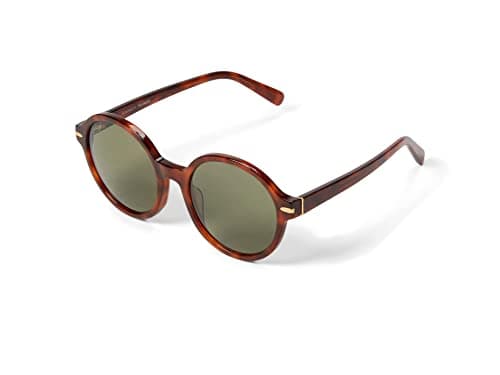
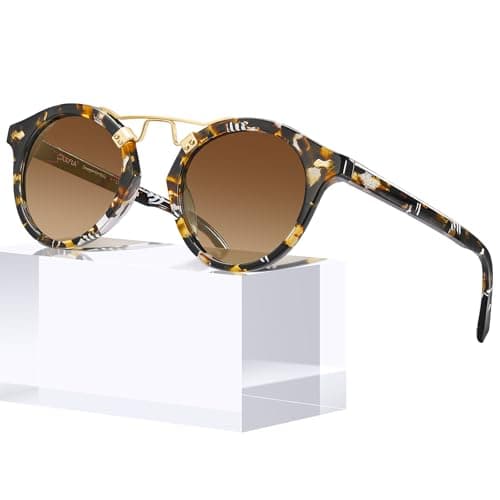
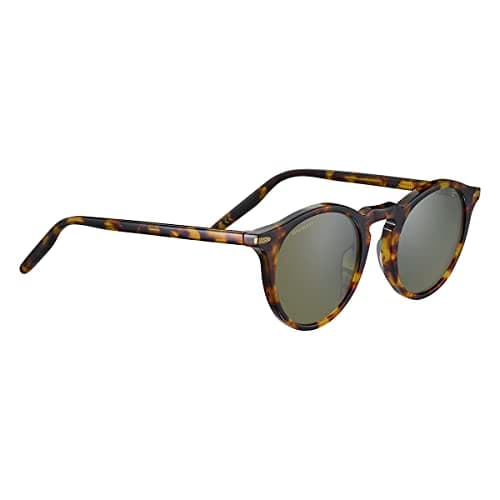
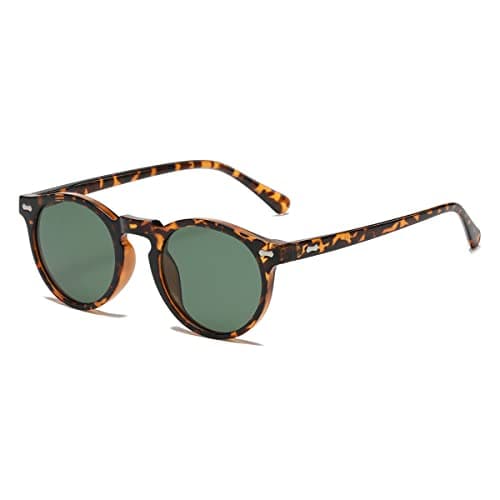
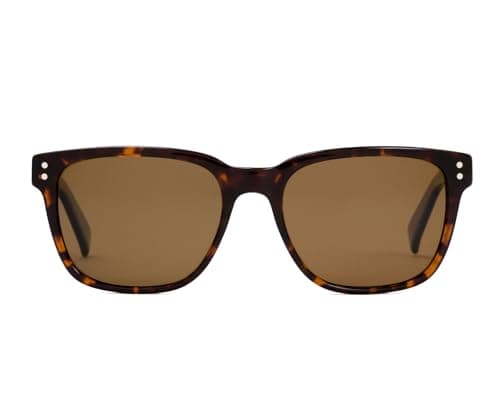
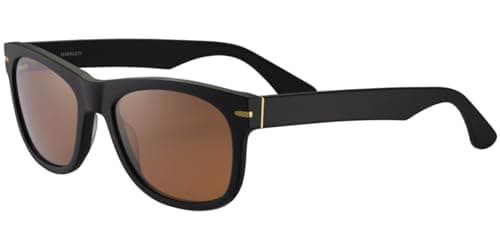
The two things people get wrong most
First: a dark lens is not a safe lens. The tint has nothing to do with UV protection — a very dark lens with no UV filter is arguably worse than none, because it dilates your pupils and lets more unfiltered UV in. The only thing that protects your eyes is the UV rating on the label. The FDA is explicit that lens darkness does not indicate UV protection.
Second: polarized and UV-protective are different features. Polarization cuts glare from flat surfaces like water and roads; it is a comfort and clarity upgrade, not a safety one. A pair can be polarized with poor UV protection, or UV400 with no polarization. You want UV400 always, and polarization when glare is your problem — the guides explain when it helps and when it actually hurts.
Fit is the third pillar nobody mentions
The best lens in the world is useless in a frame that slides down your nose or pinches your temples. Knowing your face shape and the right frame width turns a guess into a confident buy, which is why measuring your face shape is one of the guides here rather than an afterthought.
Frequently asked questions
Do darker sunglasses protect your eyes better?
No. Lens darkness and UV protection are completely independent. A clear lens with a UV400 coating blocks UV fully, while a very dark lens with no UV filter blocks little and can be worse than no sunglasses, because it opens your pupils. Always buy on the UV label, not the tint.
What UV rating should sunglasses have?
Look for '100% UV protection', 'UV400', or 'blocks UVA and UVB'. UV400 means the lens blocks all ultraviolet light up to 400 nanometers, which covers both UVA and UVB. Eye-health authorities recommend blocking 99–100% of UV, and UV400 meets that bar.
Is polarized the same as UV protection?
No. Polarization reduces glare from reflective surfaces like water and roads; UV protection blocks harmful ultraviolet light. They're separate features. You want UV protection always; polarization is an optional upgrade for glare-heavy conditions like driving, boating and snow.
How do I know my face shape for sunglasses?
Compare your face's width to its length and the shape of your jaw and forehead in a mirror. Round, square, oval and heart are the main shapes, and each suits different frames. Our measuring guide gives a five-step method with a tape measure for a definitive answer.
Sources
- U.S. FDA — Tips to Stay Safe in the Sun: From Sunscreen to Sunglasses — FDA: lens darkness does not indicate UV protection; look for a 100% UV / UV400 label (accessed July 21, 2026)
- American Academy of Ophthalmology — Recommended Types of Sunglasses — AAO on choosing sunglasses that block 99–100% of UV-A and UV-B (UV400) (accessed July 21, 2026)
- ISO 12312-1:2022 — Eye and face protection — Sunglasses for general use — The international standard for general-use sunglasses: UV filtering, filter categories and transmittance (accessed July 21, 2026)