Photochromic Sunglasses: Are They Worth It?
Lenses that darken in the sun and lighten in the shade, and the four things the marketing leaves out: the windshield problem, the cold, the clear-lens myth, and why almost no acetate frame offers them at all.
How this is funded:we earn a commission if you buy through our links, at no extra cost to you. It never changes which product we recommend, and we’ll tell you when we’d skip one. Full disclosure.
What a photochromic lens actually does
A photochromic lens contains molecules that change shape when ultraviolet light hits them. Serengeti, which has been doing this longer than almost anyone, describes it simply: in bright conditions UV radiation is more intense, the lens molecules expand and the lens darkens so less light passes through; in darker conditions UV is less intense, the molecules shrink and separate, and the lens lightens again. It also states the change is gradual rather than instant.
Two words in that description do all the work, and they are the two the marketing glosses over. The trigger is ultraviolet, not brightness. And the change is gradual, not immediate. Almost every disappointment people have with these lenses traces back to one of those two facts.
What the technology does notdo is change your UV protection. A good lens blocks UV at every tint level, and the American Academy of Ophthalmology’s advice to buy lenses blocking 99 to 100 percent of UV-A and UV-B applies here exactly as it does to a fixed tint. Darkness and UV protection are unrelated properties, which is the single most misunderstood thing in sunglasses and the subject of our UV400 guide.
The four limits, stated plainly
1. They will not darken properly in your car
This is the big one, and it is the opposite of what most buyers assume. The AAO states directly that car windows block UV light, which can keep transition lenses from darkening fully. A windshield is a UV filter, so the lens simply does not receive the trigger it needs. You will sit in bright afternoon traffic in a lens that is lighter than the fixed pair you left at home.
Newer lens designs respond to visible light as well as UV to work around this, but that is a specific product feature, not a property of all photochromics. If driving is the main reason you want these, ask whether the lens activates behind glass before you spend — and read our acetate sunglasses for driving page, where a contrast tint and polarization do more for you than an adaptive one.
2. Cold slows them down
The AAO notes that lenses take longer to adjust when it is cold outside. The practical version: on a cold, bright morning — low sun, glare off wet asphalt, the single worst light of the year to drive or walk into — the lens takes longer to reach its working tint than it would in July. Not dangerous, but exactly the opposite of when you would want the lag.
3. A photochromic sunglass lens is never clear
This is the distinction that catches people out, and it is worth being precise about. There are two different products wearing the same word.
A photochromic prescription lens is built to start near-clear so you can wear it at a desk. A photochromic sunglasslens is built to start as a light sunglass lens. Serengeti encodes this in its listing titles as a category range: “Cat 2 to 3” means the lens is a filter category 2 at its lightest — transmitting 18 to 43 percent of visible light — and darkens to category 3, the 8 to 18 percent everyday sunglasses band, in full sun. Category 2 is not clear. You will not read a menu comfortably in it.
That notation is also the most useful consumer-protection device in this category. A repeated number, “Cat 3 to 3,” tells you the lens does notshift — it is a fixed category 3, and buying it expecting adaptive behavior is a mistake the title itself warned you about. Our lens categories guidehas the whole 0–4 table.
4. They are daytime lenses, full stop
Because the lightest state is category 2 rather than clear, a photochromic sunglass lens is not a night-driving lens. Filter guidance for road use is that lenses should be category 0 to 3, and that anything transmitting under 75 percent of visible light is unsuitable for twilight or night driving. Category 2 tops out at 43 percent. If someone tells you a photochromic pair covers you around the clock, they are selling, not advising.
Photochromic is not polarized, and you need to keep them separate
These two features get bundled in marketing copy constantly, and they do entirely different jobs. Photochromic controls how dark the lens is. Polarization controls which lightgets through — specifically, it filters the horizontally reflected glare that bounces off water, wet roads and car hoods.
You can buy either, both, or neither, and the combination is often not obvious from the product name. Serengeti lists the Joan as photochromic and polarized. The Foyt Large listing we link below is photochromic and explicitly notpolarized, which is the sort of thing that should be on the card rather than buried — so it is. If your actual complaint is glare rather than brightness, polarization is the feature to pay for, and our polarized versus non-polarized guide makes that case. If you want to check whether a pair you already own is polarized, here is the thirty-second test.
Why almost no acetate frame offers this
If you have been searching for photochromic sunglasses in a frame that is not a sport wrap, you have probably noticed the field is thin. There is a structural reason.
Photochromic technology lives in two industries: sport eyewear, where the frames are nylon or polycarbonate wraps, and prescription lenses sold through opticians. Fashion acetate brands buy fixed-tint lenses because they are cheaper, simpler to stock and easier to photograph. Searching Amazon for photochromic acetate frames mostly returns budget sport wraps and clear blue-light-blocking glasses marketed with the word “photochromic” attached — neither of which is what you came for.
Serengeti is the exception, and not by accident. It states the brand began in 1877 with Corning, the optical glass laboratory, carries over 140 years of optical heritage, and dates its amber driving lens to 1985 — a lens company that added frames, rather than a frame company that added a lens. Its mineral lenses are borosilicate optical glass from Corning, which Serengeti says comes out 20 percent thinner and lighter than other lenses, and its acetate frames carry that lens as standard.
The one mainstream alternative worth knowing about: Ray-Ban sells a photochromic model, the RB4306, in a 54-19 fitting with 100 percent UVA/UVB protection. But Ray-Ban’s own listing gives the frame material as propionate, not acetate — a different plastic with different adjustment and repair behavior, which our acetate versus propionate page covers. It is a real option; it is just not an acetate one.
So should you buy photochromic sunglasses?
Yes, ifyou spend your day moving between bright and dull outdoor light — walking, cycling, working outside, traveling — and you are tired of a fixed tint being wrong half the time. That is the use case the technology was built for and it genuinely solves it. Buy a lens that states its category range so you know what you are getting at both ends.
No, ifyour main complaint is glare (buy polarized instead), if you drive most of the time (the windshield blocks the trigger), if you want one pair that also works indoors (you need a photochromic prescription or plano lens, not a photochromic sunglass lens), or if you simply want the darkest, most consistent lens you can get for the money — in which case a good fixed category 3 from our best acetate sunglasses roundup will serve you better and cost considerably less.
And one piece of advice that applies either way: adaptive glass is heavier than a plastic lens and more brittle on a hard drop. If you are hard on sunglasses, the premium is wasted twice over. Our are expensive sunglasses worth it page is the honest version of that argument, and lens materials compared explains what glass buys you and what it costs you.
The photochromic frames we can actually point you at
Two frames, not four, and that is the honest size of this market in acetate. Both are Serengeti, both were confirmed In Stock with a live price on October 5, 2026, and both state the photochromic lens on the brand's own product page. Everything else we found at this material and this spec was either metal, a sport wrap, out of stock, or a blue-light-blocking clear lens being marketed as photochromic sunglasses.
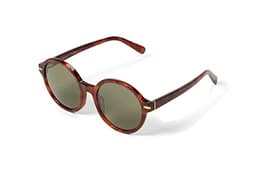
Serengeti Joan (Shiny Classic Havana, Mineral Polarized 555nm)
The one to start with. Serengeti lists the Joan's Ultra-Light Mineral lens as photochromic, polarized, anti-reflective and Spectral Control treated, on a bio-acetate frame - and it publishes a full 53-20-140 fitting, which almost nothing else in the range does. Oversized and cut for women. Serengeti's own page prices it at $350 before discounts; this listing has been running well below that.
Price as of October 5, 2026. #ad How we’re funded
Frame material: Bio-acetate, eco-friendly handmade acetate (per Serengeti). Specs read from the listing on October 5, 2026.
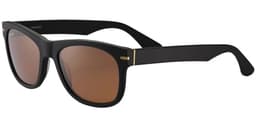
Serengeti Foyt Large (Matte Black, Mineral 555nm Photochromic, Cat 2 to 3)
The large-fit option, and the clearest example of how the notation works: the listing title states 'Cat 2 to 3', meaning the lens sits in filter category 2 in dull light and darkens into category 3 in full sun. Handcrafted eco-acetate, cut large. Important caveat stated on the card - this particular variant is NOT polarized; Serengeti sells polarized Foyt lenses as a separate listing.
Price as of October 5, 2026. #ad How we’re funded
Frame material: Eco-friendly acetate (per Serengeti). Specs read from the listing on September 21, 2026.
General guidance, not eye-care advice. Acetate Club is written by an eyewear enthusiast, not an optician or optometrist. Sunglasses are sun protection, not a substitute for an eye exam — if you have a vision or eye-health concern, or need prescription lenses, see a qualified professional.
Frequently asked questions
Do photochromic sunglasses work in the car?
Mostly not, and this is the single most important thing to know before you buy. Photochromic lenses are triggered by ultraviolet light, and the American Academy of Ophthalmology states plainly that car windows block UV light, which can keep transition lenses from darkening fully. So the lens that goes properly dark on a pavement will sit noticeably lighter behind a windshield. Some newer lens designs respond to visible light as well as UV to work around this - if driving is the main use, ask specifically whether the lens activates behind glass rather than assuming it does.
Are photochromic sunglasses as dark as normal sunglasses?
It depends on the lens, and the filter category is how you check rather than guess. A Serengeti lens marked 'Cat 2 to 3' reaches filter category 3 at its darkest - 8 to 18 percent of visible light transmitted - which is exactly the band an ordinary everyday sunglass lens sits in. So at full darkness, yes. The AAO also notes that some brands darken more than others and some take longer to adjust, so a lens with no published category is a lens you are trusting rather than verifying.
Do photochromic sunglasses go completely clear indoors?
Photochromic sunglasses generally do not, and this is where buyers get caught out. A prescription photochromic lens is designed to start near-clear and darken. A photochromic sunglass lens like Serengeti's 'Cat 2 to 3' starts at category 2, which transmits 18 to 43 percent of visible light - that is a lighter sunglass lens, not a clear one. You cannot wear it at a desk or in a dim restaurant and expect to see normally. If you want one pair for indoors and outdoors, you want a photochromic prescription or plano lens, not a photochromic sunglass lens.
Do photochromic lenses work in cold weather?
They work, but more slowly. The AAO states that lenses take longer to adjust when it is cold outside. In practice that means a winter morning can leave you under-tinted for longer than you expect after stepping into bright low-angle sun, which is the glare situation most likely to actually bother you. It is a nuisance rather than a safety problem, but it is worth knowing before you pay a premium for adaptive behavior you will use in January.
Can you drive at night in photochromic sunglasses?
No, and you should not try. A photochromic sunglass lens at its lightest is still a sunglass lens - category 2 for a 'Cat 2 to 3' Serengeti, which is far darker than the clear state people imagine. Filter guidance for road use is that filters should be category 0 to 3, and that anything transmitting under 75 percent of visible light is not suitable for twilight or night driving. Category 2 transmits at most 43 percent. Treat these as daytime lenses only, and keep a clear pair for night.
Are photochromic and polarized the same thing?
No - they solve completely different problems and you can have either, both or neither. Photochromic means the lens changes how dark it is in response to UV. Polarized means the lens filters out horizontally reflected light, which is what kills glare off water, wet roads and car hoods. Serengeti's Joan is listed as both photochromic and polarized; its Foyt Large variant is photochromic and explicitly not polarized. If glare rather than brightness is your complaint, polarization is the feature you actually want.
Why are there so few photochromic acetate sunglasses?
Because the lens technology and the frame material come from two different industries that rarely overlap. Photochromic performance is mostly found in sport eyewear - wrap frames in nylon or polycarbonate - and in prescription lenses sold through opticians. Fashion acetate brands buy fixed-tint lenses because they are cheaper and simpler. Serengeti is the exception because it started as a lens company with Corning glass heritage and added frames later. Ray-Ban offers a photochromic model, the RB4306, but Ray-Ban's own listing gives its frame material as propionate rather than acetate - so if you want photochromic glass in genuine acetate, the field is very small.
Sources
- American Academy of Ophthalmology — Sunglasses With Transition (Photochromic) Lenses: Pros and Cons — AAO on photochromic lenses: one pair works indoors and out, but some brands darken more than others and some take longer to adjust, lenses take longer to adjust when it is cold outside, and car windows block UV light, which can keep transition lenses from darkening fully (accessed October 5, 2026)
- Serengeti — Our Technologies (photochromic, Spectral Control, 555nm) — Serengeti on photochromic: lenses are activated by atmospheric UV radiation and transition from light to dark gradually - in bright light the molecules expand and darken the lens, in low light they shrink and separate; Spectral Control filters up to 96% of blue light; 555 nm sits at the center of the visible spectrum (accessed October 5, 2026)
- Serengeti — The Serengeti Lens (lens technology) — Serengeti on its mineral lenses (Corning borosilicate optical glass), the 555 nm tuning, Spectral Control, and UV protection to 400 nm (accessed September 21, 2026)
- Serengeti — JOAN — Serengeti's product page: a bold oversized silhouette on a bio-acetate, eco-friendly handmade acetate frame; Ultra-Light Mineral lens listed as anti-reflective, photochromic, polarized and Spectral Control; fitting 53-20-140, medium fit, base curve 6; listed price $350 (accessed October 5, 2026)
- Serengeti — Foyt — Serengeti's product page: handcrafted eco-friendly acetate; category 2 to 3 lenses in polarized and non-polarized mineral versions; photochromic mineral lenses activated in a hydrogen-fueled Lehr furnace (accessed September 21, 2026)
- The College of Optometrists — Tints and driving (BS EN ISO 12312-1 filter categories) — Category bands: 0 = 80-100% transmission, 1 = 43-80%, 2 = 18-43%, 3 = 8-18%, 4 = 3-8%; filters for road use shall be categories 0-3; under 75% transmittance is unsuitable for twilight or night driving (accessed September 21, 2026)
- Ray-Ban — RB4306 Transitions (Polished Black, Clear/Green) — Ray-Ban's own listing for its photochromic RB4306: a 54-19 frame with 145 mm temples and 100% UVA/UVB protection, with the frame material given as propionate rather than acetate (accessed October 5, 2026)
- American Academy of Ophthalmology — Recommended Types of Sunglasses — AAO on choosing sunglasses that block 99–100% of UV-A and UV-B (UV400) (accessed July 21, 2026)
Keep reading
Serengeti review
The brand that invented the photochromic driving lens - what it publishes, and what it does not.
Read the reviewSunglasses lens categories
The 0-4 transmission table behind 'Cat 2 to 3', and the road-use rules.
See the numbersPolarized vs non-polarized
The other lens decision, and why it is completely separate from this one.
Read the guideBest acetate sunglasses for driving
What actually helps behind a windshield, now that you know a photochromic lens mostly will not darken there.
See the picksUV400 explained
Why how dark a lens goes tells you nothing about how much UV it blocks.
Read the guideSerengeti vs Persol
The adaptive lens against the fixed one, at similar money.
Read the comparison