Geometric and Hexagon Sunglasses
Search hexagon sunglasses and nearly everything you'll find is thin metal. There's a real manufacturing reason for that - and a sensible acetate alternative.
How this is funded:we earn a commission if you buy through our links, at no extra cost to you. It never changes which product we recommend, and we’ll tell you when we’d skip one. Full disclosure.
Geometric frames — hexagons above all — had a genuine moment, and the search demand is still there. If you have come looking for them on an acetate site, though, you deserve the honest finding rather than a padded roundup: the hexagon shape belongs to metal, not to acetate, and the reason is in how the two materials are made rather than in what is fashionable.
Why the shape resists acetate
A metal frame is formed from drawn wire. Wire can be bent to a genuine sharp angle at a fraction of a millimeter of thickness, which is exactly what a crisp hexagonal lens outline needs: six straight runs and six defined corners, with almost nothing between the lens and the air.
An acetate frame is milled from solid sheetwith a rotating cutter. A rotating cutter has a radius, and a radius cannot produce a truly sharp internal corner — there is always a small rounding where two straight edges meet. Acetate also needs meaningful thickness around the lens to hold it and to have any strength, so a six-sided acetate frame ends up with visibly softened corners and a chunky outline. That is a perfectly nice frame. It is just not the thing people picture when they type “hexagon sunglasses.”
This is the same trade-off our acetate vs metal comparisoncovers in general form: metal wins on thin and sharp, acetate wins on depth of color, adjustability and presence. Geometric shapes sit squarely in metal’s half of that split.
What the listings actually show
Search the category and the pattern is immediate. The frames that come back are overwhelmingly described as metal, with gold, gunmetal and silver colorways and thin wire rims — and the listings that do use the word acetate for a hexagon frame are typically vague everywhere else too. That is worth treating as a signal. A seller that names its material precisely usually names its measurements precisely; a seller reaching for a material keyword on a shape that material cannot really produce is telling you something about the rest of the listing.
The one genuine exception is acetate temples on a metal front. A wire hexagon front with acetate arms is a real and common construction, and it is arguably the best of both: the sharp geometric front the shape needs, plus acetate against your skin where the frame actually touches you. Our guide to acetate and metal combination frames explains how to read those listings.
The acetate shape that gets you closest
If what appealed to you about hexagons was the faceted, slightly technical look rather than the exact six sides, acetate does have an answer: the polygon round. Instead of a perfect circle, the lens outline is flattened into several shallow facets. It reads as considered and modern rather than vintage-hippy, it keeps acetate’s thickness and color depth, and crucially it is a shape a milling cutter can produce cleanly, because the corners are obtuse rather than sharp.
A polygon round is also more forgiving on the face than a small hexagon. Shallow facets soften a strong jaw the way a round frame does, without the perfectly circular outline that a lot of people find hard to wear — which is why it shows up on our square face recommendations.
And if it was the hard angles you wanted rather than the facets, the honest answer is a rectangle: straight top line, defined corners, cut thick in acetate, and a shape the material is genuinely good at. It does the same job of adding structure to a softer face, and it will fit better than a small geometric frame will.
The verdict
If you specifically want a hexagon, buy a metal one from a seller who says it is metal — that is the right construction for the shape, and there is no reason to feel you have compromised. If you wanted the geometric feeling and came to acetate for the material, the polygon round and the rectangle are where the two things actually meet. What we would not do is put a stack of thin wire frames on an acetate site and call it a roundup.
The closest acetate alternative
We are not going to pad this page with metal hexagons on an acetate site. If you want the geometric look in acetate, the soft-polygon round is the shape that genuinely exists - faceted enough to read geometric, cut thick enough to work in sheet.
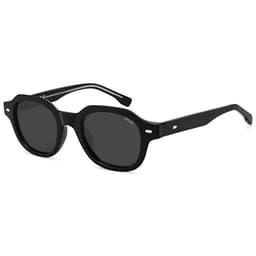
SOJOS Retro Polygon Round (Italian Acetate)
A polygon round rather than a hexagon: flattened facets instead of a true circle, in acetate the listing describes as Italian-sourced. It is the geometric look the material can actually support.
Frame material: Cellulose acetate (Italian, per listing). Specs read from the listing on July 21, 2026.
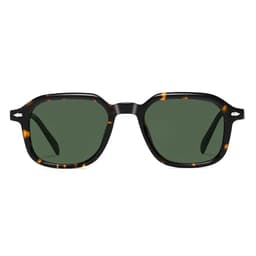
SOJOS Acetate Rectangle (Handmade, Polarized)
If what drew you to hexagons was the hard angles rather than the six sides, a straight-edged acetate rectangle gets you most of the way there with none of the fit compromises.
Frame material: Cellulose acetate. Specs read from the listing on July 21, 2026.
Frequently asked questions
Are hexagon sunglasses available in acetate?
Rarely, and there is a manufacturing reason rather than a fashion one. A true hexagonal lens shape has sharp internal corners, and an acetate frame is milled from solid sheet with a rotating cutter, which always leaves a small radius at an internal corner. Metal frames are made from bent wire, which can hold a genuine sharp angle at almost no thickness. So the hexagon look belongs to metal by construction. Acetate versions exist but are usually softened polygons rather than true hexagons, which is a different shape wearing the same name.
What is a geometric sunglasses frame?
In practice the word covers any lens shape built from straight edges and defined corners rather than curves - hexagons, octagons, hard-edged pentagons, faceted squares and angular teardrops. It is a category defined by what it is not: not round, not a soft rectangle, not a classic wayfarer. The look is deliberately technical and slightly severe, which is exactly its appeal to people who find the classic shapes too safe.
Who do geometric frames suit?
The same contrast logic as every other shape applies, with one extra caution. Hard angles add structure, so a geometric frame does the most for a rounder, softer face and can be too much on a face that already has strong angles. The caution is size: most hexagon frames on the market are small, and small angular frames on a wide face read as pinched. If you have a wider face and want the look, the shape to search for is a larger faceted square rather than a small hexagon.
Should I buy a metal hexagon frame instead?
If the hexagon shape is what you want, then yes - buy the metal version rather than accepting a vague listing that calls something acetate without evidence. There is nothing wrong with a metal frame; it is lighter, it holds a sharper angle, and it is the honest construction for that shape. What we would avoid is a cheap listing that uses acetate as a keyword while showing an obviously thin wire frame, because that seller is being loose about the one thing you were checking.
Sources
- Mazzucchelli 1849 — the cellulose-acetate maker for eyewear — Background on cellulose acetate as the traditional material for spectacle and sunglass frames (accessed July 21, 2026)
Keep reading
Best round acetate sunglasses
Where the polygon-round shape properly belongs, with the full picks.
See the round picksBest rectangle acetate sunglasses
The angular alternative, in a shape acetate is genuinely good at.
See the rectangle picksAcetate vs metal frames
The trade-off this whole page turns on, covered properly.
Compare the materialsHow acetate sunglasses are made
Why a milled sheet material has different shape limits to bent wire.
See the process