Japanese Acetate, Explained
Japanese cellulose acetate is a real material with a published specification and a real manufacturer behind it. The phrase on a marketplace listing is a different thing entirely — here is how to tell them apart.
How this is funded: we earn a commission if you buy through our links, at no extra cost to you. It never changes which product we recommend, and we’ll tell you when we’d skip one. Full disclosure.
“Japanese acetate” turns up in two very different places. One is the material documentation of a large chemical company that has made cellulose acetate for over a century. The other is the title of a $29 marketplace listing. The first is real and worth understanding. The second tells you nothing, and this page is about the gap between them.
The verdict first: Japan has a genuine cellulose acetate industry and Daicel Corporation publishes a clear specification for the material, but no certification or standard sits behind the phrase on a product listing, and no frame in our registry states it. The origin claims we repeat on this site are the ones a brand publishes on its own pages — which in practice means Italian acetate far more often than Japanese.
What Japanese acetate actually is, per the company that makes it
Daicel is the Japanese producer whose material documentation is public, and it is specific about both the chemistry and the use. Its investor glossary defines acetate plastic as made mainly from cellulose acetate, with “excellent transparency, toughness, and moisture absorption properties, as well as color, gloss, pattern, and texture not found in other plastics”, and lists its applications as including eyeglass frames, toys and writing instruments. The plastic is marketed under the trademark Acety® by group company Daicel Miraizu.
The company’s own account of why it exists is the most interesting part for anyone reading an eyewear spec sheet. Daicel traces back to a 1919 merger of celluloid makers; celluloid uses cellulose nitrate, which is highly flammable, and the company records that it commercialised cellulose acetate specifically to achieve non-flammability. That is the same history that put acetate into spectacle frames in the first place, and it is why how acetate is made starts where it does.
Daicel’s materials page adds the properties that matter to a frame rather than to a factory. Its cellulose acetate is “a resin derived from cellulose obtained from wood pulp or cotton”. Products made from it “exhibit excellent resistance to sunlight, particularly UV radiation, and do not easily degrade, making them suitable for long-term use”. It is “inherently flame-retardant” with high thermal stability, softening and carbonising at approximately 230–300 °C. And its cellulose acetate products are certified under the Japan BioPlastics Association’s Biomass Plastic and Biodegradable Plastic schemes, with some certifications applying only to specific grades.
Three of those facts are directly useful when you are shopping. UV resistance is why a decent acetate frame does not go chalky in a season. The thermal figure is why a hot car does not melt a frame — what heat does instead is let a fitted frame relax out of adjustment. And the certification note is a reminder that “biodegradable” attaches to specific grades and test conditions, never to a material in general; our bio-acetate explainer covers that in full.
Japanese vs Italian acetate: what is actually different
Both countries have a real claim. Italy’s is Mazzucchelli 1849, which has supplied cellulose acetate to the eyewear trade for generations and publishes the detail behind its M49 bio-acetate — 68% bio-based content and more than 90% biodegradation after 115 days measured against ISO 14855-2:2018. Japan’s is the Daicel documentation above.
What you will read online is that Japanese acetate is denser, harder, or holds a crisper edge than Italian acetate. We can find no published figure from either producer that supports a general ranking, and we are not going to supply one by inference. Here is what does genuinely vary between two acetate frames, in rough order of how much it affects the frame in your hand:
The grade of the sheet. Both producers sell multiple grades. A cheap grade from either country is worse than a good grade from the other, which is the entire problem with reasoning from a country name.
The thickness it is cut at. A thick front feels substantial and is cheaper to make rigid; a thin front needs a better sheet and a more careful cut. Our page on thick frame sunglasses covers the deliberate version of that choice.
The finishing. Tumbling, polishing, how cleanly the rim steps down to the hinge, whether the temple tips are shaped. This is labour, and labour is where the money goes at the top of the market. Oliver Peoples describes the process on its own craftsmanship pages: craftspeople hand-carve the front from a single piece of acetate, heat it to bend it to the curve of the face, then file the frame and sculpt the nose pads.
The hardware. The hinge is usually what fails first regardless of the sheet it is set into — see acetate frame hinges.
None of those four is determined by a country. All four are visible or stated. That is why our designer acetate roundup ranks on them rather than on provenance.
When the claim is checkable
An origin claim becomes useful the moment a brand puts it on its own site, under its own name, where it can be held to it. Two examples of the standard we hold:
Oliver Peoples lists its N.01 as handmade in Japan in highly polished acetate, and describes two dedicated factories, one in Italy and one in Japan. That is a brand making a specific, attributable claim about where a specific model is made. Persol states Italian acetate and made in Italy on its product pages. Both are the kind of statement a buyer can rely on, and both are the kind we will quote.
A marketplace title reading “Japanese Acetate Vintage Round Polarized” is not that. There is no certifying body for the phrase, the seller is frequently a reseller rather than the manufacturer, and the same product family often appears with Italian acetate in the title on a different listing. This is the same problem, in a different costume, as the frames that claim “acetate” without being cut from sheet at all — which is what how to tell if frames are real acetate exists to solve.
What we would check instead
Four questions, in the order we ask them when deciding whether a frame goes into our registry at all.
1. Does the listing state cellulose acetate? Not “acetate style”, not “acetate finish”, not silence. Where a seller publishes nothing, our product cards print not published rather than guessing.
2. Does it state the material for the temples as well as the front? Mixed builds — a TR90 or nylon front with acetate temples, or the reverse — are common and not disclosed in the title. Our acetate vs TR90 and acetate vs nylon pages cover what that swap changes.
3. Are any measurements published? A frame with no stated eye size, bridge or temple length is a frame you are buying blind, whatever sheet it is cut from. Our sizing guide covers reading them.
4. Does the brand publish anything about its own manufacture? Not as romance — as a signal. Brands that document where and how they make frames tend also to publish UV figures, filter categories and fittings, and brands that document nothing tend to document nothing across the board. Origin claims are weak evidence on their own and decent evidence in company.
The origin claims we can actually verify
No frame in our registry states Japanese acetate, and we will not promote one that implies it. What these three have instead is an origin claim published by the brand itself - which is the only kind this site repeats. Prices are live and dated.
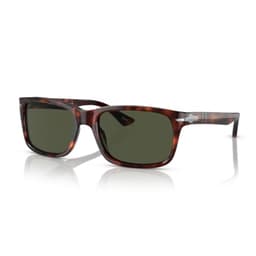
Persol PO3048S Rectangular
The strongest origin claim we can cite: Persol states Italian acetate and made in Italy on its own product pages, and its heritage pages describe cellulose acetate passing through thirty manual processes. If you want the labour-intensive, published-origin frame that people are usually reaching for when they search for Japanese acetate, this is the version of it you can actually buy and verify.
Price as of October 16, 2026. #ad How we’re funded
Frame material: Italian cellulose acetate. Specs read from the listing on July 21, 2026.
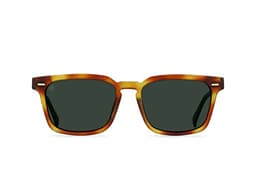
RAEN Adin 54 Round
The same kind of claim at a third of the price: RAEN states Italian cellulose acetate for the Adin, along with 100% UV protection. An independent brand stating its sheet origin is rare below the premium tier, and it is the reason this frame keeps appearing on our pages.
Price as of October 16, 2026. #ad How we’re funded
Frame material: Italian cellulose acetate. Specs read from the listing on July 21, 2026.
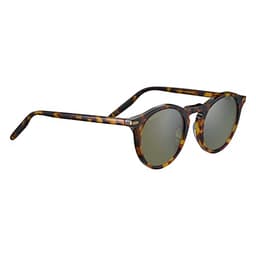
Serengeti Raffaele (Shiny Tortoise, Mineral Polarized 555nm, Cat 3)
Italian acetate stated by Serengeti on its own product page, paired with a mineral glass lens - included here because it shows that an origin claim and a published lens specification tend to travel together. Brands that document one usually document the other.
Price as of October 16, 2026. #ad How we’re funded
Frame material: Italian acetate (per Serengeti). Specs read from the listing on September 21, 2026.
Frequently asked questions
What is Japanese acetate?
Cellulose acetate produced in Japan, where Daicel Corporation is the established producer. Daicel's own glossary defines acetate plastic as made mainly from cellulose acetate with excellent transparency, toughness and moisture absorption properties, as well as colour, gloss, pattern and texture not found in other plastics, and lists eyeglass frames among its uses; it is marketed under the Acety trademark by group company Daicel Miraizu. The company's cellulose acetate is a resin derived from cellulose obtained from wood pulp or cotton.
Is Japanese acetate better than Italian acetate?
Neither producer publishes a figure that would let you answer that, and we are not going to invent one. Daicel in Japan and Mazzucchelli 1849 in Italy both publish material specifications, and both supply the eyewear trade. The claims you see online about Japanese acetate being denser or harder than Italian acetate are not supported by anything either company publishes. What genuinely varies between frames is the grade of sheet, the thickness it is cut at, and the amount of hand-finishing - none of which is determined by the country on the label.
Can I trust a listing that says Japanese acetate?
Treat it as marketing unless the brand publishes the claim on its own site. The phrase costs a seller nothing to type into a marketplace title, there is no certification behind it, and no frame in our own registry states it - which is why none of the frames on this page is presented as Japanese acetate. Where a brand does publish it, the claim is checkable: Oliver Peoples, for example, lists its N.01 as handmade in Japan in highly polished acetate and describes two dedicated factories, one in Italy and one in Japan.
Is Japanese acetate the same as bio-acetate?
No, they answer different questions - one is about origin, the other about feedstock and end-of-life. They do overlap in one documented way: Daicel states that its cellulose acetate products are certified under the Japan BioPlastics Association's Biomass Plastic and Biodegradable Plastic schemes, with some certifications applying only to specific grades. That is a Japanese certification of a Japanese material, and it is not the same claim as the ISO 14855-2 industrial-composting figures Mazzucchelli publishes for its M49 bio-acetate.
Does acetate from either country yellow in sunlight?
Cellulose acetate is unusually good here, and Daicel publishes the reason: products made from its cellulose acetate exhibit excellent resistance to sunlight, particularly UV radiation, and do not easily degrade, which makes them suitable for long-term use. What changes on an old frame is usually the surface polish rather than the dye, and polish is restorable. Our page on whether acetate frames turn yellow covers the specific cases where a colourway does shift.
What should I look for instead of a country name?
Four things that are all checkable. Whether the listing states cellulose acetate at all, rather than acetate style or nothing. Whether the frame and the temples are both stated as acetate, since mixed builds are common at the budget end. Whether any measurements are published, so you can size it against a pair you own. And whether the brand publishes anything about its own manufacture on its own site - a brand that documents where it makes frames usually documents the rest too.
Sources
- Daicel Corporation — investor glossary: acetate plastic (Acety®) — Daicel's own definition: acetate plastic is made mainly from cellulose acetate and has excellent transparency, toughness and moisture absorption properties, as well as color, gloss, pattern and texture not found in other plastics; it is used in a variety of products, including eyeglass frames, toys and writing instruments; and it is marketed under the trademark Acety® by group company Daicel Miraizu. The company also records that it commercialized cellulose acetate to replace highly flammable celluloid (cellulose nitrate) (accessed October 17, 2026)
- Daicel Corporation (Material SBU) — Cellulose Acetate — Manufacturer detail on the raw material: a resin derived from cellulose obtained from wood pulp or cotton; products made from it resist sunlight and particularly UV radiation and do not easily degrade, making them suitable for long-term use; it is inherently flame-retardant with high thermal stability, softening and carbonizing at approximately 230–300°C; and Daicel's cellulose acetate products are certified under the Japan BioPlastics Association's "Biomass Plastic" and "Biodegradable Plastic" schemes, with some certifications applying only to specific grades (accessed October 17, 2026)
- Oliver Peoples — N.01 (made-in-Japan acetate collection) — Oliver Peoples' product page for the N.01, part of its made-in-Japan acetate collection: listed as handmade in Japan in highly polished acetate (accessed October 17, 2026)
- Oliver Peoples — Superior Craftsmanship I (prototyping and factories) — Oliver Peoples on how its frames are made: two dedicated factories, one in Italy and one in Japan, combining technology with hand work; craftspeople hand-carve raw material into three-dimensional prototypes before industrial production, carving the front from a single piece of acetate, heating it to bend it to the curve of the face, then filing the frame and sculpting the nose pads (accessed October 17, 2026)
- Mazzucchelli 1849 — the cellulose-acetate maker for eyewear — Background on cellulose acetate as the traditional material for spectacle and sunglass frames (accessed July 21, 2026)
- Mazzucchelli 1849 — M49 bioplastic (bio-based cellulose acetate) — Manufacturer detail on bio-acetate: 68% bio-based content, >90% biodegradation after 115 days per ISO 14855-2:2018 (accessed July 21, 2026)
- Specialty Vision — Eyeglass Frame Materials (optometry-practice reference) — On titanium frames: very strong, lightweight and corrosion-resistant, suited to a thin, light profile and small or delicate styles; hypoallergenic, which matters for patients with a nickel allergy; corrosion resistance handles sweat, humidity and daily handling without pitting; a higher cost than basic metals. On blended-nylon frames: commonly used for sports and safety eyewear including wraparound styles, handles impact and motion better than standard plastics, and resists sweat and moisture well. On plastic frames: the most popular choice for affordability and styling, but they break more easily than metal and may fade in color over time, while Italian zyl acetate is known for its quality, hand-polished finishes and multi-layer color effects, and lasts many years with proper care (accessed October 11, 2026)
Keep reading
Italian acetate, explained
The other origin claim, and the supply chain behind it.
Read the guideHow to tell if frames are real acetate
Five checks that work when a listing will not say.
Read the guideBio-acetate, explained
The feedstock question, and what the biodegradability claims mean.
Read the guideBest Oliver Peoples alternatives
Where the made-in-Japan look is shopped, and what gets closest.
See the picks