Bio-Acetate Sunglasses, Explained
What bio-based acetate actually is, whether 'biodegradable' holds up, and how to read the eco claims without getting greenwashed.
How this is funded: we earn a commission if you buy through our links, at no extra cost to you. It never changes which product we recommend, and we’ll tell you when we’d skip one. Full disclosure.
“Bio-acetate” is one of the more honest eco claims in eyewear — but like most sustainability language, it comes with fine print worth reading before you pay a premium for it. The short version: bio-acetate is a genuine improvement on standard acetate, and it canbiodegrade — but only under industrial conditions most people don’t have access to. Here’s what’s actually going on.
We do not run biodegradation tests and we do not own a lab, so everything below comes from what the material makers and the brands publish, and from the standards those claims are measured against. Where a claim has no published basis, we say so instead of repeating it.
What bio-acetate is
Standard cellulose acetate is already plant-derived: it starts from wood pulp and cotton. The catch is that raw cellulose acetate is stiff, so manufacturers add plasticizers— traditionally petroleum-based — to make it workable into frames. Bio-acetate replaces those fossil plasticizers with plant-based ones. The best-documented version, Mazzucchelli’s M49, reaches around 68% bio-based contentwhile keeping the durability, color depth and transparency that make acetate worth buying. In other words, it’s the same desirable material with a lower fossil footprint.
The plant sources are specific rather than generic. Ray-Ban describes its own bio-acetate as cellulose acetate derived from cotton or wood pulp, combined with a bio-based plasticizer made from renewable sources such as cereals, beet or sugar cane. That is worth knowing because it shows how narrow the change is: one ingredient, swapped for a version of the same ingredient made from crops instead of crude oil. Everything else about the material — the cellulose base, the sheet-casting, the milling, the polishing — is unchanged. Our guide to how acetate is made walks through the process that stays the same either way.
The two claims people confuse
This is the single most useful thing to understand about the category, and almost nobody separates the two. Bio-acetate frames get sold on two different claims, with two different levels of proof, and brands blur them constantly.
Claim one is about feedstock: where the carbon came from. This is expressed as a percentage of bio-based content, and when a brand is being rigorous it names the standard the percentage was calculated to. Ray-Ban states 67% bio-based carbon content on its bio-based RB2140, calculated to ASTM D6866. Mazzucchelli states around 68% bio-based content for M49. These are measurable properties of the material as sold, and they say nothing whatsoever about what happens when you throw the frame away.
Claim two is about end-of-life: whether it biodegrades.That is a test result, not a composition figure, and it comes with conditions attached — the whole of the next section. A frame can honestly carry the feedstock claim and make no biodegradability claim at all; Ray-Ban does exactly that. A frame can also loudly make the biodegradability claim and publish no figure for either. Knowing which claim you are being sold is most of the skill in buying this material.
Is it really biodegradable?
This is where the asterisk lives. Mazzucchelli reports that M49 exceeds 90% biodegradation after about 115 days— but that figure is measured under industrial composting conditions, tested to the ISO 14855-2standard. That standard runs at roughly 58°C with carefully controlled humidity and microbial activity: an industrial composter, not your garden, your kitchen caddy, or a landfill. In a landfill — where most discarded frames end up — there isn’t the heat, oxygen or microbial environment for that to happen at any useful rate.
So the honest reading is: bio-acetate is genuinely more sustainable — lower fossil content, and compostable under the right industrial conditions — but “biodegradable” on the box is not a promise that the frame vanishes if you bin it. It’s better, not magic.
It also means one specific phrase should stop you: any claim that a frame is biodegradable in a landfill. We have seen that wording in the wild from a brand selling eco-acetate frames, with no standard, no percentage and no lab named alongside it. Landfill is not the environment the published test basis describes, so a landfill claim is not supported by the evidence the industry actually has. The frame may still be a good frame — that is a separate question — but the disposal claim is doing work it cannot back up.
How to read the sustainability claims
A few questions cut through the marketing:
- Does it name a real material?“M49” or a named bio-acetate is more credible than a vague “eco acetate.”
- Does it state the bio-based percentage?A specific figure (like M49’s ~68%) is a good sign; “natural” with no number is not.
- Does it name the standard behind the number? ASTM D6866 for bio-based carbon content, ISO 14855-2 for biodegradation. A figure with a standard attached is checkable; a figure without one is a marketing number.
- Does it qualify “biodegradable”?An honest brand notes that biodegradation needs industrial composting. A brand implying it breaks down anywhere — especially in a landfill — is overselling.
- Is “eco” doing the whole job?“Eco,” “eco-friendly” and “sustainable” are not material claims. If a listing will not name the material, treat the frame as conventional plastic until it does.
Does it feel or perform any differently?
No, and that is the strongest practical argument for it. Bio-acetate has the same density, the same color depth through the sheet, and the same machining behavior as conventional acetate, so a bio-acetate frame is indistinguishable in the hand. You cannot spot one in a photograph and neither can we.
Crucially, it keeps acetate’s serviceability. A bio-acetate frame can still be heat-adjusted by an optician when the fit drifts, re-polished when the surface goes flat, and re-hingedwhen a hinge pulls. That matters more environmentally than the plasticizer does, because a frame that can be repaired is a frame that stays out of a bin — and it is the one advantage neither bio-acetate marketing nor recycled-plastic marketing tends to mention.
It shares acetate’s weaknesses too. Bio-acetate is still temperature-sensitive, so a frame left on a hot dashboard can distort, and pale frames can still discolor with skin oil and UV over years — covered in do acetate frames turn yellow and frame care. Bio-based does not mean more fragile, and it does not mean tougher either.
Where you can actually buy it
Availability is the real constraint on this material, and it splits into three tiers.
At the top, Ray-Ban runs a bio-based line across several models including the RB2140 Original Wayfarer, and it is the one brand publishing a figure and a standard. In the middle, OTISsells an eco-acetate range it describes as derived from cotton seeds and plant matter — good frames, with the landfill-claim caveat above, and our OTIS review checks the standard it cites against what that standard actually covers. Meller is the brand most people arrive looking for, because it built its identity on bio-acetate; we could not find a single Meller frame purchasable on Amazon US when we checked, which our Meller review says plainly rather than pointing you at a dead listing.
Below that, a growing set of budget listings state bio-acetate without quantifying it. Those are worth taking seriously for one reason: at that price you are not paying a premium for the claim, so a vague claim costs you nothing. Our bio-acetate roundup ranks the frames we could verify by how well each one substantiates its claim rather than by how green it sounds.
What it does not change: your eyes
Nothing about the frame material affects UV protection. Filtering happens entirely in the lens, so a stated-UV400 lens in a bio-acetate frame and the same lens in a conventional frame protect identically — and a dark lens with no stated rating protects neither way. Our UV400 explainer covers what the number means and how to check a pair you already own covers verifying it. Never trade a stated UV rating for a greener frame.
Should you buy bio-acetate?
If reducing fossil-based materials matters to you, bio-acetate is a legitimately better choicethat costs you nothing in look or feel — you keep acetate’s color and quality. Just buy it with clear eyes about the composting caveat, and don’t pay a huge premium for “eco” claims that don’t name a material or a number. Brands like Meller build their whole identity around bio-acetate, and we review whether that holds up. For frames chosen on the eco claim, our best sustainable acetate sunglasses roundup is where the bio-acetate pick lives.
The rule that survives all of this is a price rule. At a small premium, bio-acetate is a free win— identical frame, cleaner feedstock, take it. At a large premium it is a poor trade, because the money is better spent on a frame you will still want in five years: longevity beats feedstock, and one acetate frame kept for eight years beats three greener frames bought and binned. And if what you actually care about is plastic already in circulation rather than what the frame is made from, that is a different material and a different argument — our bio-acetate vs acetate vs recycled plastic comparison sets all three side by side.
Two frames that state the material, at opposite ends of the price
Earned by the checklist above rather than ranked. One frame that publishes a figure and the standard behind it, and one that states the material honestly at a price where the upgrade costs you nothing. Live prices are on the cards.
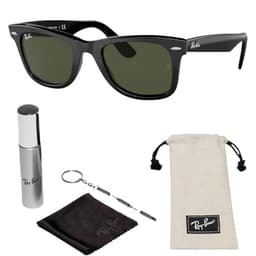
Ray-Ban Original Wayfarer Bio-Based RB2140
The only bio-acetate frame we found that attaches a number to the claim: Ray-Ban states 67% bio-based carbon content, calculated to ASTM D6866. Note what that number is - a feedstock measure, not a biodegradability promise. Ray-Ban does not make one, and neither do we on its behalf.
Price as of October 19, 2026. #ad How we’re funded
Frame material: Bio-based cellulose acetate (Ray-Ban states 67% bio-based carbon content, ASTM D6866). Specs read from the listing on September 3, 2026.
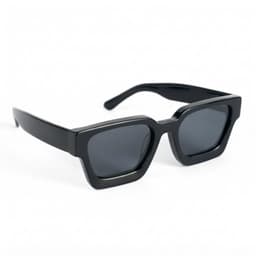
Earthly Ones Polarized Square (Eco Bio-Acetate)
The other end. Its listing says bio-acetate outright rather than hiding behind 'eco', with polarized UV400 lenses at ordinary budget-acetate money - which is the price at which this material is an easy yes. Nothing is quantified and no standard is cited, so the claim is the seller's word.
Price as of October 19, 2026. #ad How we’re funded
Frame material: Bio-acetate (per the listing: “Eco Bio-Acetate”). Specs read from the listing on September 3, 2026.
Frequently asked questions
What is bio-acetate?
Bio-acetate is a bio-based version of cellulose acetate. Standard acetate is already made from plant cellulose, but it uses petroleum-based plasticizers to become workable; bio-acetate replaces those with plant-based plasticizers. Mazzucchelli's M49, the best-known version, reaches about 68% bio-based content.
Are bio-acetate sunglasses actually biodegradable?
Partly, and only under specific conditions. M49 bio-acetate exceeds 90% biodegradation after about 115 days, but that's under industrial composting conditions tested to ISO 14855-2 — roughly 58°C with controlled humidity and microbes. It will not biodegrade meaningfully in a landfill, the ocean, or a home compost bin.
What is the difference between bio-acetate and bio-based acetate?
The terms get used interchangeably, but the claims behind them often differ. A "bio-based" figure is a feedstock measure — Ray-Ban states 67% bio-based carbon content on its bio-based RB2140, calculated to ASTM D6866, which says where the carbon came from and nothing about disposal. The biodegradability figures quoted for bio-acetate come from composting tests to ISO 14855-2. A frame can honestly carry one claim without the other, so check which one you are being sold.
Is bio-acetate better than regular acetate?
Environmentally, yes — it lowers the fossil-based content and can biodegrade under industrial composting, which standard acetate does far more slowly. For look and feel it's essentially the same material, keeping acetate's color depth and workability. The main catches are availability and a slightly higher price.
Does bio-acetate look different from normal acetate?
No — that's part of the point. Bio-acetate retains the durability, workability, color depth and transparency that make acetate desirable, so a bio-acetate frame looks and feels like a normal acetate one. The difference is in the plasticizers and the environmental footprint, not the appearance.
Which brands make bio-acetate sunglasses?
Ray-Ban runs a bio-based line across several models including the RB2140 Original Wayfarer, and it is the one publishing a figure and a standard. OTIS builds an eco-acetate range it says is derived from cotton seeds and plant matter. Meller built its whole identity on bio-acetate, though we could not find its frames purchasable on Amazon US when we checked. Below that there is a growing set of budget listings that state bio-acetate without quantifying it.
Is bio-acetate the same as recycled acetate?
No. Bio-acetate is virgin material made with a bio-based plasticizer instead of a petroleum one — nothing about it is recycled. Recycled acetate is offcuts and production scrap reprocessed into new sheet, which is a circularity claim about waste rather than about feedstock. Recycled plastic is a third thing again: usually reprocessed PET, injection-molded rather than cut from sheet, and not acetate at all.
Sources
- Mazzucchelli 1849 — M49 bioplastic (bio-based cellulose acetate) — Manufacturer detail on bio-acetate: 68% bio-based content, >90% biodegradation after 115 days per ISO 14855-2:2018 (accessed July 21, 2026)
- ISO 14855-2:2018 — Aerobic biodegradability of plastics under controlled composting — The industrial-composting biodegradation test method bio-acetate claims are measured against (accessed July 21, 2026)
- Mazzucchelli 1849 — the cellulose-acetate maker for eyewear — Background on cellulose acetate as the traditional material for spectacle and sunglass frames (accessed July 21, 2026)
- U.S. FDA — Tips to Stay Safe in the Sun: From Sunscreen to Sunglasses — FDA: lens darkness does not indicate UV protection; look for a 100% UV / UV400 label (accessed July 21, 2026)
Keep reading
Best bio-acetate sunglasses
The frames that actually say bio-acetate, ranked by how well each one substantiates the claim.
See the picksBio-acetate vs acetate vs recycled plastic
Three materials making three different environmental arguments, separated out.
Compare the threeBio-acetate vs regular acetate
A side-by-side on what actually changes, and whether the eco difference is real.
Compare themWhat is acetate?
Standard cellulose acetate explained, so you can see exactly what bio-acetate changes.
Read the explainerMeller sunglasses review
A bio-acetate brand reviewed honestly — do the eco claims hold up in practice?
Read the reviewBest sustainable acetate sunglasses
The wider lower-footprint field, where longevity outranks feedstock.
See the picks