Acetate Club

Best Bio-Acetate Sunglasses (2026)

The frames that actually say bio-acetate, ranked by how well each one substantiates the claim - because on this material the wording is doing most of the work.

By Stephen V.Last updated How we pick

Bio-acetate is a small category with an unusually large gap between what gets claimed and what gets proven, so the ranking criterion here is not “which frame is greenest” — nobody can honestly answer that from a listing. It is how well each frame substantiates its own claim. A brand that publishes a percentage and the standard it was measured to ranks above one that prints “100% biodegradable” and names no test, no lab and no number. That ordering is the whole point of the page, and it is the opposite of how this category usually gets covered.

The material itself is real and worth understanding before you spend: bio-acetate is ordinary cellulose acetate with the plasticizer swapped from a petroleum-based one to a bio-based one. Our bio-acetate explainer works through what that does and does not buy you, and bio-acetate vs regular acetate covers whether the upgrade is worth paying for at all. Prices below are live and dated.

How this is funded:we earn a commission if you buy through our links, at no extra cost to you. It never changes which product we recommend, and we’ll tell you when we’d skip one. Full disclosure.

Quick picks

Ranked on frame material, fit and value. Select a row to jump to the full write-up. We have not handled these frames in person — here is exactly what we do instead.

#ProductBest forPrice
1
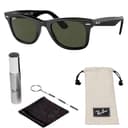
Ray-Ban Original Wayfarer Bio-Based RB2140

Ray-Ban Original Wayfarer Bio-Based RB2140

The only bio-acetate frame here that puts a measured number behind the claim. Ray-Ban states 67% bio-based carbon content calculated to ASTM D6866 — an actual standard, an actual figure — on the reference acetate shape. You pay Ray-Ban money for it, and the number is about feedstock, not biodegradability.

Best substantiated claim
$222.00 · View on Amazon

Price as of September 3, 2026. #ad How we’re funded

2
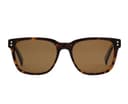
OTIS Test of Time X Eco (Havana Brown)

OTIS Test of Time X Eco (Havana Brown)

A genuinely good frame with a sustainability claim we would not repeat without a caveat. OTIS builds this on its eco-acetate with polarized mineral glass lenses, which is a real specification advantage. But OTIS states the frames are biodegradable in a landfill environment, and it publishes no standard, no figure and no lab to support that.

Best lenses
$131.91 · View on Amazon

Price as of September 3, 2026. #ad How we’re funded

3
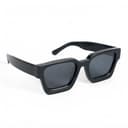
Earthly Ones Polarized Square (Eco Bio-Acetate)

Earthly Ones Polarized Square (Eco Bio-Acetate)

The same bio-acetate claim and the same price as the round, in the shape that flatters more people. If you want a bio-acetate frame you will actually reach for every day rather than one that makes a statement, this is the one to take.

Best everyday budget
$39.99 · View on Amazon

Price as of September 3, 2026. #ad How we’re funded

4
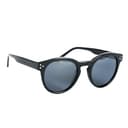
Earthly Ones Polarized Round (Eco Bio-Acetate)

Earthly Ones Polarized Round (Eco Bio-Acetate)

The cheapest frame we could find whose listing actually says bio-acetate rather than gesturing at 'eco'. Polarized, UV400 stated, in a soft round shape — and at a price where you are not paying a large premium for the material claim, which is the honest reason to start here.

Best budget round
$39.99 · View on Amazon

Price as of September 3, 2026. #ad How we’re funded

The picks in full

#1Best substantiated claim

Ray-Ban Original Wayfarer Bio-Based RB2140

The only bio-acetate frame here that puts a measured number behind the claim. Ray-Ban states 67% bio-based carbon content calculated to ASTM D6866 — an actual standard, an actual figure — on the reference acetate shape. You pay Ray-Ban money for it, and the number is about feedstock, not biodegradability.

Strengths

  • 67% bio-based carbon content stated by Ray-Ban and calculated to ASTM D6866 — a real standard, not a slogan
  • The reference Wayfarer shape and full Ray-Ban serviceability, unchanged by the material swap
  • 100% UV protection stated, same as the standard RB2140

Who should skip it

  • Bio-based carbon content is a feedstock measure — it is NOT a biodegradability claim, and Ray-Ban does not make one
  • By far the most expensive way to buy bio-acetate here
  • This listing does not state whether the pair is polarized; check the variant before you buy
Frame materialBio-based cellulose acetate (Ray-Ban states 67% bio-based carbon content, ASTM D6866)
Frame shapeWayfarer
Lens protection100% UV protection (per Ray-Ban)
PolarizedNot published
Lens widthNot published
Suits face shapesOval, Round, Heart

Spec note. Ray-Ban describes its bio-acetate as cellulose acetate from cotton or wood pulp combined with a bio-based plasticizer made from renewable sources such as cereals, beet or sugar cane — the plasticizer is the part that changes. Ray-Ban's own bio-based RB2140 pages list a 50-22 fitting; this listing does not state the size it ships.

Specs and material read from the product listing, on September 3, 2026. “Not published” means the seller does not state that figure.

#2Best lenses

OTIS Test of Time X Eco (Havana Brown)

A genuinely good frame with a sustainability claim we would not repeat without a caveat. OTIS builds this on its eco-acetate with polarized mineral glass lenses, which is a real specification advantage. But OTIS states the frames are biodegradable in a landfill environment, and it publishes no standard, no figure and no lab to support that.

Strengths

  • Mineral glass lenses, which resist scratching far better than plastic over years of wear
  • Polarized, and OTIS states its lenses block 100% of UVA and UVB
  • 70s-leaning square shape with a genuine point of view, at well under designer money

Who should skip it

  • OTIS claims the eco-acetate is biodegradable in a LANDFILL environment; the published test basis for acetate biodegradation is industrial composting, and OTIS cites no standard, figure or lab
  • Mineral glass is heavier on the nose and less impact-resistant than plastic
  • Sold through third-party sellers, so stock and price move more than a first-party listing
Frame materialEco-acetate (OTIS states it is derived from cotton seeds and plant matter)
Frame shapeSquare
Lens protection100% UVA/UVB (per OTIS)
PolarizedYes
Lens width55 mm
Suits face shapesOval, Round, Heart

Spec note. OTIS lists the Test of Time X at 55-18-140. Its lenses are mineral glass rather than plastic — OTIS's own argument being that glass is sourced from sand and soda ash and is endlessly recyclable, which is a separate sustainability claim from the frame material.

Specs and material read from the product listing, on September 3, 2026. “Not published” means the seller does not state that figure.

#3Best everyday budget

Earthly Ones Polarized Square (Eco Bio-Acetate)

The same bio-acetate claim and the same price as the round, in the shape that flatters more people. If you want a bio-acetate frame you will actually reach for every day rather than one that makes a statement, this is the one to take.

Strengths

  • Square front adds definition a round face lacks, and stays neutral enough for daily wear
  • Bio-acetate stated on the listing, with polarized UV400 lenses
  • Same price as the round, so the choice is purely shape

Who should skip it

  • No published measurements, same as its sibling
  • No quantified bio-content and no cited standard
  • One size only, so very small and very wide faces are a gamble
Frame materialBio-acetate (per the listing: “Eco Bio-Acetate”)
Frame shapeSquare
Lens protectionUV400
PolarizedYes
Lens widthNot published
Suits face shapesRound, Oval, Heart

Spec note. Identical material wording and price to the round in the same range; the only published difference between them is the silhouette.

Specs and material read from the product listing, on September 3, 2026. “Not published” means the seller does not state that figure.

#4Best budget round

Earthly Ones Polarized Round (Eco Bio-Acetate)

The cheapest frame we could find whose listing actually says bio-acetate rather than gesturing at 'eco'. Polarized, UV400 stated, in a soft round shape — and at a price where you are not paying a large premium for the material claim, which is the honest reason to start here.

Strengths

  • The listing states bio-acetate explicitly, not the vaguer 'eco' wording most budget frames use
  • Polarized and UV400 both stated at well under $50
  • Soft round shape suits square and angular faces

Who should skip it

  • No measurements published, so buying blind is a real risk if your face is unusually wide or narrow
  • Bio-acetate content is not quantified and no standard is cited — the claim is the seller's word
  • A new Amazon-only brand with no independent brand site to check against
Frame materialBio-acetate (per the listing: “Eco Bio-Acetate”)
Frame shapeRound
Lens protectionUV400
PolarizedYes
Lens widthNot published
Suits face shapesSquare, Oval, Heart

Spec note. The listing names the material but attaches no percentage and no test standard to it. That is the norm at this price and the reason we rank a frame that publishes a figure above one that does not.

Specs and material read from the product listing, on September 3, 2026. “Not published” means the seller does not state that figure.

How we ranked these

We do not own these frames, we do not run biodegradation tests, and we are not going to pretend a listing tells us how a frame behaves after you throw it away. What we can do is read what each brand publishes and rank on the quality of the evidence. Three checks, in this order.

1. Is there a number, and is it tied to a standard? This is the single most discriminating question in the category. Ray-Ban states 67% bio-based carbon contenton its bio-based RB2140 and names the standard it is calculated to — ASTM D6866. That is a checkable claim about a measurable property. Most bio-acetate frames state nothing quantified at all.

2. Does the claim match what the material can actually do? A bio-based feedstock claim and a biodegradabilityclaim are different claims, and brands blur them constantly. Bio-acetate’s biodegradation figures come from industrial composting tests — the widely quoted result, exceeding 90% biodegradation in about 115 days, is measured to ISO 14855-2, which means sustained elevated temperature and managed microbial activity in a facility. A brand that promises the same outcome in a landfill is describing something the test basis does not support.

3. Would you keep the frame? Longevity beats feedstock and it is not close. One acetate frame worn for eight years and re-polished twice has a smaller footprint than three bio-acetate frames bought and binned over the same period. That is why a well-made frame in a shape you will still want in five years outranks a marginally greener one you will not. The same logic drives our sustainable acetate roundup, which looks at the wider field rather than just this material.

Where each pick actually lands

The Ray-Ban bio-based RB2140 wins on evidence, not on virtue. It is the only frame here with a figure and a standard attached, and it is the reference acetate shape on a frame that is endlessly serviceable. Two honest caveats. The 67% figure is about where the carbon came from, notabout how the frame breaks down — Ray-Ban does not claim biodegradability, and we are not going to claim it on Ray-Ban’s behalf. And it is by a wide margin the most expensive way to buy this material. If your goal is a bio-based frame with a number you can check, this is the one. If your goal is spending less, it is not.

The OTIS Test of Time X Eco has the best lenses and the weakest claim.Mineral glass rather than plastic is a real specification advantage — glass resists scratching far better over years of wear, which our lens materials guidecovers properly — and the frames are polarized with 100% UVA/UVB stated. But OTIS states its eco-acetate is “biodegradable and recyclable when placed into a landfill environment,” and publishes no standard, no percentage and no lab to support it. As established above, landfill is not the environment acetate biodegradation is measured in. Buy this frame for the glass lenses and the shape. Do not buy it because you believe it will compost in a bin bag.

The two Earthly Ones frames are the honest budget entry.Their listings say bio-acetate outright rather than hiding behind “eco,” they are polarized with UV400 stated, and critically you are not paying a premium for the material claim— they sit at ordinary budget-acetate money. That matters, because a bio-acetate frame that costs three times a conventional one has to justify the gap, and one that costs the same does not. The trade is that nothing is quantified, no standard is cited, and no measurements are published at all, which is a genuine risk if your face is unusually wide or narrow. Take the square if you want a frame for every day; take the round if you have a square or angular face and want the shape to soften it.

What is NOT on this list, and why

Two absences are deliberate. Meller is the bio-acetate brand most people arrive looking for, and we could not find a single Meller frame purchasable on Amazon US when we checked, so there is nothing to link. Our Meller review covers the brand editorially and says so plainly rather than pointing you at a dead listing.

The other absence is every frame whose listing says only “eco,” “eco-friendly” or “sustainable”without naming a material. There are a lot of them, several at tempting prices, and none of them belongs on a page about a specific material. “Eco” is not a material claim; bio-acetate is. If a listing will not name the material, treat it as conventional plastic until it does.

The one thing bio-acetate does not change

Eye protection. Every frame here states full UV protection, and so does a $25 conventional acetate frame with stated UV400 — because UV filtering is a property of the lens, and the frame material has nothing to do with it. Our UV400 explainer covers what the number means and how to verify a pair you own covers checking it. Nobody should buy bio-acetate expecting better protection, and nobody should accept worse protection in exchange for a greener frame.

Fit does not change either. Bio-acetate machines, cuts and heat-adjusts exactly like conventional acetate, which means an optician can still adjust it to your head and it can still be re-polished when the surface goes flat. That serviceability is the most underrated sustainability feature in eyewear and none of these brands leads with it.
Frequently asked questions

What are the best bio-acetate sunglasses?

It depends on what you want the claim to be worth. Ray-Ban's bio-based RB2140 is the only frame we found that publishes a figure and the standard behind it — 67% bio-based carbon content, calculated to ASTM D6866 — so it ranks first on evidence. The OTIS Test of Time X Eco has the best lenses (polarized mineral glass) but the least substantiated claim. The two Earthly Ones frames are the honest budget entry: bio-acetate stated on the listing, polarized UV400, and no sustainability premium on the price.

Are bio-acetate sunglasses actually biodegradable?

Under industrial composting conditions, the material genuinely does biodegrade — the widely quoted figure, exceeding 90% biodegradation in about 115 days, is measured to ISO 14855-2, which means sustained elevated temperature and managed microbial activity inside a facility. It does not mean a landfill, a garden compost heap, a hedge or the sea. Any brand promising landfill biodegradation is describing an outcome its own test basis does not support, and you should read the rest of that brand's claims with the same care.

Is bio-acetate worth paying more for?

Only if the premium is small. Bio-acetate is conventional cellulose acetate with a bio-based plasticizer instead of a petroleum-based one, so it looks, feels, machines and wears the same — you are buying a better feedstock, not a better frame. That is a real improvement worth having when it is free or close to it, which is exactly why the budget picks here matter. When a frame charges several times the price of a conventional acetate one for it, longevity is the better place to spend.

What is the difference between bio-acetate and bio-based acetate?

In practice the terms get used interchangeably, but the claims behind them can differ, and that is worth knowing before you spend. Ray-Ban's "bio-based" figure is a feedstock measure: 67% bio-based carbon content to ASTM D6866, which says where the carbon came from and nothing about disposal. The bio-acetate biodegradability claims you see elsewhere come from composting tests to ISO 14855-2. A frame can legitimately carry one claim without the other, so read which one you are actually being sold.

Do bio-acetate frames protect your eyes as well?

Yes, and the frame material is irrelevant to it. UV filtering comes entirely from the lens, so a stated-UV400 lens in a bio-acetate frame and the same lens in a conventional acetate frame protect identically. Lens darkness is not a proxy for protection either. Check for a stated UV400 or 100% UV rating and ignore the frame material when you are assessing safety.

Sources

Keep reading