Can Acetate Frames Be Repaired?
A loose hinge, a lost screw, a snapped temple, a crack at the rim. Which of those an optician can genuinely fix, which ends a frame, and which you can do yourself.
How this is funded:we earn a commission if you buy through our links, at no extra cost to you. It never changes which product we recommend, and we’ll tell you when we’d skip one. Full disclosure.
The honest answer is that acetate is one of the more repairable frame materials, and also that most people ask this question about the one type of damage that is hardest to fix. So let us split it properly: hardware, fit, finish and structure. Three of those four are routine. One is where frames go to die.
Hardware: routine, cheap, often free
Genuine acetate frames use metal hinges set into the material— that construction is one of the ways you tell acetate from injection plastic in the first place. Metal hinges have screws, and screws work loose. Symptoms are a temple that flops instead of holding position, a frame that suddenly sits crooked, or a screw that has simply gone.
This is the easiest repair there is. Any optician has a tray of frame screws and will usually tighten or replace one on the spot for nothing. It is also the one acetate repair genuinely worth doing yourself, provided you use a precision eyewear driver rather than the smallest thing in the kitchen drawer — a badly fitting driver rounds the screw head and turns a two-minute job into a proper one.
The harder version is a hinge pulling out of the acetate. The hinge is embedded rather than molded in, so with enough years and enough force the seat around it can give. That is a real repair rather than a screw change, but it is a repair a specialist does routinely: the hinge is re-seated into the material. It is not a job for home.
Fit: not damage at all
Half the frames people believe are broken are simply out of shape. Acetate is a thermoplastic: warm it gently and it becomes pliable, then holds the new shape as it cools. A temple that pinches, an arm that has splayed loose, a frame sitting visibly crooked — all of that is an adjustment, not a repair, and most optical shops do it in minutes for free or for very little.
You can do gentle versions at home, carefully, and our guide to adjusting acetate frames walks through the safe method. The two rules that matter: never force a cold frame, and never use boiling water, a flame or a heat gun. Forcing cold acetate is the single most common way a frame that only needed adjusting becomes a frame that needs repairing.
Finish: a polish brings it back
Acetate’s shine is a surface finish, not a coating, and that distinction is what makes it restorable. Years of handling, skin oil and cleaning wear the polish flat; a polishing wheel removes a whisker of material and restores it. The same process lifts much of the surface discoloration that shows up on clear and pale frames.
There is a limit — you can only take so much material off a frame — but for a frame that simply looks tired, a professional polish is a genuinely transformative and underused service. Injection-molded plastic cannot be treated this way at all, which is one of the quieter arguments for buying acetate in the first place.
Structure: where it gets serious
A snapped temple
Usually the result of sitting on a pair, or of forcing a cold frame. A specialist can repair a clean break by pinning or welding it, and on a frame with real value — a Persol, an inherited frame, a discontinued model you love — that is well worth doing. Two honest caveats: the repair will be visible if you look for it, and the repaired arm will not be as strong as the original.
Do not reach for superglue first. A temple is under leverage every single time the frame goes on and off, so a glued joint fails again quickly, and the dried adhesive in the break makes the professional repair harder afterwards. Some solvent glues also attack acetate and cloud the surface around the break.
A crack at the rim or through the front
This is generally where repair stops being sensible. The front carries the lenses under constant tension, so a crack around a lens rim is in the worst possible place, and there is rarely enough material to work with. Occasionally a specialist will attempt it on a valuable frame; usually the answer is a new frame, or new lenses fitted to a replacement front.
Heat damage
Warped from a dashboard, blistered, gone cloudy or tacky from a solvent. This one is genuinely terminal, because the material itself has changed rather than merely broken. There is nothing to re-seat and nothing to polish out. Prevention is the entire strategy, which is why frame care spends so much time on where you leave your sunglasses.
When repair stops making sense
Be realistic about the economics. On a frame in the budget band, a structural repair will usually cost more than the frame did — there is no shame in replacing it, and our affordable acetate roundup is there for exactly that. On a premium frame, repair is nearly always the right call: the whole argument for spending on acetate is that the frame is worth keeping, and a serviceable material only pays off if you actually service it.
And take the free stuff. Opticians tighten screws, straighten frames and adjust fit for nothing or nearly nothing all day long, whether or not you bought the frame there. A large share of “my sunglasses are broken” is solved by walking into a shop and asking.
For the repairs you can genuinely do at home
Exactly one category of acetate repair belongs on your kitchen table: hardware. Screws, hinges and the pads around them. Everything structural in the list above goes to someone with a frame heater.
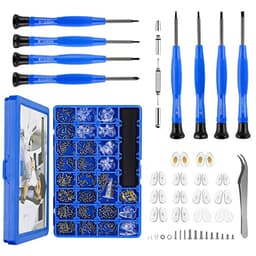
A hinge screw and repair kit
One of the ways you can tell real acetate from injection plastic is that the hinges are metal, pressed into the frame — and metal hinges work loose. A magnetic tray, the right precision drivers and a box of spare screws turn a wobbling temple into a two-minute fix.
Price as of October 7, 2026. #ad How we’re funded
Listed as “Upgrade Version Magnetic Eye Glass Repairing Kit, Eyeglass Repair Tool Kit with Compact Screw Box Include Nose Pads, Precision Screwdriver Set, Screws, Tweezer for Eyeglass, Sunglass, Spectacles Watch” — read on August 16, 2026.
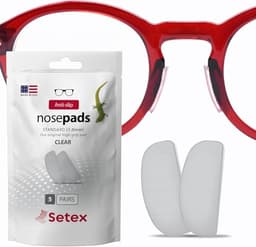
Stick-on anti-slip nose pads
An acetate frame has a molded saddle bridge and no adjustable pads, so when it slides down your nose there is nothing to bend. Thin stick-on pads add grip and lift the lenses a little — the same cheap fix an optician reaches for on a low bridge.
Listed as “Setex Gecko Grip 1.0mm Anti Slip Nose Pads for Glasses, 5 Pair, Clear” — read on August 16, 2026.
Frequently asked questions
Can a broken acetate frame be fixed?
It depends entirely on what broke. Hardware problems - a lost screw, a loose hinge, a hinge pulling out of the acetate - are routine repairs, and an optician or a frame repair specialist fixes them regularly. Fit problems are not damage at all: acetate is a thermoplastic, so a frame that pinches or sits crooked is warmed and reshaped. A clean snap through a temple can sometimes be repaired by a specialist, though the join is never invisible and never as strong. A crack running through the front around the lens rim is usually where repair stops being worth it.
Can a snapped acetate temple be glued?
Not successfully with household glue, and it is worth understanding why before you try. A temple arm is under constant leverage every time the frame goes on and off, and a superglue joint has no mechanical strength against that - it will fail again, usually within days, and the dried adhesive contaminates the break so a professional repair afterwards is harder. Some solvent glues also attack acetate directly and cloud the surface around the break. A frame repair specialist can pin or weld a clean break properly; that is the route worth taking on a frame you care about.
How much does it cost to repair acetate glasses?
Costs vary widely by shop and country, so treat any number you read online with caution - including here. What is reliable is the shape of it: hardware jobs like tightening or replacing a screw are the cheapest thing in the shop and many opticians do them free, particularly if you bought the frame there. A heat adjustment is usually free or near it. A re-polish is a modest paid job. A structural repair to a snapped temple is specialist work priced accordingly, and on a budget frame it will often cost more than a replacement. Ask for the price before agreeing to anything beyond an adjustment.
Can acetate frames be re-polished?
Yes, and this is one of acetate's genuine advantages over injection-molded plastic. The gloss on an acetate frame is a polished surface finish, so when it goes flat with years of handling, an optician with a polishing wheel removes a whisker of material and brings the shine back rather than coating over it. The same process lifts a good deal of surface discoloration on pale and clear frames. It is restorative rather than cosmetic, and it is why a good acetate frame is worth maintaining instead of replacing.
Sources
- Mazzucchelli 1849 — the cellulose-acetate maker for eyewear — Background on cellulose acetate as the traditional material for spectacle and sunglass frames (accessed July 21, 2026)
Keep reading
How to adjust acetate frames
Fit problems are not damage. The safe way to reshape a frame with gentle heat.
Read the how-toHow to care for acetate frames
The habits that keep a frame out of the repair conversation entirely.
Read the care guideAre acetate sunglasses durable?
How acetate actually fails, and how it compares with metal and polycarbonate.
Read the durability guideAcetate and metal frames explained
Combination frames fail at the join. What that means for repairs.
Read the explainerDo sunglasses expire?
When repair stops being the sensible call and replacement starts.
Read the guide