Do Sunglasses Expire?
The internet says UV protection wears off after two years. That is mostly wrong - but sunglasses do fail, in specific ways worth knowing how to spot.
How this is funded:we earn a commission if you buy through our links, at no extra cost to you. It never changes which product we recommend, and we’ll tell you when we’d skip one. Full disclosure.
Search this question and you will find the same claim repeated everywhere: sunglasses lose their UV protection after about two years, so replace them. It is a tidy piece of advice that also happens to sell sunglasses, and it deserves more scrutiny than it usually gets.
The more accurate framing is this: sunglasses do not expire, they fail— and failure is something you can inspect for rather than assume from a date.
Why the two-year rule is shaky
In most modern lenses the ultraviolet filter is not a fragile film sitting on the outside. It is either inherent to the lens material— polycarbonate and Trivex block UV as a property of what they are — or it is an absorber incorporated into or bonded within the lens during manufacture, as with treated glass and CR-39. Our lens materials guide covers which is which.
Filters built into a material do not quietly evaporate on a two-year timer. What genuinely can degrade are surface coatings— anti-reflective, mirror, hydrophobic layers — and those can wear, craze or delaminate. That is real, it just is not the same thing as the UV protection vanishing, and it shows up visibly rather than invisibly.
So the useful question is not “how old are they?” It is “what has happened to them?”
What actually fails
Deep scratches in your line of sight
The most common real failure, and almost always caused by wiping a dusty lens with a shirt, a tissue or a paper towel. The UV filter is probably still working, but scratches scatter light, create glare and make you squint — and a pair you squint through is a pair you stop wearing, which protects nothing. Scratches at the edge you never notice are cosmetic; scratches in the middle are a replacement.
Crazing and cloudiness
A fine web of cracks, or a milky haze that will not clean off. This is the signature of heat damage or of a solvent — household glass cleaner, alcohol, acetone — attacking the lens surface and its coatings. It is not cleanable and it is not repairable. It is also a genuine reason to be suspicious about the lens overall, because whatever did that has been working on the whole surface.
Heat-warped frames
The dashboard problem. Acetate is a thermoplastic, so sustained heat softens it and it sets in whatever shape it cooled into — frequently with lenses now sitting loose in a distorted rim. A mild case can sometimes be reset by an optician; a blistered or clouded frame cannot, as our repair guide explains.
Delaminated coatings
Patchy, peeling mirror or anti-reflective layers, usually looking like a smear that will not wipe away. Cosmetically obvious and optically annoying. Not fixable in place.
What does not require replacement
A surprising amount of what sends people shopping is a repair or a clean.
- A loose or wobbling temple. A screw. Free at most opticians, or a two-minute job at home with the right driver.
- A frame that has gone crooked or slides down your nose.A heat adjustment, not damage — see how to adjust acetate frames.
- A dull, tired-looking frame.Acetate’s shine is a polished surface. A wheel brings it back, and it takes a good deal of surface discoloration with it.
- A hazy lens that has never been washed properly.Skin oil, sunscreen and product build a film that people mistake for wear. Soap, water and a clean microfiber cloth — the routine is in our cleaning guide.
The check that actually answers the question
If your real worry is whether an old pair still protects your eyes, stop guessing and get them measured. Most optical shops keep a UV photometer on the counter, the test takes under a minute, and it is generally free whether or not you bought the pair there. Take every old pair in the drawer at once and find out which ones have earned their place. Our guide to checking UV protection covers what to ask for and why the home tests are not good enough.
The honest summary
A well-made acetate frame with an undamaged lens can serve for many years, and that longevity is the entire argument for buying a serviceable material rather than a disposable one. Replace on evidence: deep scratches in your line of sight, crazing or cloudiness, heat warping, delaminated coatings, or a failed meter test. Do not replace because two summers have passed and an article told you to.
If it is genuinely time to replace
Two frames worth knowing about if the checks above say your current pair is done. Both state their UV protection and both are genuinely acetate, which is the combination that makes a replacement worth keeping rather than replacing again next year.
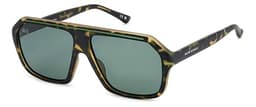
Privé Revaux Clevelander/S Rectangle
The straightforward everyday replacement: a clean polarized acetate rectangle with 100% UV protection stated on the listing, and understated enough to suit most faces.
Price as of October 7, 2026. #ad How we’re funded
Frame material: Cellulose acetate. Specs read from the listing on July 21, 2026.
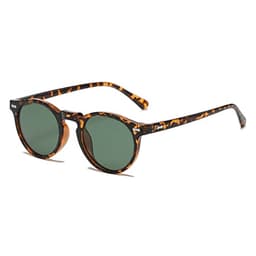
Gleyemor Vintage Round (Tortoise Acetate)
If your last pair died from being treated casually, this is the low-stakes version - stated hand-crafted acetate, polarized, UV400, at a price that survives being lost.
Frame material: Cellulose acetate (hand-crafted, per listing). Specs read from the listing on August 19, 2026.
General guidance, not eye-care advice. Acetate Club is written by an eyewear enthusiast, not an optician or optometrist. Sunglasses are sun protection, not a substitute for an eye exam — if you have a vision or eye-health concern, or need prescription lenses, see a qualified professional.
Frequently asked questions
Do sunglasses expire or lose their UV protection?
Not on a schedule, and the widely repeated claim that UV protection wears out after about two years is not something you should treat as a rule. In most lenses the ultraviolet filter is built into the lens material or bonded into it rather than sitting on the surface as a wearable coating, so it does not simply evaporate with time. What does happen is physical damage: deep scratching, crazing from heat or solvents, and delamination of surface coatings can all compromise a lens. The honest answer is that sunglasses fail from damage, not from age - and damage is something you can inspect for.
How often should you replace sunglasses?
When they fail a check rather than when a calendar says so. A well-made acetate frame with an undamaged lens can serve for many years, and the whole argument for buying acetate is that the frame is serviceable - hinges re-seated, surface re-polished, fit reset. Replace when the lens is deeply scratched in your line of sight, when the lens surface is crazed or cloudy, when the frame is heat-warped, or when a UV meter test says the protection is no longer there. Any of those is a real reason; the passing of two summers is not.
Do scratched lenses still protect your eyes?
Usually the UV filter is still doing its job, because it is generally in the lens material rather than on the scratched surface - but that is not the whole story. Deep scratches scatter light, which degrades the view, causes glare and makes you squint, and a lens you squint through is one you stop wearing. There is also a real risk that whatever damaged the lens damaged a coating too. If the scratches sit in your line of sight, replace the lens or the pair; if they are at the edge and you do not notice them, they are cosmetic.
How do I know if my old sunglasses are still safe?
Get them tested. Most optical shops keep a UV photometer on the counter, will check a pair in under a minute, and usually do it free whether or not you bought the glasses there. That is the only way to actually measure rather than guess, and it is genuinely underused - if you have several old pairs in a drawer, take them all in at once. Alongside that, inspect for the physical failures: crazing, cloudiness, deep scratches in your line of sight, and any heat warping in the frame.
Sources
- American Academy of Ophthalmology — Recommended Types of Sunglasses — AAO on choosing sunglasses that block 99–100% of UV-A and UV-B (UV400) (accessed July 21, 2026)
- U.S. FDA — Tips to Stay Safe in the Sun: From Sunscreen to Sunglasses — FDA: lens darkness does not indicate UV protection; look for a 100% UV / UV400 label (accessed July 21, 2026)
- National Eye Institute — Protecting your eyes from the sun's UV light — NEI on UV eye risks and choosing sunglasses that block UV-A and UV-B (accessed July 21, 2026)
- ISO 12312-1:2022 — Eye and face protection — Sunglasses for general use — The international standard for general-use sunglasses: UV filtering, filter categories and transmittance (accessed July 21, 2026)
Keep reading
How to check if sunglasses really block UV
The optician's meter test that settles whether an old pair still protects you.
Read the guideCan acetate frames be repaired?
Before you replace, most frame damage is fixable. Here is what is and isn't.
Read the repair guideHow to care for acetate frames
The habits that push replacement years further out.
Read the care guideWhat does UV400 mean?
The specification an ageing pair either still meets or doesn't.
Read the explainer