Clear and Transparent Acetate Sunglasses
A clear frame shows every edge, every polish mark and every fingerprint. That's exactly why the material matters more here than in any other colorway.
How this is funded:we earn a commission if you buy through our links, at no extra cost to you. It never changes which product we recommend, and we’ll tell you when we’d skip one. Full disclosure.
Clear frames are the most revealing thing you can put on your face, in the literal sense: there is no pigment layer, no pattern and no gloss-black surface hiding anything. Every edge, every hinge seat, every polish mark and every molding seam is on display. That makes a transparent frame a genuinely useful test of whether a maker knows what it is doing — and a harder colorway to buy carelessly.
Why clear frames expose the material
Clear acetate is the same cellulose sheet stock as tortoise, honey or havana, minus the pigment layers. That is the entire difference. But removing the color removes the camouflage, and two things become visible that you would never notice on a dark frame.
The first is the edge polish. A properly finished acetate frame has had its milled edges tumbled and polished to a slight, even roundness that catches light. On a black frame you register it subconsciously as “expensive.” On a clear frame you can see straight through the edge, so a rushed polish or a leftover mill mark is obvious.
The second is how the hinge sits. Genuine acetate frames have metal hinges pressed into the material; injection-molded frames have them molded in place or screwed to the surface. On a transparent frame you can often see the hinge plate through the acetate, which is about as direct a material check as eyewear offers. The rest of the checks are in our how to tell if frames are real acetate guide.
The honest problem with clear frames
Two of them, and neither is a dealbreaker if you know going in.
They show everything you touch. Fingerprints, skin oil, sunscreen, the smudge from pushing them up your nose. A dark frame accumulates exactly the same film and simply does not advertise it. This is a cleaning-habit problem rather than a quality problem, and the fix is a microfiber cloth and the routine in our cleaning guide.
They show age.Acetate’s surface changes slowly with heat, UV and accumulated skin oil, and on clear acetate that change reads as yellowing — usually first at the bridge and temple tips, where your skin sits. On tortoise it disappears into a pattern that is already amber and brown. Our guide on whether acetate frames yellow covers what is reversible, and most early discoloration comes back with a polish.
Who clear frames actually suit
The genuinely useful property of a clear frame is that it reduces visual weight without reducing size. A large frame in gloss black is a strong statement; the same shape in clear reads considerably softer, because your face shows through it. That makes clear the easiest route into oversized frames for anyone who likes the coverage but finds the black version too severe.
It cuts the other way too. If you want the frame to define your face — a strong angular shape adding structure to a round face, say — clear is working against you, because the definition comes from contrast and clear removes it. In that case buy the shape you need in a color that shows up.
Warm skin tones tend to look better in a slightly warm clear — champagne, smoke, pale honey — than in an ice-white transparent, which can read cold. That is taste rather than a rule, but it is the one that gets mentioned most when people are disappointed by a clear frame that looked good online.
What to look for in a listing
- The words “cellulose acetate.” Clear is the colorway where sellers are vaguest, because a transparent injection-molded frame photographs almost identically. If the listing will not say it, treat the material as unconfirmed rather than assuming.
- A stated UV standard.Non-negotiable at every price. A pale frame with a light lens can read as casual eyewear rather than sun protection, and the lens still has to do its job — see what UV400 means.
- Photographs from an angle. Straight-on product shots hide edge finish. An angled shot showing the temple and the hinge tells you far more about a clear frame than the front view does.
- The lens tint. On a clear frame the lens color is the whole personality of the pair, because the frame contributes almost none. Our lens tint guide covers what each tint actually does.
Below are the two clear frames we would point people at, and we have been explicit about which one states its material and which one does not — because on this of all colorways, that is the thing worth knowing.
The clear frames worth buying
Two picks, chosen on a deliberately narrow test: does the listing tell you what the frame is cut from? One does and one doesn't, and we've said which is which rather than quietly ranking them as equals.
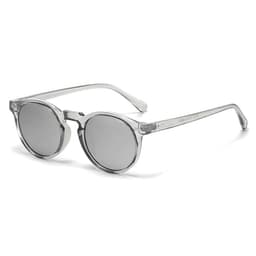
Gleyemor Vintage Round (Clear Acetate)
The pick, because it states hand-crafted acetate on a clear colorway - which is genuinely uncommon in this price band. A round shape that softens a square or angular face.
Price as of October 7, 2026. #ad How we’re funded
Frame material: Cellulose acetate (hand-crafted, per listing). Specs read from the listing on August 19, 2026.
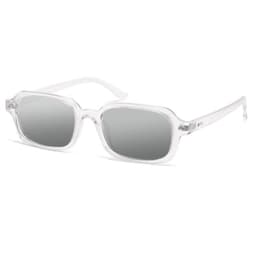
SOJOS Trendy Rectangle (Transparent)
The better-looking shape of the two if you have a round or oval face, and polarized. But the listing never states the frame material, so buy it on looks rather than on material.
Frame material: not published by the seller. Specs read from the listing on August 19, 2026.
Frequently asked questions
Are clear sunglasses frames a good idea?
They suit some people extremely well and they are the least forgiving colorway to own. A transparent frame softens the visual weight of a large shape, which is why an oversized clear frame reads far lighter on the face than the same shape in black - useful if you want presence without severity. The trade-off is maintenance: clear acetate shows fingerprints and skin oil immediately, and it shows age more than pigmented acetate does. If you case your sunglasses and rinse them occasionally, a clear frame looks striking for years.
Do clear acetate frames turn yellow?
They can, and they show it more than any other colorway because there is no pigment to hide behind. The causes are heat above all, then UV exposure, then skin oil and product soaking into the surface at the bridge and temple tips. The good news is that a lot of early discoloration lives in the surface layer, and an optician's polish removes a whisker of material and takes much of it back. Keeping the frame out of hot cars does more than any product you can buy.
How do I know a clear frame is really acetate?
Read the listing for the words cellulose acetate, because clear is the colorway where sellers are vaguest - a transparent injection-molded frame photographs almost identically to a transparent acetate one. In the hand the differences are obvious: acetate has real weight, metal hinges set into the material rather than molded, and edges that have been polished to a slight roundness rather than left with a mold seam. If the listing will not name the material, treat it as unconfirmed rather than assuming.
What face shapes suit clear frames?
Clear is a colorway rather than a shape, so the usual fit logic still applies: angular frames flatter round faces, rounder frames flatter angular ones. What clear changes is visual weight. Because a transparent frame recedes, you can wear a bigger or bolder shape than you normally would without it dominating your face - which makes clear a genuinely good route into oversized frames for people who find them too much in black. The reverse also holds: a small clear frame can almost disappear, which may not be the effect you wanted.
Sources
- Mazzucchelli 1849 — the cellulose-acetate maker for eyewear — Background on cellulose acetate as the traditional material for spectacle and sunglass frames (accessed July 21, 2026)
- American Academy of Ophthalmology — Recommended Types of Sunglasses — AAO on choosing sunglasses that block 99–100% of UV-A and UV-B (UV400) (accessed July 21, 2026)
Keep reading
Do acetate frames turn yellow?
The one real drawback of a clear frame, and how much of it you can prevent.
Read the guideBest tortoiseshell acetate sunglasses
The opposite end of the colorway question - the most forgiving finish acetate offers.
See the tortoise picksHow to tell if frames are real acetate
Doubly useful on clear frames, where the material is on full display.
Check before you buyTortoiseshell vs black sunglasses
If clear feels like a step too far, the other two neutral options compared.
Read the comparisonBest acetate sunglasses
The full cross-brand roundup if colorway isn't your starting point.
See the picks