Acetate vs Nylon Frames
Nylon is lighter, springier and better at taking a hit — which is why sports eyewear is built from it. Acetate is the one that carries real layered color and the only one an optician can re-set to your face. The surprise is how often you are buying nylon without being told.
How this is funded:we earn a commission if you buy through our links, at no extra cost to you. It never changes which product we recommend, and we’ll tell you when we’d skip one. Full disclosure.
The short answer: nylon if the frame has a job to do — sport, safety, heat, sweat, anything that will get knocked — and acetateif you want real layered color, a substantial front, and a frame an optician can fit to your face. And one practical warning before either: nylon frames are frequently sold without the word nylon appearing anywhere a buyer looks. The clearest example is in the biggest name on the shelf. Ray-Ban’s own listing gives the frame material of the New Wayfarer RB2132 as nylon, while the Original Wayfarer RB2140 is cellulose acetate. Two models, one family, sold side by side, and the material is the difference nobody mentions.
This page completes our material comparisons. The site already covers acetate vs plastic in general, acetate vs TR90 (TR90 is a nylon, and the closest neighbour to this page), acetate vs polycarbonate, acetate vs propionate, acetate vs zyl, acetate vs metal, acetate vs titanium and acetate vs wood. Nylon deserves pulling out of the general “plastic” bucket for the same reason titanium deserved pulling out of “metal”: it behaves genuinely differently from the molded plastics most cheap frames are made of.
The comparison
The nylon column below is drawn from the optometry frame-materials reference cited in our sources, which covers blended nylon directly, plus Ray-Ban’s own published material for the RB2132. The acetate column is the material’s own characteristics, documented across this section of the site.
| Property | Acetate | Nylon |
|---|---|---|
| How it is made | Cut and milled from a pressed sheet | Injection-molded from pellets |
| Weight | Heavier; thickness is part of the look | Lighter — the main reason sport frames use it |
| Impact | Good in thick sheet; thin sections are the weak point | Handles impact and motion better than standard plastics |
| Sweat and humidity | Does not corrode; surface shine can dull with skin oils | Resists sweat and moisture well |
| Flex | Rigid until heated, then re-settable | Springy — returns to its molded shape |
| Color and pattern | Layered tortoise, havana, crystal — through the material | Surface color and coatings only; may fade over time |
| Adjustability | The whole front can be heat-adjusted by an optician | Temples bend a little; the front is essentially fixed |
| Repair | Screws and hinges yes; a snapped front, realistically no | Hinges are often molded in, which limits repair |
| Typical shapes | Thick wayfarers, cat-eyes, rounds, browline brows | Wraparounds, sport, safety eyewear |
| Cost | Budget to designer — the widest range of any frame material | Mostly budget to mid; cheap to mold at volume |
Where nylon genuinely wins
Weight and spring. A molded nylon front can be thin and still hold its shape, and it flexes rather than resisting. On a wraparound that has to curve hard around the side of the head, that is not a nicety — it is the only practical way to build the shape. It is also why a nylon frame survives being sat on more often than a thin acetate one does.
Sweat and heat. The reference we cite is explicit that blended nylon resists sweat and moisture well. If you want one pair for running, cycling, fishing or working outdoors in summer, nylon is the correct material and acetate is the sentimental choice. Our pages on goodr and Knockaround cover that category honestly, including where their frames are polycarbonate rather than nylon.
Price at volume. Molding is cheaper than cutting, milling, tumbling and hand-polishing. A nylon frame at $25 is a normally-made frame; an acetate frame at $25 has had corners cut somewhere, usually in the finish and in the hinge.
Where acetate wins
Color with depth. This is the whole argument and it is visible from two feet away. Acetate sheet is built up in layers before the frame is cut from it, so a tortoise or havana pattern runs through the thickness of the material — look at the cut edge of a temple and the pattern continues. A molded nylon frame carries its color on or near the surface, which is why nylon tortoise reads as a print. Mazzucchelli, the Italian house most premium acetate comes from, sells sheet rather than frames for exactly this reason. Our pages on how acetate is made, Italian acetate and how to tell if a frame is acetate cover the process and the test.
A front that can be fitted to you.Heat is acetate’s unique capability. An optician can warm the bridge and open its angle, change the tilt so the lenses sit off your cheeks, and re-bend the temples to your head — in minutes, usually free, often on a frame they did not sell you. A molded frame is the shape it came out of the mold in. If your face is not a standard shape — a wide nose, a low bridge, a large head — that single property outweighs most of the rest of the spec sheet. See how to adjust acetate frames, sunglasses for a big nose and sunglasses for a low nose bridge.
Substance, and the shapes that need it. A wayfarer, a thick cat-eye and a browline brow all depend on a front with real thickness, and thickness is what cut sheet gives you. Try to mold the same shape in nylon and it either looks hollow or needs a wall thickness that defeats the weight advantage. Our thick frame sunglasses roundup is built on that point.
Serviceability. Acetate frames use metal hinges set into the material, secured with screws, which means a loose or lost screw is a cheap fix — see can acetate frames be repaired. Molded frames often integrate the hinge into the plastic, and when that fails the frame is finished. ISO 12870 is the standard that governs how spectacle frames are tested for durability; note it does not cover sunglass filters, which fall under ISO 12312-1.
How to tell which one you are buying
Three checks, in order of reliability. First, read the stated material. “Cellulose acetate” is acetate; “nylon”, “polyamide”, “TR90” and “Grilamid” are all nylons; plain “plastic” or “PC” is neither and usually means polycarbonate. If a listing states nothing, treat the material as unknown rather than as acetate — that is exactly how we record it in our own product entries.
Second, look at the cut edge of the temple. Pattern that continues into the thickness means sheet; pattern that stops at the surface means molding. Third, look at the hinge. A metal hinge set into the material with visible screws points to acetate; a hinge molded into the plastic or a bare pin points to nylon or polycarbonate. None of the three is infallible on its own; together they are reliable, and the full method is in how to tell if a frame is acetate.
One last thing worth saying plainly, because it is the reason this page exists: neither material tells you anything at all about UV protection. That comes from the lens, and the only trustworthy signal is a stated 100% UV or UV400 figure — darkness and frame material are both irrelevant to it. Our guides to checking UV protection and UV400 are the two to read before you spend anything.
If acetate is the right call for you
We do not stock a nylon frame to recommend - this is an acetate site, and we will not add a product we have not researched just to balance a comparison. These three are the acetate frames where the material's advantages show most clearly: layered color through a cut sheet, a front an optician can re-set, and a frame built to be serviced. Prices are live and dated.
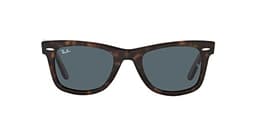
Ray-Ban Original Wayfarer RB2140
The cleanest comparison on the market, because it is the same brand and almost the same shape: the Original Wayfarer RB2140 is thick cellulose acetate, while Ray-Ban lists the lighter New Wayfarer RB2132 as nylon. If you want the Wayfarer look in acetate, the 2140 is the model number to buy. Published in 50-22 and 54-18.
Price as of October 10, 2026. #ad How we’re funded
Frame material: Cellulose acetate. Specs read from the listing on July 21, 2026.
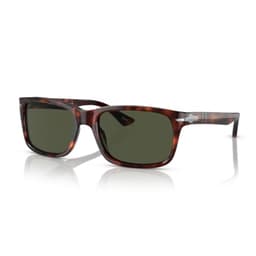
Persol PO3048S Rectangular
What nylon cannot do at any price: Italian acetate, hand-polished, with the color depth that comes from a pattern running through the layers of a cut sheet rather than sitting on a molded surface. A 58 mm eye, so it runs large.
Price as of October 10, 2026. #ad How we’re funded
Frame material: Italian cellulose acetate. Specs read from the listing on July 21, 2026.
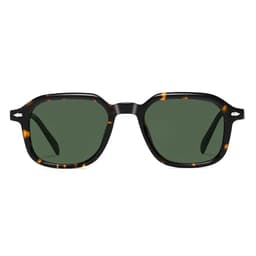
SOJOS Acetate Rectangle (Handmade, Polarized)
Proof that the material choice is not a budget question. Stated cellulose acetate with metal hinges, polarized and UV400, at a price well below most molded nylon frames - which is the point: acetate is cheap to buy and expensive to finish well.
Price as of October 10, 2026. #ad How we’re funded
Frame material: Cellulose acetate. Specs read from the listing on July 21, 2026.
Frequently asked questions
Is nylon better than acetate for sunglasses frames?
For impact, weight and sweat, nylon is better. An optometry frame-materials reference describes blended-nylon frames as commonly used for sports and safety eyewear including wraparound styles, says the material handles impact and motion better than standard plastics, and notes it resists sweat and moisture well. What nylon cannot do is carry color and pattern through the material, be cut from sheet into a thick substantial front, or be heat-adjusted by an optician. For a sport or safety frame, buy nylon. For a frame you will wear daily and want fitted to your face, acetate.
Is the Ray-Ban New Wayfarer acetate or nylon?
Nylon. Ray-Ban's own listing for the New Wayfarer RB2132 gives the frame material as nylon - not acetate and not propionate. The Original Wayfarer RB2140 is the cellulose acetate model in the family. This catches a lot of buyers out, because the two models look closely related and are sold side by side; if you specifically want acetate from that line, the model number to look for is 2140.
Can nylon frames be adjusted?
The temples and tips can be bent a little, but the front cannot be meaningfully re-set, and that is the practical difference. Acetate can be warmed by an optician so the bridge angle, the tilt and the temple bend are changed to your actual head, usually in minutes and often for free. A molded nylon frame is the shape it was molded in. If your face is not a standard shape, that single capability is worth more than most of the spec sheet.
Is nylon the same as TR90?
TR90 is a nylon - a thermoplastic polyamide sold under that trade name, and the most common nylon you will meet in eyewear listings. So everything on this page applies to TR90 too: light, springy, good at taking a hit, resistant to sweat, molded rather than cut, and limited to surface color. Our acetate vs TR90 page covers that specific comparison in more detail, including how to read a listing that says TR90 when you were expecting acetate.
Does nylon fade or go brittle?
The optometry reference we cite is specific that plastic frames in general break more easily than metal and may fade in color over time, and because nylon frames carry their color on or near the surface, a faded nylon frame cannot be polished back - there is no pigmented depth underneath to reveal. Acetate's equivalent failure is different: it does not fade in the same way and a dulled surface can often be re-polished, but a genuinely snapped acetate front cannot be meaningfully repaired.
Sources
- Ray-Ban — New Wayfarer Classic RB2132, Polished Black / G-15 Green (52-18) — Ray-Ban's listing for the New Wayfarer: frame material given as nylon, square shape, 52-18 and 55-18 fittings with 145 mm temples, lens height 37.6 mm at 52-18 and 40.8 mm at 55-18 (a 58-18 Color Mix variant is also listed), plus an RB2132F low-bridge version in 55-18 (accessed October 5, 2026)
- Specialty Vision — Eyeglass Frame Materials (optometry-practice reference) — On titanium frames: very strong, lightweight and corrosion-resistant, suited to a thin, light profile and small or delicate styles; hypoallergenic, which matters for patients with a nickel allergy; corrosion resistance handles sweat, humidity and daily handling without pitting; a higher cost than basic metals. On blended-nylon frames: commonly used for sports and safety eyewear including wraparound styles, handles impact and motion better than standard plastics, and resists sweat and moisture well. On plastic frames: the most popular choice for affordability and styling, but they break more easily than metal and may fade in color over time, while Italian zyl acetate is known for its quality, hand-polished finishes and multi-layer color effects, and lasts many years with proper care (accessed October 11, 2026)
- Mazzucchelli 1849 — the cellulose-acetate maker for eyewear — Background on cellulose acetate as the traditional material for spectacle and sunglass frames (accessed July 21, 2026)
- ISO 12870:2024 — Ophthalmic optics — Spectacle frames — Requirements and test methods — The spectacle-frame construction and durability standard. Not a biodegradability standard, and not applicable to sunglasses with afocal filters (ISO 12312-1 applies there) (accessed September 7, 2026)
- American Academy of Ophthalmology — Recommended Types of Sunglasses — AAO on choosing sunglasses that block 99–100% of UV-A and UV-B (UV400) (accessed July 21, 2026)
Keep reading
Acetate vs plastic frames
The broader comparison nylon sits inside.
Read the guideAcetate vs TR90
TR90 is a nylon. The closest comparison to this one.
Read the guideAcetate vs propionate
Cut sheet against molded, in the same chemical family.
Read the guideOriginal vs New Wayfarer
The acetate 2140 against the nylon 2132, in full.
Read the comparison