Tortoiseshell vs Black Sunglasses
Same frame, two colorways, and a decision people stall on for weeks. What each one does for your face and your wardrobe - and why acetate favors one of them.
How this is funded:we earn a commission if you buy through our links, at no extra cost to you. It never changes which product we recommend, and we’ll tell you when we’d skip one. Full disclosure.
This is the decision people stall on longest, and it is more consequential than it looks — not because one is right, but because the two do genuinely different things to a face. Black draws a hard outline. Tortoise fills a shape with a warm mid-tone. Same frame, same fit, two quite different results.
There is also a material angle that only applies on an acetate frame, and it is the reason this site has a view.
What black does
Black is maximum contrast. Against any skin tone it is the darkest thing on your face, which means the frame reads as a distinct object rather than as part of you. That is exactly right when the frame is doing structural work: an angular black frame adding definition to a round face gets more done than the same shape in a soft tone, because the definition comes from the contrast.
Black is also the safe wardrobe answer. It cannot clash. If you own a lot of cool tones, monochrome, navy and gray, a black frame slots in without thought.
The costs are real too. Gloss black shows every fingerprint, every speck of dust and every scratch as a pale line. And on a large frame it can be genuinely severe — a big black frame is a strong statement whether or not you wanted to make one.
What tortoise does
Tortoiseshell — havana, amber, honey, whatever a given maker calls it — is a warm mid-tone with variation in it. That does three useful things.
It softens. Because it is lighter than black and closer to the tones already in most people’s skin and hair, it reads as part of the face rather than a frame around it. People who feel that glasses make them look stern often find tortoise fixes it entirely.
It hides wear. A varied pattern camouflages small scuffs, dust and fingerprints, and it disguises the gradual surface change acetate goes through with heat and skin oil — the change that shows up as yellowing on pale frames vanishes into a pattern that is already brown and amber.
And it proves the material. This is the part specific to acetate.
The material argument
Acetate’s defining property is that color is built into the sheet in layers, running through the entire thickness of the frame. On a black frame you cannot see that at all — black acetate and black injection-molded plastic look essentially identical in a photograph, and fairly similar in the hand until you feel the weight.
On tortoise you can see it immediately. Real acetate tortoise has depth: the pattern shifts as light moves across it, continues through a cut edge, and never repeats in an obviously printed way. Cheap tortoise is a pattern applied to a surface— flat, repeating, and stopping dead at an edge or a hinge. That is the easiest material check in eyewear, and it is why a tortoise frame is a better test of whether a maker is telling the truth than a black one. Our five checks lean on it heavily, and the tortoiseshell roundup goes deeper.
Put bluntly: if you are paying for acetate and you buy black, you have bought the one colorway where the material is invisible. That is a perfectly reasonable choice — you are still getting the weight, the adjustability and the serviceability — but you are not getting the part you can see.
Choosing between them
Take black if: you want the frame to do structural work on a soft or round face; your wardrobe is cool-toned or monochrome; you want the most formal, least noticeable option; or you have high-contrast coloring that carries it well.
Take tortoise if: you have warm skin or hair tones; you want the frame to soften rather than define; the frame will be worn hard and you would rather it aged gracefully; or you are buying acetate specifically and want to see what you paid for.
Take clear if: neither of those is you. It is the third neutral, it reduces visual weight without reducing size, and our clear frames guide covers the maintenance trade-off honestly.
One last practical note, because it comes up constantly with gifts: if you are buying for someone else and cannot ask, tortoise is the safer bet. It flatters a wider range of coloring, it reads as considered rather than default, and it is harder to already own an identical pair of. That is why nearly every pick on our gift roundup is offered in it.
If you want to go past “tortoise is safer” and work out which of the two suits you specifically, our guide to choosing a frame color for your skin tone gives you a two-minute undertone test and the colorway families that go with each result — including why black is the most demanding choice on very fair, low-contrast coloring.
One of each, to make it concrete
Two budget frames in the same price band, one in each colorway. If you are trying to decide in the abstract, looking at the two side by side settles it faster than any amount of reading.
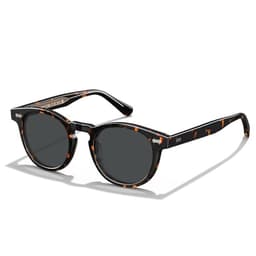
CARFIA Vintage Round (Hand-Crafted Acetate)
The tortoise case: a hand-crafted acetate vintage round where the layered pattern does the work. This is the colorway that shows what acetate can do that molded plastic cannot.
Frame material: Cellulose acetate. Specs read from the listing on September 29, 2026.
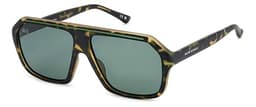
Privé Revaux Clevelander/S Rectangle
The neutral case: a clean polarized acetate rectangle available in classic finishes, understated enough to disappear into whatever you already wear.
Price as of October 7, 2026. #ad How we’re funded
Frame material: Cellulose acetate. Specs read from the listing on July 21, 2026.
Frequently asked questions
Are tortoiseshell or black sunglasses more versatile?
Black is more universally neutral; tortoise is more universally flattering. Black goes with anything in the strict sense that it clashes with nothing, which is why it is the default. But tortoise is a warm mid-tone that sits closer to most people's skin and hair, so it tends to soften a face where black draws a hard line around it. If you want the frame to disappear into your wardrobe, black. If you want it to look like part of your face rather than an object on it, tortoise.
Which color suits my skin tone?
As a starting point rather than a rule: warm skin tones - golden or olive undertones, brown or auburn hair - generally look better in tortoise, honey and havana, because the frame echoes tones already in your face. Cooler skin tones with ashier hair often carry black more comfortably, because the contrast reads intentional rather than harsh. High-contrast coloring, like dark hair against fair skin, can wear black very well. The reliable test is a photograph in daylight, not a mirror under a shop light.
Does tortoiseshell look cheap?
Bad tortoiseshell does, and it is easy to spot. A cheap frame prints or sprays a tortoise pattern onto the surface, so it looks flat, repeats visibly, and stops abruptly at an edge or a hinge. Real acetate tortoise is built from pigment layers running through the full thickness of the sheet, so the pattern continues through a cut edge and shifts as light moves across it. That is the single easiest material check in eyewear, and it is why tortoise is a better test of a frame's quality than black is.
Which hides scratches and wear better?
Tortoise, comfortably. A varied brown and amber pattern camouflages small scuffs, and it disguises the slow surface changes acetate goes through with heat and skin oil. Gloss black shows every scratch as a light line and shows dust and fingerprints more readily. Neither hides a dulled polish - when the surface shine goes flat both look tired - but that is fixable with an optician's polish. If your sunglasses live a rough life, tortoise ages more gracefully.
Sources
- Mazzucchelli 1849 — the cellulose-acetate maker for eyewear — Background on cellulose acetate as the traditional material for spectacle and sunglass frames (accessed July 21, 2026)
Keep reading
Best tortoiseshell acetate sunglasses
The full tortoise roundup, and how to tell layered from printed.
See the tortoise picksClear and transparent acetate sunglasses
The third neutral option, if neither tortoise nor black is quite it.
See the clear picksWhat is acetate?
Why layered color through the material is the whole point of the stuff.
Read the explainerHow to tell if frames are real acetate
Printed tortoise versus layered tortoise is the easiest check there is.
Check before you buyBest acetate sunglasses
The cross-brand roundup, once you have settled on a colorway.
See the picks