Choosing a Frame Color for Your Skin Tone
Two minutes to find your undertone, then the colorways the eyewear trade pairs with it - plus an honest note on how much of this is convention rather than fact, and when to ignore it.
How this is funded:we earn a commission if you buy through our links, at no extra cost to you. It never changes which product we recommend, and we’ll tell you when we’d skip one. Full disclosure.
Short version: find your undertone (not how light or deep your skin is, the base beneath it), then pick a colorway from the same family. Warm undertones sit well with tortoise, havana, honey and amber; cool undertones with black, grey, crystal and smoke; neutral undertones with almost anything, which is genuinely an advantage. And one honest caveat up front: this is convention, not measurement. It is a real pattern in how the eyewear trade works, it encodes something true about contrast, and it is not a rule you are obliged to obey.
Find your undertone in two minutes
The wrist test. In daylight, look at the veins on the inside of your wrist. Greenish suggests a warm undertone, blue or purple suggests cool, a mixture suggests neutral. It is crude and it works on most people.
The metal test. Hold something gold and something silver against your skin, one at a time. One usually looks like it belongs and the other looks slightly borrowed. Gold reading better suggests warm; silver suggests cool; both looking fine suggests neutral.
The sun test. Skin that tans fairly readily tends to read warm; skin that goes pink before it goes brown tends to read cool. Not definitive — and worth saying plainly that neither tanning nor burning is a reason to skip UV protection, which is about your eyes rather than your skin and which the American Academy of Ophthalmology treats as the one non-negotiable in choosing sunglasses.
Crucially, undertone is independent of depth. Very fair skin can be warm and very deep skin can be cool. Advice organized around light skin and dark skin tends to be wrong for exactly that reason, which is why the tests above are about base rather than brightness.
Warm undertones
Golden, olive, peachy or yellow base. The colorways that work with it: tortoise and havana, honey, amber, warm brown, olive, gold, cream and off-white. The logic is simple — these share the yellow-to-red base your skin has, so the frame reads as continuous with you rather than stuck on top.
Tortoise is the most forgiving option for a warm undertone, and acetate is the reason it looks the way it does. Cellulose acetate can be laminated in layers before the frame is cut from the sheet, so a tortoise pattern contains several browns, ambers and near-blacks at once and shifts as light passes through the edge — Mazzucchelli, the Italian maker that supplies much of the eyewear trade, is in the business of exactly that. A printed pattern on molded plastic cannot do it, which is the difference our page on acetate vs plastic is about, and tortoise shell acetate sunglasses shows what the layering looks like across price bands.
What to be careful of: a very cold, blue-grey black can look stark against warm skin, and pure white frames tend to grey out a golden undertone. If you want a dark frame and you are warm-toned, a deep warm brown or a near-black tortoise does the same job more kindly.
Cool undertones
Pink, red or blue base. The conventional pairings: black, grey, gunmetal, crystal and smoke, navy, plum, and tortoise in its cooler grey-brown versions rather than its honey ones.
Black is the purest expression of this and also the most demanding. It produces maximum contrast with the face, which is striking on cool skin with strong features and can read as severe on very fair skin where hair, brows and eyes are all low-contrast. If black feels like too much, smoke or a translucent grey crystal gets most of the same effect with the edge taken off. Our comparison of tortoise vs black sunglasses goes through the two defaults properly.
What to be careful of: orange-leaning honey and amber frames tend to fight a pink undertone, and gold hardware can look slightly off against cool skin where silver or gunmetal looks intentional. On a full-acetate frame that is rarely an issue, but it is worth noting on combination frames — see acetate and metal frames.
Neutral undertones, and the universal answer
If the tests came out mixed, you have the easiest version of this problem: most colorways will work and you can choose on shape and mood instead. The two genuinely universal options are worth knowing anyway.
Crystal and clear frames take their color from what is behind them, so they adapt to any undertone. They are also the least committal frame you can own, which is either the appeal or the drawback depending on what you want from eyewear — our page on clear frame acetate sunglasses covers both sides, and the one real caveat (a clear frame shows every fingerprint and yellows faster in cheap material, which is covered in do acetate frames turn yellow).
Mid-tone tortoise is the other. Because it contains warm browns and cooler near-blacks in the same frame, it finds something to agree with on most skin. If you own one pair of sunglasses and do not want to think about this again, that is the pair.
Hair and eyes change the answer more than people expect
Skin undertone is one input; the other two are hair and eye color, and they are really a question about contrast. If your hair, skin and eyes are close in depth — fair skin, light hair, light eyes — a very dark frame introduces a level of contrast your face does not otherwise have, which is a choice rather than a mistake, but it will be the first thing anyone notices. If your natural contrast is already high — deep hair, light skin, or deep skin with light eyes — a strong frame sits in proportion with it.
The practical version: decide whether you want the frame to be the loudest thing about your face. If yes, go darker and more saturated than your undertone family suggests. If no, stay within one or two steps of your own depth. Tortoise is popular precisely because it is a middle setting.
Where color sits in the order of decisions
Last, honestly. A frame that is the wrong width for your face, or the wrong geometry for its proportions, looks wrong in every colorway — while a frame that fits looks good in most of them. So work in this order: fit (our guide to how sunglasses should fit and reading sunglasses sizes), then shape against your face (how to measure your face shape, then the relevant page among our round, square, oval and heart guides), then lens and protection (UV400 stated, because the FDA is explicit that lens darkness tells you nothing about UV — see checking UV protection), and then color, to pick between the two or three frames that have survived the first three filters.
One last thing worth saying for a page like this: depth of color is a property of the material, not of the shade you choose. A $30 black acetate frame and a $300 black acetate frame are not the same black, because the expensive sheet is thicker and the pattern runs through it rather than sitting on the surface. Our page on why acetate sunglasses are expensive explains where that goes, and how to tell if frames are real acetate is the check to run when a cheap frame claims a colorway it cannot really deliver.
One frame for each undertone
Three acetate frames whose colorways are recorded on their own listings - a warm tortoise, a cool black-and-grey and a neutral crystal. The first and third are the same shape in two colorways, which is the cleanest way to see what a colorway alone changes. Prices are live and dated.
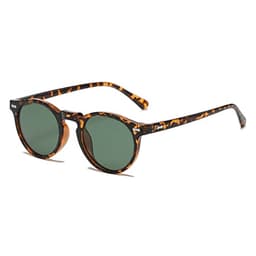
Gleyemor Vintage Round (Tortoise Acetate)
The warm-undertone pick: a hand-crafted acetate vintage round in tortoise, where the brown-and-amber mottling sits alongside golden and olive undertones rather than against them. Polarized, and the cheapest way to test whether a warm colorway suits you before spending properly.
Price as of October 5, 2026. #ad How we’re funded
Frame material: Cellulose acetate (hand-crafted, per listing). Specs read from the listing on August 19, 2026.
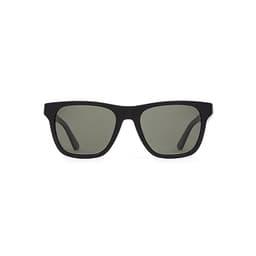
OTIS Guilt Trip X Eco (Black / Grey Polarized)
The cool-undertone pick: OTIS lists this one in black with a grey polarized mineral lens, which is the combination the trade pairs with pink and blue undertones. A large 57 mm square in eco-acetate - the most expensive frame here, and the most emphatic.
Price as of October 5, 2026. #ad How we’re funded
Frame material: Eco-acetate (OTIS states it is derived from cotton seeds and plant matter). Specs read from the listing on September 22, 2026.
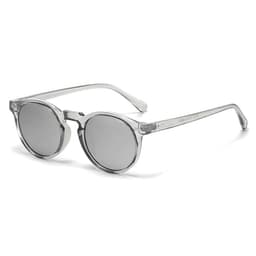
Gleyemor Vintage Round (Clear Acetate)
The neutral option: the same hand-crafted acetate round in clear. A crystal frame takes its color from whatever is behind it, which is why it reads as neutral on almost everyone - and why it is the safest answer when the undertone test comes out ambiguous.
Price as of October 5, 2026. #ad How we’re funded
Frame material: Cellulose acetate (hand-crafted, per listing). Specs read from the listing on August 19, 2026.
Frequently asked questions
How do I know if I have a warm or cool skin tone?
Look at the veins on the inside of your wrist in daylight. Greenish veins suggest a warm undertone, bluish or purple veins a cool one, and a mix means you are neutral. Two cross-checks: hold a piece of gold jewelry and a piece of silver against your skin and see which looks like it belongs, and think about how you react to sun - skin that tans more readily tends to read warm, skin that pinks tends to read cool. Undertone is independent of how light or deep your skin is.
What sunglasses colors suit warm skin tones?
The eyewear convention pairs warm undertones with tortoise and havana, honey, amber, olive, warm brown, gold and off-white. The reasoning is that these colorways share the yellow-to-red base that a warm undertone has, so the frame sits alongside your skin rather than contrasting with it. Tortoise acetate is the single most forgiving option, because a layered tortoise contains several of those shades at once.
What sunglasses colors suit cool skin tones?
Black, grey and gunmetal, crystal and smoke, navy, plum and true tortoise with a cooler grey-brown base. The convention is that cool undertones have a pink or blue base, and frames in the same family read as deliberate against it. Black is the strongest version of this and also the least forgiving - it creates maximum contrast, which is striking on cool-toned skin and can look severe on very fair skin with little contrast elsewhere.
Is the skin-tone rule actually true?
It is a convention, not a finding, and we would rather say so. There is no measurement behind it of the kind we can cite the way we cite UV guidance - it is a widely shared piece of trade practice that encodes something real about contrast and undertone, and plenty of people look better breaking it. Treat it as a useful starting point when you are shopping online and cannot try frames on, and treat your own eye in a mirror as the final authority.
Does frame color matter more than frame shape?
No. Shape and size do far more work: a frame that is the wrong width for your face or the wrong geometry for its proportions looks wrong in every colorway, while a well-fitting frame looks good in most. Get the fit and the shape right first - our face-shape guides and the sizing guide cover that - then use color to decide between the two or three frames that already fit.
Sources
- Mazzucchelli 1849 — the cellulose-acetate maker for eyewear — Background on cellulose acetate as the traditional material for spectacle and sunglass frames (accessed July 21, 2026)
- American Academy of Ophthalmology — Recommended Types of Sunglasses — AAO on choosing sunglasses that block 99–100% of UV-A and UV-B (UV400) (accessed July 21, 2026)
- U.S. FDA — Tips to Stay Safe in the Sun: From Sunscreen to Sunglasses — FDA: lens darkness does not indicate UV protection; look for a 100% UV / UV400 label (accessed July 21, 2026)
Keep reading
Tortoise shell acetate sunglasses
The warm colorway in full, and how layering creates it.
See the picksTortoise vs black sunglasses
The two defaults, compared properly.
Read the comparisonClear frame acetate sunglasses
Why crystal frames suit almost everyone.
See the picksHow to measure your face shape
The other half of the decision, and the half that matters more.
Read the guide