Acetate and Metal Frames Explained
A lot of frames are part acetate, part metal. Here's which part is which, what the combination actually changes, and when it beats using either material alone.
How this is funded:we earn a commission if you buy through our links, at no extra cost to you. It never changes which product we recommend, and we’ll tell you when we’d skip one. Full disclosure.
Search for acetate sunglasses and you will quickly hit frames that are only partly acetate. The listing says “acetate and metal,” the photo shows a thick top edge over a thin wire bottom, and it is not obvious whether you are buying an acetate frame with a metal detail or a metal frame with an acetate one. The answer matters, because it changes the weight on your nose, the way the frame ages, and what an optician can do for it in five years.
A combination frame is simply a frame that uses both materials deliberately, with each doing the job it is better at. Acetate is cut from solid sheet, so it carries color right through the material and can be milled into a thick, sculptural shape. Metal is drawn into thin wire and holds its form at a fraction of the bulk. Put the acetate where you want presence and the metal where you want to save weight, and you get something neither material does alone.
The four common patterns
Almost every combination frame is one of four arrangements, and once you can name them the listings stop being confusing.
- Acetate brow, metal rim. The browline. A heavy acetate bar across the top, a thin metal wire holding the bottom of each lens. The acetate does all the styling, the metal removes most of the weight.
- Acetate front, metal temples. The full lens surround is acetate, but the arms are wire. Common on lightweight fashion frames, because the temples are where weight is most noticeable behind the ears.
- Metal front, acetate temples or tips. The inverse, and the classic aviator upgrade: a wire front with acetate arms or just acetate tips for grip and warmth against the skin.
- Acetate front with a metal bridge or core. The frame reads as all acetate, but a metal bar reinforces the bridge, or a wire core runs through the temples. This last one is invisible from outside and is the reason you should not heat-bend a temple without knowing what is inside it.
What the mix actually changes
Weight
This is the honest headline benefit. A full acetate frame is milled from solid sheet, and solid sheet is heavy — that heft is part of why a good acetate frame feels expensive in the hand, and part of why it slides down a low nose bridge. Replacing the lower rim or the temples with wire strips out a real chunk of that mass while keeping the acetate on the part of the frame people actually look at. If you like how acetate looks but find full acetate frames heavy, a combination frame is the obvious answer.
Fit and adjustment
Acetate is a thermoplastic: warm it gently and it becomes pliable, then holds the new shape as it cools. Metal is not. It bends cold, holds immediately, and cares nothing for a hair dryer. On a combination frame you are dealing with both behaviors on one object, which is genuinely harder than adjusting either alone. Metal frames also often carry adjustable nose pads, which acetate frames almost never do — so a combination frame can offer a level of nose-fit tuning that a molded acetate saddle bridge simply cannot. Our guide on how to adjust acetate frames covers the heat side; the metal side is best left to someone with pliers and practice.
Repairability
A single-material frame has fewer ways to go wrong. A combination frame adds a join, and joins are where wear concentrates: the two materials expand and contract at different rates through years of hot cars and cold mornings, and eventually a rim seats less tightly or a screw needs attention. None of that is dramatic — it is a small optician job, not a write-off — but it is a real difference. The flip side is that a thin metal lower rim shrugs off knocks that would crack an equally thin acetate rim.
Skin contact
Cellulose acetate is generally kinder against skin than nickel-containing metal alloys, which is a genuine consideration if you have reacted to jewelry before. A combination frame is a useful middle path here: it keeps acetate on the temples and tips, the parts resting against your skin all day, while using metal where it never touches you. If skin sensitivity is your main concern, that specific arrangement is the one to look for rather than combination frames in general.
How to read a listing
Listings are frequently vague, so read them for what they do notsay. “Acetate and metal” with no further detail tells you nothing about which part is which, and the photo is usually a better guide than the text. If the price is very low and the description says only “metal frame with plastic,” treat the plastic as injection-molded rather than acetate until the listing says cellulose acetate specifically — the two look similar in a photograph and feel nothing alike in the hand. Our five checks for real acetate still work on a combination frame; just apply them to the acetate section rather than the whole thing.
One more read: on a browline frame, look at how the acetate brow meets the metal. A brow that wraps and captures the wire looks and wears better than one where the wire is simply screwed to the underside. It is a small detail that separates a well-made combination frame from a cheap one, and it is visible in most listing photos if you zoom in.
So which should you buy?
Choose a combination frame if you want the acetate look without the acetate weight, if you want the option of adjustable nose pads, or if the browline shape is what suits your face — that shape essentially requires the combination to work. Choose all acetate if you want the deepest color and the most substantial feel, if you value having a single material that an optician can heat, re-polish and re-shape indefinitely, or if you simply prefer knowing there is no join to loosen. Neither is the better material; they are answers to different questions. If you are still deciding between the raw materials, our acetate vs metal comparison takes that one head on, and the browline roundup covers the shape that depends on the combination most.
Two follow-ons worth knowing. If the metal half is the part you care about, our acetate vs titanium comparison covers the one metal whose lightness and nickel-free composition genuinely change the calculation. And if you want the browline look but not the two-material join that loosens over seasons, best Ray-Ban Clubmaster alternatives argues for a single-material acetate frame with a heavy top line instead, and names the frames that do it.
The combination frames worth knowing
One archetype and one contrast. The Clubmaster is the combination frame everything else is measured against; the Wayfarer is the all-acetate version of the same era, which makes the trade-off easy to see side by side.
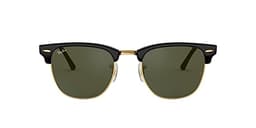
Ray-Ban Clubmaster RB3016
The browline archetype: an acetate brow doing the styling, a metal lower rim doing the weight saving. If you want to understand combination frames, this is the one to hold.
Frame material: Acetate brow with metal lower rim. Specs read from the listing on July 21, 2026.
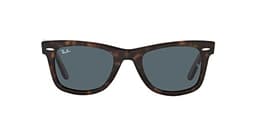
Ray-Ban Original Wayfarer RB2140
The all-acetate control case from the same maker and roughly the same money. Heavier in the hand, one material to service, and no metal-to-acetate join to eventually work loose.
Frame material: Cellulose acetate. Specs read from the listing on July 21, 2026.
Frequently asked questions
What is an acetate and metal frame?
It is a frame built from both materials rather than one, with each doing the job it is better at. The most common pattern is a browline frame like the Ray-Ban Clubmaster: a thick cellulose acetate brow across the top for the bold horizontal line, and a thin metal lower rim holding the bottom of the lens. Other common patterns are acetate fronts on metal temples, metal bridges on acetate fronts, and acetate temple tips on an otherwise all-metal frame. The combination is a design decision about where you want weight, where you want color, and where you want strength.
Are combination frames more or less durable than all-acetate?
Neither, exactly - they fail differently. An all-acetate frame is a single material with one main weakness: a snapped temple or a crack at a thin rim. A combination frame adds a join between two materials that expand and contract at different rates, and that join is the part that eventually works loose after years of daily wear. On the other hand, a metal lower rim resists the kind of impact that would crack a thin acetate rim. In practice both last a long time with reasonable care; the combination frame is the one more likely to need a screw tightened or a rim re-seated.
Can acetate and metal frames be adjusted?
Yes, but the two halves adjust differently, which is worth knowing before you try anything at home. The acetate parts respond to gentle heat, softening enough to reshape and holding the new shape as they cool. The metal parts bend cold and hold immediately, and metal nose pads can be tuned by hand. That mix is exactly why combination frames are better taken to an optician: the heat that makes acetate pliable does nothing useful for the metal section, and heating close to the join is how you loosen it.
Is a combination frame lighter than a full acetate frame?
Usually yes, and that is often the whole point. Cellulose acetate is cut from solid sheet, so a full acetate frame carries real weight - part of why it feels substantial. Replacing the lower half of the rim with a thin metal wire removes a meaningful amount of that material while keeping the acetate where it is visible. That is why browline frames feel notably lighter on the nose than a chunky all-acetate frame of the same size, and why they suit people who like the acetate look but find a full acetate frame heavy.
Sources
- Mazzucchelli 1849 — the cellulose-acetate maker for eyewear — Background on cellulose acetate as the traditional material for spectacle and sunglass frames (accessed July 21, 2026)
- American Academy of Ophthalmology — Recommended Types of Sunglasses — AAO on choosing sunglasses that block 99–100% of UV-A and UV-B (UV400) (accessed July 21, 2026)
Keep reading
Acetate vs metal frames
The straight head-to-head on the two materials, before you consider mixing them.
Compare the materialsBest browline acetate sunglasses
The shape that made the combination frame famous, and the versions worth buying.
See the browline picksRay-Ban review
Which Ray-Ban models are genuine acetate, which are propionate, and which are combination frames.
Read the brand reviewHow to tell if frames are real acetate
The five checks that work even when only part of a frame is acetate.
Check before you buyCan acetate frames be repaired?
Combination frames fail differently. What an optician can fix, and what ends a frame.
Read the repair guide