Wayfarer vs Clubmaster
Two icons from the same maker, built two different ways. What the all-acetate front and the acetate-brow-plus-metal-rim actually change for your face and your years.
How this is funded:we earn a commission if you buy through our links, at no extra cost to you. It never changes which product we recommend, and we’ll tell you when we’d skip one. Full disclosure.
These two frames get compared constantly and usually on the wrong axis. People argue about which looks better, which is a matter of your face and your taste. The more useful comparison is that they are built differently— one is a single material, the other is two — and that difference decides the weight on your nose, how the fit can be adjusted, and what a repair looks like in five years.
The short version
| Construction | Wayfarer: full cellulose acetate. Clubmaster: acetate brow over a thin metal lower rim. |
|---|---|
| Weight on the face | Wayfarer heavier and more substantial; clubmaster noticeably lighter. |
| Nose fit | Wayfarer: molded acetate bridge, adjusted with heat. Clubmaster: usually adjustable metal pads. |
| The line it draws | Wayfarer: a full angular outline. Clubmaster: one strong horizontal at the brow. |
| Best for | Wayfarer: oval, round, heart. Clubmaster: round, heart, oval — especially if you want lift. |
| Long-term | Wayfarer: one material, nothing to work loose. Clubmaster: a join that eventually wants attention. |
What the browline actually does to your face
A browline frame puts a heavy dark bar exactly where your eyebrows are, and that is the whole trick. Eyebrows are the most expressive line on a face, and a frame that reinforces them reads as deliberate and structured. It also lifts the eye upward, because your attention lands on the brow line rather than the cheek.
That lift is why the clubmaster works so well on round and heart-shaped faces. On a round face, a strong horizontal breaks up the curve. On a heart-shaped face, weight at the top balances a wider forehead against a narrower chin rather than fighting it.
The wayfarer does something different: it puts an angular outline around the whole eye. That is more definition overall, but it is distributed rather than concentrated, and it carries more visual weight at the cheek. On the same round face, the wayfarer adds structure everywhere while the clubmaster adds it at the top and gets out of the way underneath.
Weight and why it matters more than people expect
Acetate is milled from solid sheet, so a full acetate frame carries real mass. On the wayfarer that is part of the appeal — it feels like something, which is half of why the frame has lasted seventy years. It also means it sits with more force on your nose bridge all day.
The clubmaster deletes the lower half of that material and replaces it with wire. The frame keeps the acetate where you look at it and loses the weight where you do not. If you have ever taken sunglasses off because your nose was tired, or if frames tend to slide down on you — see our low nose bridge guide— the browline construction is a genuine mechanical advantage rather than a style preference.
The fit difference nobody mentions
A wayfarer has a molded acetate saddle bridge. It rests on your nose along a fixed curve, and the only way to change how it sits is a heat adjustment — effective, but a job rather than a tweak, and covered in our adjustment guide.
A clubmaster usually has adjustable metal nose pads on flexible arms. An optician can bend those in seconds to raise the lenses, add grip, or level a frame that sits crooked. That is a meaningfully finer degree of fit control, and it is one of the strongest practical arguments for the combination construction generally.
Living with each one
The wayfarer is the lower-maintenance object. One material, no join, and every classic acetate service applies to it: heat to reshape, a wheel to re-polish, a new hinge if one ever pulls. It is close to indefinitely serviceable, which is the whole argument for buying acetate in the first place.
The clubmaster asks slightly more of you over the years. Two materials expanding and contracting at different rates means the brow-to-rim join is the part that eventually wants a screw tightened or a rim re-seated — a small optician job, not a failure. In exchange, the metal lower rim shrugs off impacts that would crack an equally thin acetate rim. Our repair guide covers what each kind of damage costs you.
So which one?
Take the wayfarer if you want maximum presence, the most substantial feel, one material to look after, and a frame that suits an oval, round or heart face with a strong angular outline. It is the benchmark acetate frame and it earns that.
Take the clubmaster if you want the retro character without the weight, if you need adjustable nose pads, or if your face wants structure at the brow rather than all the way round. If you are still weighing shapes rather than builds, our wayfarer vs aviator comparison covers the other classic pairing, and the face-shape guides will settle it faster than any product page.
The two frames, side by side
Same maker, same era of design language, roughly the same money - and two genuinely different builds. If you have read this far the choice is about your face shape and how heavy you like a frame to feel.
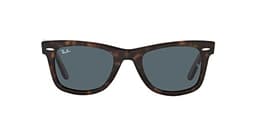
Ray-Ban Original Wayfarer RB2140
Buy this one if your face is oval, round or heart-shaped and you want the maximum-presence, single-material frame. Thick acetate throughout, nothing to work loose, endlessly serviceable.
Frame material: Cellulose acetate. Specs read from the listing on July 21, 2026.
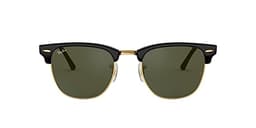
Ray-Ban Clubmaster RB3016
Buy this one if you want the strong horizontal brow without the full acetate weight, or if a round or heart face needs the lift the browline gives without a heavy lower rim.
Frame material: Acetate brow with metal lower rim. Specs read from the listing on July 21, 2026.
Frequently asked questions
What is the difference between a wayfarer and a clubmaster?
Construction, mostly. A wayfarer is a full acetate frame: the lens is surrounded by thick cellulose acetate all the way round, with a distinctive forward-canted shape. A clubmaster is a browline frame: a heavy acetate brow across the top, and a thin metal wire holding the bottom of each lens. That changes three things you can feel - the clubmaster is lighter, it has a stronger horizontal line at the brow, and it usually has adjustable nose pads where the wayfarer has a molded acetate bridge.
Which is better for a round face?
Both work, for different reasons, and this is the one comparison where you might genuinely go either way. The wayfarer's angular outline and straight top line add the definition a round face lacks, which is the classic recommendation. The clubmaster's heavy brow creates a strong horizontal line high on the face, which also breaks up roundness while keeping the lower half light. If you want more structure overall, take the wayfarer; if you want the structure concentrated at the top and a lighter feel, take the clubmaster.
Which is more comfortable to wear all day?
Usually the clubmaster, for two reasons. Replacing the lower rim with wire removes real weight, and acetate is dense - so a full acetate wayfarer sits heavier on the bridge. The clubmaster also typically has adjustable metal nose pads, which an optician can bend to raise the frame and spread the pressure, whereas a wayfarer's molded bridge is either right for your nose or needs a heat adjustment. If frames slide down your nose, the clubmaster is the more tunable of the two.
Which lasts longer?
The wayfarer, marginally, because it has fewer things to go wrong. One material means no join between materials that expand at different rates, and an all-acetate frame can be heat-reshaped, re-polished and re-hinged more or less indefinitely. The clubmaster's brow-to-rim join is the part that eventually needs attention after years of daily wear - not a failure, but a small optician job the wayfarer never asks for. Against that, a metal lower rim survives knocks that would crack a thin acetate rim.
Sources
- Mazzucchelli 1849 — the cellulose-acetate maker for eyewear — Background on cellulose acetate as the traditional material for spectacle and sunglass frames (accessed July 21, 2026)
- American Academy of Ophthalmology — Recommended Types of Sunglasses — AAO on choosing sunglasses that block 99–100% of UV-A and UV-B (UV400) (accessed July 21, 2026)
Keep reading
Best wayfarer acetate sunglasses
The full wayfarer roundup, including the alternatives to the Ray-Ban.
See the wayfarer picksBest browline acetate sunglasses
The clubmaster shape in full, and what to look for in a browline frame.
See the browline picksAcetate and metal frames explained
What the combination construction changes about weight, fit and repairs.
Read the explainerRay-Ban review
Which Ray-Ban models are genuine acetate and which are not.
Read the brand reviewWayfarer vs aviator
The other classic head-to-head, if the aviator is still in the running.
Read the comparison