Sunglasses for a Low Nose Bridge
If frames slide down or leave marks, a low nose bridge is often why. What a low-bridge or alternative fit changes, and how to spot frames that sit right.
How this is funded:we earn a commission if you buy through our links, at no extra cost to you. It never changes which product we recommend, and we’ll tell you when we’d skip one. Full disclosure.
If your sunglasses keep creeping down your nose, rest their lenses on your cheeks, sit a little crooked, or leave red marks after a few hours, the problem often isn’t the frame’s quality or your imagination — it’s the bridge. Most sunglasses are designed around a higher, more prominent nose bridge, and if yours sits low or flat relative to your eyes, standard frames simply have less to hold onto. The good news is that this is a well-understood fit issue with real solutions, from adjustable nose pads to purpose-built “low bridge fit” frames. Here’s what a low nose bridge actually is, why it makes frames slip, and how to spot the ones that will sit level and stay put.
What a low nose bridge is, and why frames slip
A low (or flat) nose bridge means the bony bridge of your nose sits low relative to your eyes and pupils, rather than rising up prominently between them. It’s a completely normal, common facial trait — not a flaw — but it matters for eyewear because a frame’s bridge is the main thing holding the whole pair up. When the bridge of your nose is high, a standard frame catches on it and the lenses sit where they should, roughly centered over your eyes. When the bridge is low, there’s less of that natural “shelf” for the frame to rest against.
The result is predictable. With little to grip, the frame tends to slide down the nose under its own weight, so you push it back up all day. As it drops, the lenses often rest on your cheeks, which smudges them and can push the frame off level every time you smile. Some frames go the other way and perch too high, so you end up looking through the wrong part of the lens, and many sit crooked because nothing is holding them evenly. Add the pressure of a frame constantly settling in the wrong place and you get the last classic sign: red marks or indentationson the sides of the nose. None of this means you can’t wear great sunglasses — it just means the bridge of the frame needs to match the bridge of your face, and most off-the-shelf frames aren’t built that way by default.
The signs you have a low-bridge fit problem
You don’t need to measure anything to recognize this. If most sunglasses you try do one or more of the following, a low nose bridge is a likely culprit:
- They slide down within minutes, and you find yourself pushing them back up constantly.
- The lenses touch your cheeks, fog or smudge there, or lift off your face when you smile.
- The frame sits too highon your face, or won’t settle level and always looks slightly crooked.
- There’s a visible gapwhere the bridge should rest against your nose, and the frame’s weight lands on just one narrow spot.
- You get red marks, indentations or soreness on the sides of your nose after wear.
If several of these sound familiar across many different frames — not just one bad pair — the pattern points to bridge fit rather than a single poorly made frame. It also helps to separate bridge issues from the rest of fit: temple arms that are too loose or a frame that’s simply too wide can cause sliding too. Our guide to how sunglasses should fit walks through the whole checklist so you can tell which part is actually letting you down.
What to look for
Once you know a low bridge is the issue, the search gets much easier, because a few specific features make the difference. These are the things to prioritize.
1. Adjustable nose pads
The single most useful feature for a low bridge is a pair of adjustable nose pads— the small plastic or silicone pads on flexible metal arms found on most metal frames and some combination frames. Because the arms bend, an optician (or a careful owner) can tune them to sit higherand grip more firmly, effectively building up the bridge contact that your nose doesn’t provide on its own. Adjustable pads also spread the frame’s weight over a larger area, which is what reduces both sliding and those red pressure marks. If you keep gravitating toward metal frames, this is a big reason why: they’re the easiest to adapt to a low bridge.
2. The “alternative fit” or “low bridge fit” label
Many brands now make frames specifically for lower, flatter bridges, sold under names like “alternative fit,” “low bridge fit” or “Asian fit.”These aren’t a marketing gimmick — they’re genuinely re-engineered. Compared with the standard version of the same style, a low bridge fit typically has a lower and wider bridge, more nose-pad area for contact, and slightly more pantoscopic tilt(the small forward lean of the lenses) so the frame sits level and stays where you put it. When a brand offers both, you’ll usually choose between a “standard fit” and a “low bridge fit” of the same frame. We don’t point you at specific low-bridge products here because we don’t stock verified ones — the reliable move is to look for that label yourself and treat it as your shortlist.
3. Saddle vs keyhole bridge on acetate
Acetate frames don’t use pads. Instead they have a molded saddle bridgethat rests across the top of the nose, so the shape of that bridge is doing all the work. Because it’s fixed rather than adjustable, fit varies a lot from frame to frame — and that’s actually useful information, because it means the right acetate frame can fit a low bridge well even without pads. A wider or deeper saddle spreads across more of the nose and can sit differently than a narrow one. A keyhole bridge— the rounded, open shape that arches over the top of the nose rather than sitting flat on it — distributes contact differently again, and some people with lower bridges find one style noticeably steadier than the other. The only way to know is to try both.
Acetate frames and a low bridge
We should be honest about acetate, since it’s our thing. Acetate frames are harder to customize at the bridge than metal ones, for one simple reason: they usually lack adjustable nose pads. Where a metal frame lets an optician bend the pad arms to fine-tune height and grip, an acetate frame’s saddle bridge is molded in one piece, so you can’t just dial the bridge in. That makes choosing the right frame in the first placemore important with acetate — you’re selecting a bridge shape rather than adjusting one afterward.
That said, acetate isn’t a dead end for a low bridge, and there are two real fixes. First, an optician can add stick-on or press-on silicone nose padsto the inside of an acetate bridge, which adds grip and lifts the lenses much the way built-in pads do — a small, inexpensive change that solves a lot of sliding. Second, because acetate softens with heat, an optician can warm and reshape the temple arms for a snugger hold behind the ears, so the frame is anchored at the sides even if the bridge contact is modest. There are limits to what heat adjustment can do at the bridge itself, but between add-on pads and temple tuning, a well-chosen acetate frame can be made to sit and stay far better than it does out of the box. Our guide to adjusting acetate frames covers exactly what can and can’t be tuned, and why heat is the key.
How to check before you buy
You can stack the odds in your favor before a frame ever reaches your face. Start with the bridge number. Every frame is described by three measurements — lens width, bridge width and temple length, usually printed inside the arm as something like 52–18–145. The middle number is the bridge, in millimeters, and for a low or narrow bridge a smaller bridge numbergenerally means the frame sits closer and has less room to slide sideways, while a too-large bridge number lets the frame drop straight down. It’s not a perfect predictor on its own — bridge shape matters as much as width — but it’s a fast filter. Our guide to sunglasses sizing explains how to read those numbers and find yours.
Then, wherever possible, try the frame onand watch for the specifics above: does it sit level, does the bridge actually touch your nose rather than gapping, do the lenses clear your cheeks, and does it stay put when you look down or smile? If you’re buying online, favor sellers with a genuine returns policy so you can test at home, and lean on the labels — an “alternative fit” or “low bridge fit” option, or a frame with adjustable pads, is a safer bet than hoping a standard fit works. Whatever you choose, remember that fit is the foundation but not the whole picture: the American Academy of Ophthalmology’s core advice is to prioritize UV protectiontoo, choosing lenses that block 99–100% of UV-A and UV-B (a UV400 rating), and that’s the baseline any pair should meet regardless of how it sits. The international sunglasses standard, ISO 12312-1, covers that UV filtering and lens performance for general-use sunglasses.
Get the bridge right and everything else opens up. Once a frame sits level and stays put, you’re free to choose on looks — and the next question is usually which shape suits your face. Start with our face-shape guides to narrow that down, or browse the full field in our best acetate sunglasses roundup, now that you know which features to look for at the bridge.
One of those features gets its own page: our guide to keyhole bridge sunglasses explains why the notched vintage bridge tolerates a lower nose better than a saddle, and names the acetate frames that have one.
And if the day-to-day consequence is a frame that keeps sliding or leaving a mark, our guide to sunglasses slipping down your nose covers the five fixes in order of cost — cleaning the bridge, a temple bend behind the ear, stick-on pads, a retainer cord, and finally changing the bridge design itself.
The cheap fixes before you replace the frame
If a frame you already like is sliding, these are the two things an optician would reach for first. Neither turns a standard bridge into a low-bridge fit, but both buy back a lot of comfort for very little.
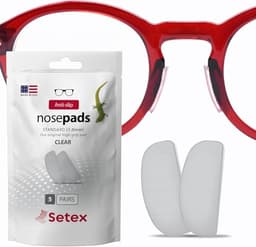
Stick-on anti-slip nose pads
An acetate frame has a molded saddle bridge and no adjustable pads, so when it slides down your nose there is nothing to bend. Thin stick-on pads add grip and lift the lenses a little — the same cheap fix an optician reaches for on a low bridge.
Listed as “Setex Gecko Grip 1.0mm Anti Slip Nose Pads for Glasses, 5 Pair, Clear” — read on August 16, 2026.
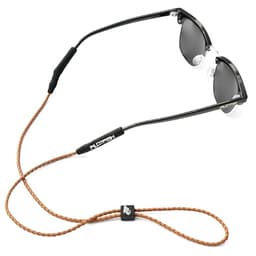
A slim leather retainer cord
Acetate is heavier than wire, which is how a good frame ends up shoved on top of your head and, eventually, on the floor. A slim leather cord in tortoise reads like part of the frame rather than sports kit, which is the difference between wearing one and not.
Price as of October 7, 2026. #ad How we’re funded
Listed as “Pilotfish Leather Sunglasses Strap - Glasses Retainer Cord for Men or Women, Secure Chain Eyeglass or Sunglass Holder (Tortoise)” — read on August 16, 2026.
Frequently asked questions
What sunglasses are best for a low nose bridge?
The frames that work best are the ones designed to sit lower and grip more of the nose. On metal frames, look for adjustable nose pads, which an optician can bend to raise the lenses and add contact so the frame stops sliding. Across materials, look for frames labeled 'alternative fit', 'low bridge fit' or 'Asian fit', which are purpose-built with a lower, wider bridge, more nose-pad area and a little extra tilt. On acetate frames, which use a molded bridge rather than pads, fit varies from frame to frame, so try several and favor ones that already sit level and stay put on you.
Why do my sunglasses keep sliding down?
Usually because the bridge of the frame does not match the bridge of your nose. Most frames are designed for a higher, more prominent nose bridge, so if yours sits lower or flatter relative to your eyes there is less for the frame to rest against, and gravity pulls it down your nose. The lenses may also end up resting on your cheeks or sitting crooked. Weight, a too-wide bridge and loose temple arms can all make sliding worse, but a low nose bridge is one of the most common underlying reasons.
What is a low bridge fit?
A low bridge fit, sometimes called an alternative fit or Asian fit, is a version of a frame redesigned for a lower or flatter nose bridge. Compared with the standard version, it typically has a lower and wider bridge, larger or adjustable nose pads for more contact, and slightly more pantoscopic tilt so the frame sits level and holds its position. Many brands now offer these as a separate fit line, so you often choose between a standard fit and a low bridge fit of the same style.
Can you adjust sunglasses for a low nose bridge?
Often, yes, though how much depends on the frame. Metal frames with adjustable nose pads are the easiest: an optician can bend the pad arms to raise the lenses and increase grip. Acetate frames are harder because they use a molded bridge instead of pads, but an optician can still add stick-on or press-on silicone nose pads and warm and reshape the temple arms for a more secure fit. If a frame simply does not suit your bridge, an alternative or low bridge fit version is usually a better fix than adjustment alone.
Sources
- American Academy of Ophthalmology — Recommended Types of Sunglasses — AAO on choosing sunglasses that block 99–100% of UV-A and UV-B (UV400) (accessed July 21, 2026)
- ISO 12312-1:2022 — Eye and face protection — Sunglasses for general use — The international standard for general-use sunglasses: UV filtering, filter categories and transmittance (accessed July 21, 2026)
Keep reading
How should sunglasses fit?
The full fit checklist.
Read the guideSunglasses sizes explained
The bridge number and what it means.
Read the guideHow to adjust acetate frames
What can and can't be tuned on acetate.
Read the how-toFind your face shape
Fit sorted - now match the shape.
Find your shape