How to Adjust Acetate Frames at Home
Acetate softens with gentle heat, so a loose or pinching frame can be reshaped. A safe step-by-step - and the times to let an optician do it instead.
How this is funded:we earn a commission if you buy through our links, at no extra cost to you. It never changes which product we recommend, and we’ll tell you when we’d skip one. Full disclosure.
A frame that pinches your temples, slides down your nose, or sits crooked on your face is not necessarily a frame you are stuck with. Because acetate softens with a little warmth and firms back up as it cools, the fit of an acetate frame can usually be nudged into shape — and a lot of small comfort problems come down to fit rather than the frame being wrong for you. This guide explains why acetate can be reshaped, walks through a safe step-by-step you can follow at home, covers the most common fit fixes, and — just as important — flags the situations where you should hand the job to an optician instead.
Why acetate can be adjusted
Acetate is a thermoplastic. In plain terms, that means it becomes slightly soft and pliable when it is warmed and then sets again, holding whatever shape it is in, once it cools. This is not a flaw or a sign of a cheap frame — it is a built-in property of the material, and it is the same property that lets manufacturers shape frames in the first place. If you want the fuller picture on what the material is and how it behaves, our explainer on what acetate is covers the basics.
For you, that thermoplastic behavior is genuinely useful. Warm a temple gently and you can ease it wider so it stops pinching, or bring it in a touch so a loose frame grips better. Warm the point where the arm bends behind your ear and you can change how the frame hooks and holds. The key is that acetate needs only gentlewarmth to become workable, and that it wants to be shaped slowly. It is forgiving when you respect it and much less forgiving when you rush — which is why the method below matters as much as the idea. That same resilience is part of what makes the material hold up over years of wear.
Before you start
A few things are worth knowing before you warm anything. First, the safest, cheapest option is often not to do it yourself at all: most opticians will adjust a frame for free or for very little, even if you did not buy it from them, and they do it every day with the right tools. There is no shame in walking in and asking — it takes a couple of minutes and removes all the risk.
Second, know your target before you bend anything. Adjusting a frame is much easier when you already understand what a good fit feels like — where the frame should rest, how the temples should sit, and how much grip is enough. Our guide to how sunglasses should fit is worth a read first, so you know what you are aiming for. Adjustment fine-tunes a frame that is close; it cannot rescue a frame that is the wrong size to begin with, so start from a good fit.
Third, respect the limits of the material. Gentle heat is your friend; too much heat is not. Overheating can make acetate blister, cloud over, lose its gloss, or warp in ways that are hard to undo, and heat near the lenses can damage anti-reflective and other coatings. Never reach for boiling water, an open flame, or a heat gun — those are the tools that ruin frames. Work on one small area at a time, move in small increments, and stop the moment something does not feel right.
The safe step-by-step
Here is the method, start to finish. Read it through once before you begin so you are not improvising with a warm frame in your hands.
- Find the part to adjust.Put the frame on and pinpoint exactly what is wrong — a temple that pinches, an arm that sits loose, or a frame that leans to one side. You want to work on that one small area, not bend the whole frame at once.
- Warm the frame gently. Soften just the part you are changing. Warm-to-hot tap water for about thirty to sixty seconds works well, or a hair dryer on a low-to-medium setting held a few inches away for a few seconds at a time. Keep the heat away from the lenses, and never use boiling water, a flame, or a heat gun.
- Bend slowly in small steps.While the acetate is warm and slightly flexible, ease it toward the shape you want in small increments. If it resists, stop and warm it again — never force a cold frame, because that is when acetate cracks.
- Hold until cool. Keep the new shape steady until the acetate has cooled completely, usually a minute or two. Acetate sets as it cools, so if you let go too early it will spring partway back to where it started.
- Check the fit and repeat.Put the sunglasses on and see how they sit. Expect to make several small, gentle passes — rewarming between each — rather than one big bend. Sneaking up on the right fit is far safer than overshooting and having to bend back.
The theme running through every step is patience. Small, repeated, gentle adjustments get you to a comfortable fit without stressing the material. One forceful bend is how a frame you care about ends up cracked.
Fixing common fit problems
Most home adjustments fall into three familiar categories. The method is always the same — warm gently, move slowly, hold until cool — but knowing what to reach for helps.
Temples that pinch
If the frame squeezes the sides of your head or leaves marks behind your ears, the temples are too tight. Warm each temple gently and ease it outward a little, widening the angle so the arms sit with less pressure. Work one side at a time and compare in the mirror as you go, since a frame that pinches on only one side will end up crooked if you widen both equally.
Temples that are loose
If the sunglasses slide down or feel like they could fall off when you look down, the temples are too loose. Warm the arms and bring them in slightly so they grip a touch more, or warm the point where the arm curves behind the ear and adjust that bend so the frame hooks and holds better. A small change here makes a big difference — you are after gentle contact, not a clamp.
A frame that sits crooked
If one lens sits higher than the other, the fix is usually in the temples. Warm the arm on the side that sits low and adjust its angle so both sides rest evenly — often it is the bend behind one ear that has shifted. Put the frame on a flat surface and eye it from the front, then wear it and check in the mirror, tweaking one side at a time until it sits level.
Across all three, the smart move is to make a small change, let it fully cool, put the frame back on, and reassess before touching it again. Keeping the frame clean and looked after helps too — our guide on how to care for acetate frames covers keeping the shine and the shape over time.
When to see an optician instead
Doing it yourself is not always the right call, and knowing when to stop is part of doing it well. Take the frame to an optician — who will usually adjust it for free or for a small charge — in any of these cases:
- The temples have a metal core or wire inside. Many acetate temples are reinforced with a metal insert. Heating and bending those is different from working plain acetate, and doing it wrong can kink the wire or stress the frame. Let a professional handle it.
- The frame is expensive or a designer piece. If it would genuinely hurt to crack it, the small cost or free service at an optician is cheap insurance compared to the risk of a home mistake.
- The adjustment is anywhere near the lenses. Heat close to the lenses can damage coatings, and reshaping around the rims is fiddly. This is squarely optician territory.
- You are not confident. If you are hesitating, that is reason enough. An optician has the proper warmer and the practiced touch, and can fix in two minutes what might take you several nervous attempts.
None of this means acetate is fragile — it is a forgiving, reshapeable material, and that is exactly why small fit tweaks are doable at home. But the frames worth adjusting are often the ones worth protecting, and a professional adjustment is the surest way to get a comfortable fit without risking a frame you care about. When in doubt, warm gently, go slowly, and if the job feels beyond a simple bend, hand it to someone whose job it is.
For the fit problems heat won't fix
Warming the temples solves width and tilt. It does nothing about a hinge screw backing out or a molded bridge with nothing to grip, and both have a cheap fix.
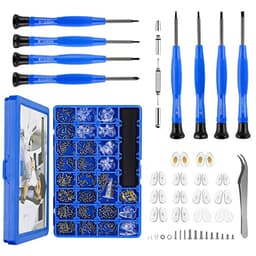
A hinge screw and repair kit
One of the ways you can tell real acetate from injection plastic is that the hinges are metal, pressed into the frame — and metal hinges work loose. A magnetic tray, the right precision drivers and a box of spare screws turn a wobbling temple into a two-minute fix.
Price as of October 7, 2026. #ad How we’re funded
Listed as “Upgrade Version Magnetic Eye Glass Repairing Kit, Eyeglass Repair Tool Kit with Compact Screw Box Include Nose Pads, Precision Screwdriver Set, Screws, Tweezer for Eyeglass, Sunglass, Spectacles Watch” — read on August 16, 2026.
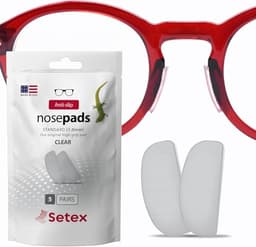
Stick-on anti-slip nose pads
An acetate frame has a molded saddle bridge and no adjustable pads, so when it slides down your nose there is nothing to bend. Thin stick-on pads add grip and lift the lenses a little — the same cheap fix an optician reaches for on a low bridge.
Listed as “Setex Gecko Grip 1.0mm Anti Slip Nose Pads for Glasses, 5 Pair, Clear” — read on August 16, 2026.
Frequently asked questions
Can you adjust acetate glasses at home?
Yes, within reason. Acetate is a thermoplastic, so it softens with gentle heat and holds a new shape as it cools - which is exactly why temple width and nose fit can be tweaked. Small adjustments, like easing a temple that pinches or leveling a frame that sits crooked, are reasonable to do carefully at home. Anything that involves a metal core in the temples, the area right around the lenses, or an expensive frame you are worried about is better left to an optician, who will usually do it for free or for very little.
How do you heat acetate frames safely?
Warm only the specific part you want to move, and warm it gently. Warm-to-hot tap water for about thirty to sixty seconds works well, or a hair dryer on a low-to-medium setting held a few inches away for a few seconds at a time. Never use boiling water, an open flame, or a heat gun, and keep heat away from the lenses, since too much heat can blister, cloud, or warp the acetate and can damage lens coatings. The goal is a frame that feels slightly flexible, not hot or soft.
Can acetate frames be made bigger or smaller?
The fit can be adjusted, but the frame cannot truly be resized. Warming the temples lets you widen them so they stop pinching, or narrow them so they grip a little more, and you can fine-tune where the arm curves behind the ear. What you cannot do is meaningfully change the width of the front or the size of the lenses - that is fixed when the frame is cut. If the frame is simply the wrong size, adjusting fit will only go so far, and choosing the right size in the first place matters more.
Will heat damage acetate frames?
Gentle, controlled heat will not damage acetate - it is what lets the material be shaped at all. Too much heat is a different story. Boiling water, a flame, or a heat gun can make acetate blister, cloud, lose its shine, or warp out of shape, and heat near the lenses can harm anti-reflective and other coatings. Keep the heat mild, warm only the part you are working on, and stop as soon as the acetate feels pliable rather than trying to make it fully soft.
Sources
- Mazzucchelli 1849 — the cellulose-acetate maker for eyewear — Background on cellulose acetate as the traditional material for spectacle and sunglass frames (accessed July 21, 2026)
- American Academy of Ophthalmology — Recommended Types of Sunglasses — AAO on choosing sunglasses that block 99–100% of UV-A and UV-B (UV400) (accessed July 21, 2026)
Keep reading
How to care for acetate frames
Cleaning and keeping the shine.
Read the guideHow should sunglasses fit?
Know the target fit before you adjust.
Read the guideWhat is acetate?
Why the material can be heat-shaped at all.
Read the explainerSunglasses sizes explained
The numbers behind a good fit.
Read the guide