How to wear a cat-eye without it looking costume-y
The difference between a chic cat-eye and a theatrical one is mostly the angle of the sweep. A subtle upsweep reads modern and flattering on almost everyone; a sharp, exaggerated point is a stronger statement that needs the right face and the confidence to carry it. If you’re new to the shape, start soft — a gently upswept frame like the CARFIA or the SOJOS Aria is the low-risk way in.
Who the cat-eye flatters most
A cat-eye is close to ideal for a heart-shaped face (it widens and lifts the lower half to balance a narrow chin) and a square face (the curve of the sweep softens an angular jaw). It also adds welcome angles to a round face. About the only face it needs care with is a very long one, where a taller cat-eye can lengthen it further — keep the frame wider than it is deep in that case.
Where to spend on a cat-eye
The visible upgrade from budget to designer is color and finish — a hand-mixed Havana or a smoky gradient has a depth a printed budget frame can’t match, and polarization adds real glare control. If the cat-eye is a statement piece you’ll wear often, a designer frame earns its price. If you just want to try the shape, a $40 polarized acetate cat-eye is a genuinely good entry point.
How to read a cat-eye listing before you buy
Cat-eye is the shape where listings mislead most often, because the sweep is easy to fake in a photograph and the material is easy to leave unstated. Four checks settle it in under a minute.
Does it name cellulose acetate?A cat-eye needs thickness at the outer corners to hold its sweep, and cheap injection-molded plastic gets there by being bulky rather than dense — which is why so many budget cat-eyes look heavy and feel hollow. If the listing will not name the material, treat it as molded plastic. Our five checks for real acetate confirm it once the frame is in your hands, and acetate vs plastic covers why the difference is structural rather than snobbery.
Is the UV rating stated?Look for UV400 or 100% UV in writing. Tint depth tells you nothing — a dark lens with no rating is worse than no sunglasses, because it opens your pupils without filtering anything. See what UV400 means.
Look at the sweep from the front, not at an angle. Catalog photography is shot three-quarters on, which exaggerates the upsweep and hides how tall the frame is. Find the straight-on image. If there is not one, that is information too.
Check whether the outer corner is lifted or just pointed. A real cat-eye lifts the top rim above the temple hinge. A frame with a sharp corner but a flat top line is a squarish frame with a decoration on it, and it will not do the lifting work you are buying the shape for.
Sizing a cat-eye: the two numbers that matter
A cat-eye is less forgiving of bad sizing than a round or a wayfarer, because the sweep has to land in the right place relative to your brow and cheekbone. Two figures decide it.
Total frame widthshould be roughly as wide as your face at the temples — a cat-eye that overhangs looks theatrical, and one that pinches pushes the sweep into your brow. Lens height is the number people ignore and the one that decides whether the frame flatters a long face: a tall cat-eye lengthens, a wider-than-deep one balances. Our guide to reading sunglasses sizes explains what the numbers on the temple mean, and how to measure your face shape is worth five minutes before you spend anything.
Two practical notes. Most budget cat-eyes are one size only, so if your face is at either extreme there is no smaller or larger variant to fall back on — sunglasses for small faces covers what to look for. And a cat-eye sits higher on the nose than most shapes, so if frames tend to slide on you, read sunglasses for a low nose bridge before choosing.
The four picks, and who each one suits
Two of the four are sharp cat-eyes and two are soft, which is the real decision here rather than the price.
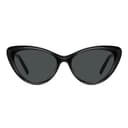
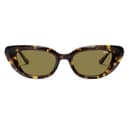
The SOJOS acetate cat-eye is the value benchmark for the shape. A properly upswept 90s-revival cut in genuine acetate with polarized UV400 lenses, handmade with metal hinges rather than the molded-in plastic hinges that fail on the cheapest frames. It is the one to buy if you know you want a cat-eye and you do not want to spend designer money to find out whether it suits you. Honest limits: the color is good rather than deep, and SOJOS often does not publish measurements on the marketplace listing — the figures are on its own site. Our SOJOS review covers the brand properly.
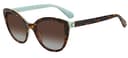
The Kate Spade Amberlee is where the money shows. Designer acetate with the color depth and hand-finished edge a budget frame cannot match, and polarized. If the cat-eye is going to be your signature frame rather than an experiment, this is the one that still looks considered in five years. It is several times the price of the SOJOS, and that gap buys finish, not protection.
The SOJOS Aria is the softer way in.The same idea with the sharp outer point rounded off, so it reads everyday rather than costume — the frame to choose if a dramatic cat-eye feels like too much, or if you want something that works at the office as easily as on holiday. It flatters a wider range of faces than the sharp cut precisely because it commits less.
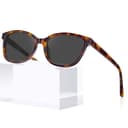
The CARFIA designer acetate is the lowest-risk buy on the page. A soft squared-round with only a hint of upsweep, forgiving across oval, round and heart faces. Take it if you have not measured your face and do not intend to. It is the least distinctive of the four, which is exactly why it is the safe one.
Which colorway for a cat-eye
Shape decides whether a cat-eye suits you; color decides how loud it is. A cat-eye is already a strong silhouette, so the finish is where you dial the statement up or down.
Tortoiseis the softening choice — a warm mid-tone with variation in it, which keeps a bold sweep from reading severe, and the colorway where acetate’s layered construction is actually visible. See tortoiseshell frames. Black is maximum contrast and makes the sweep the whole point; correct if you want the frame noticed, severe on a large cat-eye. We compare the two directly in tortoiseshell vs black. Clearreduces visual weight without reducing size, which is the trick for wearing a big cat-eye without it dominating your face — clear and transparent frames covers the maintenance trade-off honestly.
When to skip the cat-eye
Being straight about it: the shape is wrong for some people and no amount of styling fixes that. Skip it if you have a long or oblong faceand can only find tall versions, because the upsweep will lengthen what you are trying to balance — the oblong-face guide explains what to look for instead. Skip it if you need a frame that disappears; a cat-eye is never neutral, and a rectangle or a wayfarerdoes that job better. And skip it if your main problem is glare on the road or the water rather than style, because performance is about the lens, not the silhouette — polarized vs non-polarized is the page for that. If a soft round appeals more than a sweep, our cat-eye vs round comparison settles it.