Are Acetate Sunglasses Heavy?
Short answer: heavier than nylon, far heavier than titanium, and almost never heavy enough to matter if the frame fits. The longer answer is that three things decide the weight — and two of them have nothing to do with the material.
How this is funded: we earn a commission if you buy through our links, at no extra cost to you. It never changes which product we recommend, and we’ll tell you when we’d skip one. Full disclosure.
Yes — an acetate frame is heavier than the same shape in nylon, TR90 or titanium. That is a property of the material and there is no point pretending otherwise. What the question usually means, though, is will it be uncomfortable, and there the honest answer is different: on a correctly sized, correctly adjusted frame, almost nobody notices the difference, and the pairs people describe as unbearably heavy are nearly always oversized, glass-lensed, or sitting wrong on the nose.
So this page does two things. It explains why acetate carries more mass than the alternatives, and then it gives you the three numbers that actually predict how a pair will feel — all of which are published more often than a weight in grams is.
Why acetate weighs what it does
Cellulose acetate is a solid plastic made in sheets and then cut, milled and polished into a frame. Daicel, the Japanese producer, describes it as a resin derived from cellulose obtained from wood pulp or cotton — a real, dense material rather than a foam or a hollow section. The thickness that gives a good acetate frame its depth of color is the same thickness that gives it mass; you cannot have the layered tortoise look without the material that carries the layers, which is the whole subject of what acetate actually is.
Compare that with how the lighter options are built. A sport frame in blended nylon is injection-molded thin and hollow where it can be — an optometry frame-materials reference describes nylon blends as the standard for sports and safety eyewear because they handle impact and motion better than standard plastics. A titanium frame is mostly air: a thin wire rim and temples, with the same reference calling titanium very strong, lightweight, corrosion-resistant and hypoallergenic. Neither is doing anything acetate could do more lightly. They are different answers to a different question, and we set them out in acetate vs TR90, acetate vs nylon and acetate vs titanium.
One thing we will not do is give you a number. No seller in our registry publishes a frame weight in grams — not the $30 frames and not the $300 ones — and inventing a figure to answer a weight question would be exactly the fabrication this site exists to avoid. Where a spec is not published, our product cards say not published, and that rule holds here too.
1. Front size: the number that moves weight most
Within one material, mass tracks the size of the front almost linearly, because a bigger front is simply more acetate. The clearest demonstration is a frame published in two fittings. Ray-Ban lists the Original Wayfarer RB2140 at 50-22 with a 41 mm lens height and at 54-18 with a 47.2 mm lens height, both on 150 mm temples. Same model, same material, same hinge — but the 54 carries four more millimetres of width and six more of depth on every part of the front.
This is why the single most effective way to buy a lighter acetate frame is to buy a smaller one that still fits, rather than to abandon the material. If you do not know your measurements, our sizing guide explains how to read them off a pair you already own, and 50 mm vs 54 mm works through this exact decision on one frame.
Shape matters a little too, though less than people expect. A round front of a given eye size carries less material than a square one, because the corners are not there to fill — and an oversized frame is the one category where the weight is genuinely a design feature rather than a side effect: a big shape needs mass to look deliberate rather than hollow.
2. Lens material: the variable people forget
On this site, the heaviest pairs are not the chunkiest frames. They are the ones with mineral glass in them.
Glass is harder than plastic, holds its optical flatness, and resists scratches for years — which is why the premium end of our glass-lens roundup exists at all. It is also denser, and you feel that on the bridge of your nose within an hour. Brands do not hide it: Serengeti lists an “Ultra-Light Mineral” lens on the Joan, which is a weight objection being answered in the product name.
The practical consequence is a straightforward trade. If you want the longest-lived, flattest lens, accept the extra weight and buy a frame sized to carry it. If weight is your binding constraint, choose a plastic lens and spend the saving on fit instead — the protection is identical either way, since UV filtering is a property of the lens treatment rather than the substrate, and the AAO’s advice is simply to look for 99–100% UV-A and UV-B blocking. Our lens materials guide covers the full comparison.
3. Build: what else is in the frame
Two frames that both say “acetate” can be built completely differently, and the difference shows up in the hand.
All-acetate is front and temples in the same material, with a metal hinge set into each. Mixed builds pair an acetate front with metal temples, or an acetate brow with a metal lower rim like the Ray-Ban Clubmaster — lighter overall, because metal rims and temples use less material than acetate ones, at the cost of a join that can loosen over seasons as the two materials expand differently. Acetate and metal frames covers that trade properly. And acetate-look frames — a TR90 or molded front with acetate temples, or nothing acetate at all — are lighter again, which is one reason a budget “acetate” frame can feel suspiciously insubstantial. If you want to know which one you are holding, that is how to tell if frames are real acetate.
The hinge adds a little metal in every case, and a core wire inside the temples adds a little more. Neither is a meaningful share of the total, but both are why no acetate frame is as light as the raw material suggests — see acetate frame hinges.
Why weight is the wrong thing to optimize
Here is the part that matters most, and it is the reason this page does not rank frames by mass. A sunglasses frame touches you in three places: the sides of your nose and the two points behind your ears. Discomfort is almost always a distribution problem at one of those points rather than a total-weight problem.
The bridge carries most of it. A saddle bridge spreads load across the top of the nose; a keyhole bridge — the notch Persol publishes on the 649 — rests on the sides instead, which suits a higher or more prominent nose and is usually the fix when a frame leaves marks. Our keyhole bridge guide explains the geometry, and sunglasses for a big nose works through the published bridge widths.
Temple length moves load backward. A temple that is too short grips in front of the ear and pushes the whole frame forward and down; one of the right length sits along the skull and takes some of the weight off the nose entirely.
And acetate can be adjusted, which is the whole point. Because the material is a thermoplastic — Daicel gives softening at roughly 230–300 °C, far above anything an optician’s warm air does — a frame can be gently heated and re-shaped: bridge angle, temple curve, how far the frame tilts in toward your cheeks. Ten minutes of that does more for perceived weight than fifteen grams ever will, and it is not available on a molded frame at any price. See how to adjust acetate frames.
If a pair is giving you headaches rather than nose marks, the cause is usually not weight at all — our page on why sunglasses give you a headache separates the four causes, only one of which is the frame.
How to buy a lighter acetate pair
In the order that removes the most weight for the least compromise:
1. Drop an eye size, not the material. Buy within a millimetre or two of a frame you already wear comfortably. This is the biggest single lever and it costs you nothing stylistically.
2. Choose a plastic lens. Unless you specifically want mineral glass for its clarity and scratch resistance, it is the easiest weight to leave behind.
3. Avoid oversized unless you want the look. Oversized frames are heavy on purpose; that is the shape working correctly.
4. Prefer a round or soft shape at the same eye size if you are deciding between two frames you like equally.
5. Then get it adjusted. Most opticians will heat-fit a frame in minutes, whether or not you bought it there, and it is the step that converts a frame you tolerate into one you forget you are wearing.
And if after all that you still want the lightest thing on your face, buy titanium with a clear conscience — it is the right material for that brief, we do not stock it, and our comparison says so plainly. What acetate offers in exchange for the extra few grams is color that runs through the frame, a fit that can be corrected rather than endured, and a pair that is still serviceable in ten years — which is the case our durability page makes in full.
If you want the lighter end of acetate
No seller in our registry publishes a frame weight in grams, so these are not ranked by weight — each one is here because the three variables above point the same way: a modest eye size, a plastic lens, and no mixed-material join. Prices are live and dated.
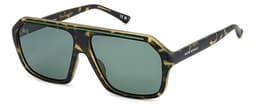
Privé Revaux Clevelander/S Rectangle
A plain acetate rectangle with a plastic polarized lens and no oversized dimensions anywhere — the combination that produces the least mass per frame in our registry. If a previous acetate pair felt like too much on your nose, this is the shape to try before you give up on the material.
Price as of October 17, 2026. #ad How we’re funded
Frame material: Cellulose acetate. Specs read from the listing on July 21, 2026.
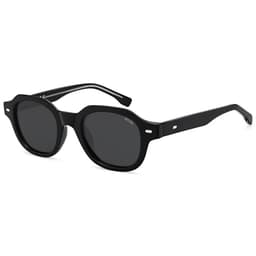
SOJOS Retro Polygon Round (Italian Acetate)
A small-to-mid round with a plastic lens, and the one frame whose listing we would call genuinely slight for acetate. A round front also carries less material than a square of the same eye size, because the corners are not there to fill.
Frame material: Cellulose acetate (Italian, per listing). Specs read from the listing on July 21, 2026.
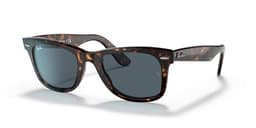
Ray-Ban Original Wayfarer RB2140
The reference point, and the reason size beats material: Ray-Ban publishes this one in 50-22 with a 41 mm lens height, against 54-18 and 47.2 mm for the larger fitting. Same model, same acetate, meaningfully different mass — buy the fitting, not the material.
Price as of October 17, 2026. #ad How we’re funded
Frame material: Cellulose acetate. Specs read from the listing on July 21, 2026.
Frequently asked questions
Are acetate sunglasses heavy?
Heavier than the alternatives, yes, but rarely heavy enough to matter. Cellulose acetate is a solid plastic cut from sheet, so a frame carries real material where a nylon or TR90 frame is thin and injection-molded and a titanium frame is a wire. What decides whether you notice it is not the material but the size of the front, the lens inside it and how the frame sits: a well-fitted 50 mm acetate frame disappears on the face, and a badly fitted light one does not.
How much do acetate sunglasses weigh?
Nobody we track publishes a figure, which is why we will not print one. Every product card on this site shows what the seller states and leaves the rest blank, and frame weight in grams is almost never stated on a sunglasses listing - not at $30 and not at $300. What you can read instead are the measurements: eye size, bridge and temple length, plus the lens material. Those three tell you more about how a pair will feel than a gram figure would anyway.
Is acetate heavier than TR90 or nylon?
Yes, and that is the honest trade. Blended nylon frames are built for sport and safety eyewear precisely because they handle impact and motion at low weight, and they stay light because the material is molded thin. Acetate's advantages are different: color that runs through the sheet, a frame an optician can heat-adjust to your head, and edges that can be re-polished years later. If the lightest possible frame is your only criterion, you do not want acetate - our acetate vs TR90 and acetate vs nylon comparisons set out both sides.
What is the lightest frame material?
Titanium, for a serious frame. An optometry frame-materials reference describes it as very strong, lightweight and corrosion-resistant, suited to a thin light profile, hypoallergenic for nickel-sensitive wearers, and able to handle sweat and humidity without pitting - at a higher cost than basic metals. We stock no titanium frame and will not invent one. Our acetate vs titanium comparison says plainly where titanium wins and why this site is still about acetate.
Do glass lenses make sunglasses much heavier?
They are the single biggest weight variable on this site, more than the frame material. Mineral glass is harder and optically flatter than plastic, and it is also denser, so a glass-lensed acetate frame sits noticeably heavier on the nose than the same frame in plastic. Brands know it: Serengeti markets an Ultra-Light Mineral lens on the Joan precisely because the weight is the objection. If weight is your concern, change the lens material before you change the frame material.
How do I stop heavy sunglasses hurting my nose?
Fix the distribution, not the mass. Weight on a frame is carried at three points - the nose and the two ears - and pain almost always means one of them is taking more than its share. A keyhole bridge rests on the sides of the nose rather than across the top, which spreads the load; Persol publishes one on the 649. Longer temples move some of the load backward. And because acetate is a thermoplastic, an optician can warm the frame and adjust the bridge angle and temple curve in minutes, which is the one fix a molded frame cannot have.
Sources
- Daicel Corporation (Material SBU) — Cellulose Acetate — Manufacturer detail on the raw material: a resin derived from cellulose obtained from wood pulp or cotton; products made from it resist sunlight and particularly UV radiation and do not easily degrade, making them suitable for long-term use; it is inherently flame-retardant with high thermal stability, softening and carbonizing at approximately 230–300°C; and Daicel's cellulose acetate products are certified under the Japan BioPlastics Association's "Biomass Plastic" and "Biodegradable Plastic" schemes, with some certifications applying only to specific grades (accessed October 17, 2026)
- Specialty Vision — Eyeglass Frame Materials (optometry-practice reference) — On titanium frames: very strong, lightweight and corrosion-resistant, suited to a thin, light profile and small or delicate styles; hypoallergenic, which matters for patients with a nickel allergy; corrosion resistance handles sweat, humidity and daily handling without pitting; a higher cost than basic metals. On blended-nylon frames: commonly used for sports and safety eyewear including wraparound styles, handles impact and motion better than standard plastics, and resists sweat and moisture well. On plastic frames: the most popular choice for affordability and styling, but they break more easily than metal and may fade in color over time, while Italian zyl acetate is known for its quality, hand-polished finishes and multi-layer color effects, and lasts many years with proper care (accessed October 11, 2026)
- Ray-Ban — Original Wayfarer Classic RB2140, Polished Tortoise / G-15 Green (50-22) — Ray-Ban's listing for the 50 mm Original Wayfarer: 50-22 fitting, 41 mm lens height, 150 mm temples, acetate frame, G-15 green lens (accessed September 18, 2026)
- Ray-Ban — Original Wayfarer Classic RB2140, Polished Tortoise / G-15 Green (54-18) — Ray-Ban's listing for the 54 mm Original Wayfarer: 54-18 fitting, 47.2 mm lens height, 150 mm temples, acetate frame, G-15 green lens (accessed September 18, 2026)
- Persol — 649 Original, Havana frame with green lenses (PO0649 24/31) — Persol's product page: 52-20, 54-20 and 56-20 sizes; acetate frame, crystal lenses, made in Italy; keyhole bridge, arrow and Meflecto; designed in 1957 for Turin's tram drivers (accessed September 15, 2026)
- Serengeti — JOAN — Serengeti's product page: a bold oversized silhouette on a bio-acetate, eco-friendly handmade acetate frame; Ultra-Light Mineral lens listed as anti-reflective, photochromic, polarized and Spectral Control; fitting 53-20-140, medium fit, base curve 6; listed price $350 (accessed October 5, 2026)
- American Academy of Ophthalmology — Recommended Types of Sunglasses — AAO on choosing sunglasses that block 99–100% of UV-A and UV-B (UV400) (accessed July 21, 2026)
Keep reading
Acetate vs TR90
The lightweight sport plastic, compared honestly against acetate.
Read the comparisonAcetate vs titanium frames
Where the lightest serious frame material simply wins.
Read the comparisonMost comfortable sunglasses
Ranked on bridge design and published fit, not on grams.
See the picksHow should sunglasses fit?
The three contact points that decide whether weight is a problem.
Read the guide