Why Sunglasses Give You a Headache
There are four separate causes and only one of them is the lens tint. Three are fixable by changing what you buy — and the fourth is the one almost nobody expects, because it comes from lenses that are too dark rather than not dark enough.
How this is funded:we earn a commission if you buy through our links, at no extra cost to you. It never changes which product we recommend, and we’ll tell you when we’d skip one. Full disclosure.
If sunglasses give you a headache, the useful question is not which brand to buy — it is where the ache is. Four different problems produce four different headaches, and they need opposite fixes. A frame that presses aches at the temples and behind the ears. A lens that is too light aches around and behind the eyes, because you are still squinting. A poor lens aches in the same place but worse on detailed work. And a lens that is too dark, worn too often, makes ordinary daylight feel painful afterward.
Work through them in that order. Three of the four are buying decisions you can get right the next time, and the fourth is a habit rather than a product.
Cause 1: the frame is pressing somewhere
This is the most common cause and the easiest to confirm. Take the sunglasses off and look in a mirror. A groove or redness behind either ear, a pink dent on the sides of the nose, or a line across the temples all mean the frame is loading one contact point too hard.
Sunglasses rest on four points: the two sides of the nose, and the two spots where the temples pass over the ears. Get those right and the frame feels like nothing. Get one wrong and that point carries weight it was not designed to carry. Three measurements govern it:
The bridge width — the second number in a 54-18-140 spec — sets how far apart the pads sit. Too narrow and the frame pinches the sides of the nose; too wide and it slides down until the rims rest on your cheeks. It is also the number sellers are least likely to publish, which is why we record it as not published on most product cards here rather than guessing.
The temple length — the third number — decides whether the bend sits behind the ear or in front of it. Too short, and the frame grips the sides of your head to stay on. That grip is what a temple headache is.
The frame width sets whether the hinges sit at the edge of your face or inside it. A frame wider than your face has nothing to brace against and slides forward, and a frame narrower than your face splays the temples outward under tension.
Two design features are worth looking for specifically. A keyhole bridgecarries weight on the sides of the nose rather than across the top of it, which suits a prominent or high bridge and is the single best structural answer to bridge pressure. And a sprung or flexible temple — Persol names its version Meflecto in the model’s own description — lets the arm move with your head instead of clamping it.
The good news about acetate specifically: it can be fixed. Acetate is cut from sheet and softens with heat, so an optician can widen a bridge, splay a temple or reset an angle in a couple of minutes, usually for nothing on a frame they sold you. An injection-molded plastic frame largely cannot be adjusted that way, which is one of the practical arguments in our acetate vs plastic comparison. Our guide to adjusting acetate frames covers what is safe to do yourself, and how sunglasses should fit covers the four contact points in detail.
If the frame is only sliding rather than pinching, start with stick-on nose pads before you replace anything — an acetate frame has a molded saddle bridge and no adjustable pads, so a 1 mm pad is the same cheap lift an optician would reach for. Our page on sunglasses slipping down your nose has the rest of the options.
Cause 2: you are still squinting
If the ache is around and behind your eyes rather than at your temples, and it is worse on bright days, the lens is not doing enough. Squinting is muscular work — the muscles around the eye, and often the brow and jaw with them — and an hour of it in bright light is a reliable headache.
Two things fix it, and neither is “buy a darker-looking lens”.
The filter category. Lens darkness is standardized on a 0 to 4 scale describing how much visible light gets through: category 0 transmits 80-100%, category 1 transmits 43-80%, category 2 transmits 18-43%, category 3 transmits 8-18%, and category 4 transmits 3-8%. Category 3 is the normal band for bright sun, and a fashion lens sold without a stated category is often a 1 or a 2 — enough to look like sunglasses, not enough to stop you squinting at midday. Category 4 is too dark for driving: the College of Optometrists states filters for road use shall be categories 0 to 3. Our guide to sunglasses lens categories covers the full scale, and the honest difficulty with it — very few sellers publish the number at all.
Coverage. Light arriving around the edges of a lens causes as much squinting as light through it. A small frame on a wide face leaves gaps at the temples; a shallow lens leaves a bright strip under the brow. This is a frame-size problem disguised as a lens problem, and it is why our sunglasses sizing guide exists.
One thing to rule out while you are here: glare off a flat surface — water, wet road, glass, snow — is a separate problem from overall brightness, and a darker lens barely touches it. That is what polarization is for, and our guide to polarized vs non-polarized lenses covers the trade.
Cause 3: the lens itself is poor
A sunglass lens has to be optically even across its whole area. Where it is not — a small variation in thickness or curvature from a rushed molding — it behaves like a weak, unintended prism, bending light slightly differently in different parts of the lens. Your eyes keep adjusting to it. That effort is what aches, and it shows up most on detailed work: reading a menu, a screen, a dashboard.
Three practical tells. Hold the lenses at arm’s length and look through them at a straight line — a door frame, a windowsill — then move them slowly across your view. The line should stay straight. Second, a wrapped lens bends light more at its edges than a flat one, so a strongly curved frame asks more of the lens quality than a flat wayfarer front does. Third, glass is inherently flatter and more stable than a molded plastic lens, which is part of why premium frames still use it — see best glass lens sunglasses and sunglasses lens materials.
What this cause is not is a reason to spend more by default. The international standard for general-use sunglasses, ISO 12312-1, covers optical requirements as well as UV, and plenty of inexpensive frames state UV400 and are perfectly fine. We cover the broader version of that question in are cheap sunglasses bad for your eyes and are expensive sunglasses worth it — the short answer being that price buys finish and optics, not UV protection.
Cause 4: the lenses are too dark — and you are wearing them indoors
This is the one that surprises people, and it is the reason this page does not simply tell you to buy a darker lens.
The American Academy of Ophthalmology is direct about it: people who wear really dark glasses can dark-adapt themselves and increase their photosensitivity, and while sunglasses outside are fine, the darker the glasses worn indoors, the more light-sensitive the person becomes. In other words, habitually very dark lenses — worn in the car, in the office, in the supermarket — recalibrate what your eyes treat as normal, so ordinary daylight starts to feel like glare. Then you reach for darker lenses, and the cycle tightens.
If that pattern sounds familiar, the fix is counter-intuitive but simple: wear sunglasses outdoors and take them off indoors, and choose a category 3 lens for bright sun rather than the darkest thing you can find. If normal indoor light is genuinely uncomfortable, that is a symptom to take to an eye doctor rather than a shopping problem — which brings us to the question most people arriving here are really asking.
Light sensitivity and migraine: where this stops being a buying decision
Photophobia — real discomfort or pain in normal light — is a symptom rather than a condition, and the AAO’s position is that managing it starts with identifying and treating the underlying cause. It is also strongly tied to migraine: the AAO reports that about 80 percent of people who have migraines have photophobia.
The tool the AAO names for that is not a sunglass. It is the FL-41 tinted lens — a rose tint developed to cut the wavelengths most associated with migraine and photophobia, which the AAO describes as noninvasive, free of side effects and inexpensive. FL-41 is specified and tinted to that standard; it is not a colorway you buy off a fashion listing, and no frame on this site is a substitute for it.
So the honest division of labor. For bright outdoor light, a well-fitted frame with a stated 100% UV or UV400 figure and a category 3 lens is the right purchase, and our guide to sunglasses for sensitive eyes works through the specifics. For headaches triggered by ordinary light, for light sensitivity that is getting worse, or for migraine, see an eye doctor — including about FL-41, which they can prescribe and we cannot sell. We would rather say that plainly than sell you a darker lens for a problem a darker lens makes worse.
What to buy if your sunglasses keep doing this
A short checklist, in the order that fixes the most headaches per dollar.
1. Measure a pair that already feels right. The three numbers are usually printed inside the left temple: lens width, bridge width, temple length. Buy within a millimeter or two of them. This single step solves more fit headaches than any other, and it is why we only name frames whose makers publish the figures.
2. Prefer a keyhole bridge if the pressure is on your nose, and a stated temple length of 140 mm or more if the ache is behind your ears.
3. Buy a stated filter category 3 for bright sun, and do not go darker than that for general wear. Read the UV figure separately — the FDA’s point is that you cannot judge UV protection by how dark a lens looks, so look for the stated 100% UV or UV400 line. Our guide to checking UV protection covers reading it off a listing.
4. Buy acetate if you want the fit fixable. A frame that can be heat- adjusted is a frame whose fit problems have an answer, which is the whole practical case for the material — see what acetate actually is.
5. Then take the frame off indoors. It is free, and per the AAO it is the fix for the cause nobody shops for.
Frames that publish the numbers this page turns on
Almost every fix below needs a measurement, and almost no seller publishes one. These three do - which is the only reason they are named here. No ranking, no awards: each illustrates one of the fit arguments above. Prices are live and dated.
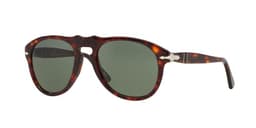
Persol 649 Original PO0649 (Havana / Green, 54 mm)
The frame that answers the pressure problem on published specs rather than on feel. Persol names a keyhole bridge and the Meflecto flexible temple system in the model's own description, lists it in 52-20, 54-20 and 56-20, and gives a 140 mm temple length. A keyhole bridge carries weight on the sides of the nose instead of the top of it, and the 56 is the widest front on this site - the two things that most often stop an acetate frame from pinching. Premium money, and it is the only frame here with all three figures published.
Price as of October 12, 2026. #ad How we’re funded
Frame material: Acetate, handmade in Italy (per Persol). Specs read from the listing on September 15, 2026.
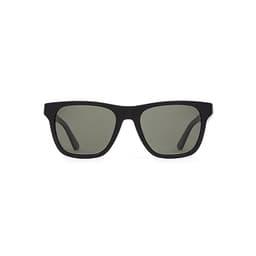
OTIS Guilt Trip X Eco (Black / Grey Polarized)
For a larger head, where the usual cause is a frame that is wide enough at the front and too short at the temple. OTIS publishes the whole fitting - 57-19-130 - so you can check it against a pair you already own before buying. We flag the mismatch honestly: 130 mm is short for a 57 mm front, so a deep head should measure first. Polarized mineral glass, which is also the flattest lens option on this site optically.
Price as of October 12, 2026. #ad How we’re funded
Frame material: Eco-acetate (OTIS states it is derived from cotton seeds and plant matter). Specs read from the listing on September 22, 2026.
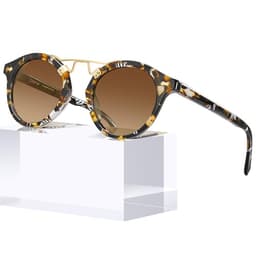
CARFIA Small-Face Double-Bridge (Acetate)
The opposite problem, and the more common one: a frame too wide for the face slides down, you tilt your head to look through the top of the lens, and the ache ends up in your neck and temples rather than your eyes. CARFIA states small-face sizing and polarized acetate on this listing, at budget money. It does not publish a measurement block, which is the honest limit of the pick - but a frame designed small is a better starting point than a medium frame worn loose.
Frame material: Cellulose acetate. Specs read from the listing on July 21, 2026.
The cheap fixes, before you replace the frame
Two of the four causes below are pressure and slippage, and both have a few-dollar answer that an optician would reach for first.
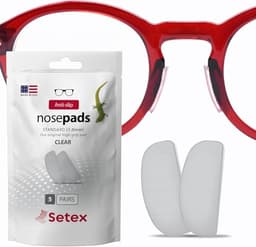
Stick-on anti-slip nose pads
An acetate frame has a molded saddle bridge and no adjustable pads, so when it slides down your nose there is nothing to bend. Thin stick-on pads add grip and lift the lenses a little — the same cheap fix an optician reaches for on a low bridge.
Price as of October 12, 2026. #ad How we’re funded
Listed as “Setex Gecko Grip 1.0mm Anti Slip Nose Pads for Glasses, 5 Pair, Clear” — read on August 16, 2026.
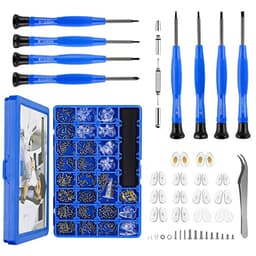
A hinge screw and repair kit
One of the ways you can tell real acetate from injection plastic is that the hinges are metal, pressed into the frame — and metal hinges work loose. A magnetic tray, the right precision drivers and a box of spare screws turn a wobbling temple into a two-minute fix.
Listed as “Upgrade Version Magnetic Eye Glass Repairing Kit, Eyeglass Repair Tool Kit with Compact Screw Box Include Nose Pads, Precision Screwdriver Set, Screws, Tweezer for Eyeglass, Sunglass, Spectacles Watch” — read on August 16, 2026.
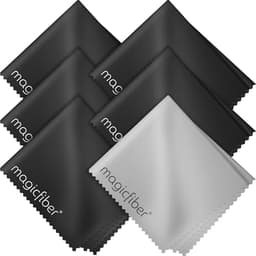
Microfiber cloths, six-pack
The only thing that should ever touch a dry lens. Buying a six-pack rather than one is the actual point: a cloth that has been living in a pocket is carrying grit and has quietly become a scratching tool, so you want a clean one in the case, the car and the bag.
Listed as “MagicFiber Microfiber Cleaning Cloth, Glasses Cleaner, Eyeglass Wipes, 6pk” — read on August 16, 2026.
General guidance, not eye-care advice. Acetate Club is written by an eyewear enthusiast, not an optician or optometrist. Sunglasses are sun protection, not a substitute for an eye exam — if you have a vision or eye-health concern, or need prescription lenses, see a qualified professional.
Frequently asked questions
Why do my sunglasses give me a headache?
Usually one of four things. The frame is pressing - the temples grip behind the ears, the bridge is too narrow, or the front is too wide and the weight has nowhere good to land. The lens is too light for the light you are in, so you are still squinting and the ache is in the muscles around your eyes. The lens quality is poor, so the optics are not even across the lens and your eyes keep refocusing. Or - the one nobody expects - the lens is very dark and you are wearing it indoors as well as out, which makes you more light-sensitive rather than less.
Can polarized sunglasses cause headaches?
Polarization itself is not a known headache mechanism, but it can set up the squinting and head-tilting that is. A polarizing filter interacts with LCD screens and with the internal stress patterns in laminated glass, so dashboards, phones, chartplotters and some windshields can look dim, patchy or rainbow-blotched at certain angles. People respond by tilting their head, moving closer and squinting around the effect, and that is what aches afterward. If this is your pattern, the fix is a non-polarized lens rather than a different tint.
Why do new sunglasses give me a headache?
A new frame changes where weight sits on your nose and ears, and a few days of mild awareness is normal. What is not normal is pain: a dent behind the ear, a red mark on the bridge or an ache at the temples after an hour means the frame does not fit, and acetate can usually be heat-adjusted by an optician to fix exactly that. If the headache continues on a frame that fits well and the lenses are prescription, the prescription or the lens centring is the thing to have checked.
Can sunglasses be too dark and cause headaches?
Yes, and it is the most counter-intuitive cause here. The American Academy of Ophthalmology's point is that people who wear really dark glasses can dark-adapt themselves and increase their photosensitivity: sunglasses outside are fine, but the darker the glasses indoors, the more light-sensitive the person becomes. So a category 4 lens worn habitually, indoors as well as out, can leave normal daylight feeling painful. Category 4 is also not permitted for road use.
What sunglasses are best for migraines?
This is a medical question rather than a shopping one, and the honest answer is that no sunglass on this site is a migraine treatment. The AAO reports that about 80 percent of people who have migraines have photophobia, and the tool it names for that is the FL-41 rose-tinted lens - noninvasive, no side effects and not expensive - which is prescribed and tinted to a specification rather than sold as a fashion sunglass. A well-fitted category 3 lens with stated UV protection is sensible for outdoors. If light is triggering headaches, see an eye doctor rather than buying darker lenses.
Do cheap sunglasses cause headaches?
They can, for a reason that has nothing to do with the price on the tag: optical quality. A sunglass lens has to be even across its whole area, and cheap lenses are more likely to carry small variations in thickness or curvature that act as a weak, unintended prism. Your eyes keep trying to correct for it, and that effort is what you feel. A lens with a stated filter category or a glass lens is a better signal than a price. What cheap lenses do not do is skip UV protection by default - plenty of inexpensive frames state UV400, and we print the stated figure on every product card.
Sources
- American Academy of Ophthalmology (EyeNet) — Photophobia: Looking for Causes and Solutions — AAO: photophobia is a symptom, so the key to managing it is identifying and treating the underlying condition; about 80 percent of people who have migraines have photophobia; people who wear really dark glasses can dark-adapt themselves and increase their photosensitivity — sunglasses outside are fine, but the darker the glasses indoors, the more light-sensitive the person becomes; FL-41 (rose-tinted) lenses are noninvasive, have no side effects and are not expensive (accessed October 11, 2026)
- The College of Optometrists — Tints and driving (BS EN ISO 12312-1 filter categories) — Category bands: 0 = 80-100% transmission, 1 = 43-80%, 2 = 18-43%, 3 = 8-18%, 4 = 3-8%; filters for road use shall be categories 0-3; under 75% transmittance is unsuitable for twilight or night driving (accessed September 21, 2026)
- U.S. FDA — Tips to Stay Safe in the Sun: From Sunscreen to Sunglasses — FDA: lens darkness does not indicate UV protection; look for a 100% UV / UV400 label (accessed July 21, 2026)
- American Academy of Ophthalmology — Recommended Types of Sunglasses — AAO on choosing sunglasses that block 99–100% of UV-A and UV-B (UV400) (accessed July 21, 2026)
- Specialty Vision — Eyeglass Frame Materials (optometry-practice reference) — On titanium frames: very strong, lightweight and corrosion-resistant, suited to a thin, light profile and small or delicate styles; hypoallergenic, which matters for patients with a nickel allergy; corrosion resistance handles sweat, humidity and daily handling without pitting; a higher cost than basic metals. On blended-nylon frames: commonly used for sports and safety eyewear including wraparound styles, handles impact and motion better than standard plastics, and resists sweat and moisture well. On plastic frames: the most popular choice for affordability and styling, but they break more easily than metal and may fade in color over time, while Italian zyl acetate is known for its quality, hand-polished finishes and multi-layer color effects, and lasts many years with proper care (accessed October 11, 2026)
- Persol — 649 Original, Havana frame with green lenses (PO0649 24/31) — Persol's product page: 52-20, 54-20 and 56-20 sizes; acetate frame, crystal lenses, made in Italy; keyhole bridge, arrow and Meflecto; designed in 1957 for Turin's tram drivers (accessed September 15, 2026)
- Ray-Ban — Original Wayfarer Classic RB2140, Polished Tortoise / G-15 Green (50-22) — Ray-Ban's listing for the 50 mm Original Wayfarer: 50-22 fitting, 41 mm lens height, 150 mm temples, acetate frame, G-15 green lens (accessed September 18, 2026)
- ISO 12312-1:2022 — Eye and face protection — Sunglasses for general use — The international standard for general-use sunglasses: UV filtering, filter categories and transmittance (accessed July 21, 2026)
Keep reading
How sunglasses should fit
The four contact points, and what each one feels like when it is wrong.
Read the guideSunglasses lens categories
The 0-4 darkness scale - the number behind two of the causes here.
Read the guideSunglasses for sensitive eyes
If light itself is the problem rather than the frame.
Read the guideMost comfortable sunglasses
Ranked on the fittings each maker publishes, not on how light they feel.
See the picks