Sunglasses for Sensitive Eyes
Four lens properties do the real work - filter category, polarization, coverage and tint color - and only one of them is 'dark'. What each does, and how to read the numbers sellers publish.
How this is funded:we earn a commission if you buy through our links, at no extra cost to you. It never changes which product we recommend, and we’ll tell you when we’d skip one. Full disclosure.
If bright light is uncomfortable for you, the useful starting point is that “dark sunglasses” is four separate properties wearing one word. A lens can cut the overall amount of light (its filter category), remove reflected glare specifically (polarization), stop light arriving from the sides (coverage), or change the balance of the spectrum that reaches you (tint color). They are independent, sellers publish them inconsistently, and buying on darkness alone is how people end up with a lens that is both too dark to drive in and no help with the glare that was bothering them.
One thing to be clear about before anything else: if light hurts rather than simply being uncomfortable, or if the sensitivity is new, one-sided, or comes with headaches or changes in vision, that is a reason to see an optometrist or ophthalmologist. This page explains what the published specifications mean so you can shop accurately. It is not a substitute for an examination and does not try to be.
1. Filter category: the number that sets how dark
Sunglasses sold for general use are classified under ISO 12312-1, and the categories describe how much visible light passes through. The College of Optometrists publishes the bands: category 0 passes 80 to 100%, category 1 passes 43 to 80%, category 2 passes 18 to 43%, category 3 passes 8 to 18%, and category 4 passes 3 to 8%. Most sunglasses you will pick up are category 2 or 3.
Category 3 is the practical answer for most people who find daylight hard. It is the darkest band still intended for road use — the same guidance states that filters for driving should be categories 0 to 3, and that anything passing under 75% of visible light is unsuitable for twilight or night driving. Category 4 exists for glaciers and high altitude and is not a “stronger medicine” version of category 3 for everyday wear. Our full guide to lens categories has the table and the road-use rules.
The frustrating part is that most sellers never publish a category at all. Across the frames we track, one maker publishes it per colorway (Serengeti), and that is why its frames appear below. Where no category is published, you cannot know how dark a lens is from the listing — and you certainly cannot tell from the photograph.
2. Polarization: the glare that actually hurts
Polarization is a different mechanism from tint. Light reflected off a flat surface — wet road, car hood, water, snow, a pale pavement — becomes polarized in one plane, and a polarizing filter blocks that plane while letting the rest through. The result is that the hard white sheet of reflected light disappears without the whole scene getting darker.
For many people who describe themselves as light-sensitive, this is the specific thing that was causing the discomfort, and it is why a modestly tinted polarized lens can be more comfortable than a very dark unpolarized one. MD Anderson makes the useful distinction that polarization is a comfort feature and not a substitute for UV protection. Our polarized vs non-polarized guide covers when it matters and the screen-visibility trade-off, and how to tell if sunglasses are polarized gives you three ways to check a pair you already own.
3. Coverage: the light that gets in past the lens
A small lens leaves gaps, and light arriving from above and from the outer corner reaches your eye without passing through any filter at all. This is the least discussed property and often the most noticeable: people who find a large frame more comfortable are usually experiencing coverage rather than tint. MD Anderson specifically recommends wraparound or close-fitting styles for this reason, and the same logic is why a bigger acetate front helps even without a wrap.
Coverage also matters for your eyelids rather than your eyes — UV exposure is cumulative, and the skin around the eye is thin and commonly affected. The American Academy of Ophthalmology and the National Eye Institute both put UV protection ahead of everything else in choosing sunglasses. On an acetate frame, coverage means lens height and width rather than curvature; our page on oversized acetate sunglasses covers the shapes that manage it without looking theatrical, and reading sunglasses sizes explains which number to compare.
4. Tint color: what you see, not how much
Color changes the balance of what reaches you, not the quantity — that is the category’s job. Grey is neutral and keeps colors looking true. Brown and amber cut more of the blue end of the spectrum, which raises apparent contrast and is why they are popular for driving and flat light. Green sits between them. Serengeti tunes its lenses to 555 nm, the center of the visible spectrum, and describes its Spectral Control filtering as cutting up to 96% of blue light — a specific, published example of the same principle.
There is no “best” tint for sensitive eyes, and anyone telling you there is has stopped describing optics and started selling. Try a brown or amber lens if flat hazy light bothers you, and grey if color accuracy matters. Our lens tint colors guide goes through each one, and mirrored vs gradient lenses covers the two finishes that change how light arrives from above.
What about lenses that adapt?
Photochromic lenses darken in bright light and lighten when it drops, which is appealing if your sensitivity varies through the day or you move in and out of shade. Two caveats worth knowing before you spend: they are triggered by UV, and a car windshield blocks much of it, so they may not darken fully while driving; and they take time to change, more so when it is cold. Both points come from the American Academy of Ophthalmology’s own summary. Our photochromic sunglasses guide covers how they work and who they suit.
How to shop this, in order
Start with stated UV protection — UV400 or 100% UV-A and UV-B — because that is the one property that protects rather than comforts, and the FDA is explicit that lens darkness is not evidence of it; our guide to checking UV protection covers the wording to look for. Then look for a published filter category, and prefer 3 if daylight is genuinely hard for you. Then polarization, which most budget acetate frames now include at no premium. Then size: the largest lens that still fits your face properly, which our guide to how sunglasses should fit helps you judge. Tint color last, because it is the one that is genuinely a preference.
And if a frame’s listing publishes none of this — no category, no measurements, no material beyond “plastic” — that is information too. Our page on telling real acetate from acetate-look plastic covers how we treat claims a seller will not put in writing, which is the same way we would like you to treat them.
Three frames that cover the three mechanisms
One with a published filter category at the dark end of the road-legal range, one with the largest lens coverage we track, and one that does the coverage job under $50. Every claim here is the one the maker publishes. Prices are live and dated.
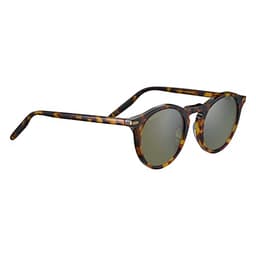
Serengeti Raffaele (Shiny Tortoise, Mineral Polarized 555nm, Cat 3)
The only frame we track whose maker publishes a filter category on the specific colorway: Serengeti lists the Shiny Tortoise Raffaele with its Mineral Polarized 555nm lens in category 3, the darkest band still permitted for road use. Italian acetate with a keyhole bridge; mineral glass, so it is heavier than plastic.
Price as of October 5, 2026. #ad How we’re funded
Frame material: Italian acetate (per Serengeti). Specs read from the listing on September 21, 2026.
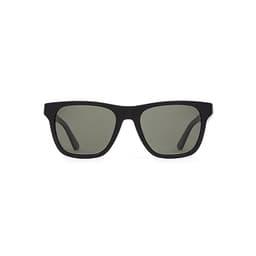
OTIS Guilt Trip X Eco (Black / Grey Polarized)
The widest coverage in the registry at a 57 mm lens, polarized, in OTIS’s eco-acetate with a mineral lens. A large square that suits round, oval and heart faces - the pick if stray light coming in past the edge of a smaller frame is your actual complaint.
Price as of October 5, 2026. #ad How we’re funded
Frame material: Eco-acetate (OTIS states it is derived from cotton seeds and plant matter). Specs read from the listing on September 22, 2026.
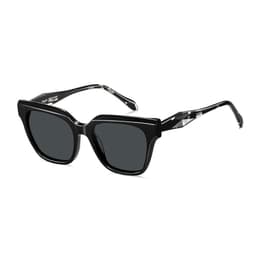
SOJOS Audrey Oversize Square (Acetate, Polarized)
Coverage on a budget: SOJOS states cellulose acetate for frame and temples, polarized and UV400, in a deliberately oversized square. No filter category or measurements are published, which is the trade - but it blocks far more stray light than a small frame at the same price.
Price as of October 5, 2026. #ad How we’re funded
Frame material: Cellulose acetate (frame and temples, per listing). Specs read from the listing on September 29, 2026.
General guidance, not eye-care advice. Acetate Club is written by an eyewear enthusiast, not an optician or optometrist. Sunglasses are sun protection, not a substitute for an eye exam — if you have a vision or eye-health concern, or need prescription lenses, see a qualified professional.
Frequently asked questions
What sunglasses are best for sensitive eyes?
Look for four things rather than one: a filter category of 3 if you want the darkest lens still permitted for road use (category 3 passes 8 to 18% of visible light), polarization to kill reflected glare off roads and water, a large lens that covers the eye socket and blocks light arriving from the side, and a brown or amber tint if contrast matters to you more than color accuracy. Darkness alone is the least useful of the four, and the FDA notes that a dark lens is not evidence of UV protection.
Are polarized sunglasses better for light sensitivity?
For reflected glare, yes, and that is often the part that actually hurts - the hard white sheet of light off a wet road, a car hood, snow or water. Polarization blocks that specifically, which a plain dark lens does not. It does not reduce the general brightness of the sky, which is what the filter category does, so the two properties are complementary rather than alternatives. The one trade-off is that polarized lenses can make some phone and dashboard screens look patchy.
Is category 4 better if light really hurts?
Not for general wear, and not at all for driving. Category 4 lenses pass only 3 to 8% of visible light, and the road-use guidance is explicit that filters for driving should be category 0 to 3, with anything under 75% transmittance unsuitable for twilight or night driving. Category 4 is intended for high-altitude and glacier conditions. If a category 3 lens genuinely is not enough for you in ordinary daylight, that is worth discussing with an eye-care professional rather than solving by buying darker lenses.
Does lens color matter for sensitive eyes?
It changes what you see rather than how much light arrives. Grey is the neutral option and keeps colors looking natural; brown and amber lift contrast by cutting more of the blue end of the spectrum, which many people find more comfortable in hazy or flat light; green sits between the two. None of these is a treatment, and the amount of light getting through is set by the filter category rather than by the color. Our lens tint colors guide covers each one.
Can sunglasses help with migraine or photophobia?
We are not able to answer that, and we will not pretend otherwise - this site is written by an eyewear enthusiast, not an eye-care professional, and persistent or painful light sensitivity is a symptom that deserves a proper examination. What we can say is what the published specifications mean, so that whatever your optometrist or ophthalmologist recommends, you can read a listing and tell whether a frame actually meets it. Start with the filter category and the lens size.
Sources
- ISO 12312-1:2022 — Eye and face protection — Sunglasses for general use — The international standard for general-use sunglasses: UV filtering, filter categories and transmittance (accessed July 21, 2026)
- The College of Optometrists — Tints and driving (BS EN ISO 12312-1 filter categories) — Category bands: 0 = 80-100% transmission, 1 = 43-80%, 2 = 18-43%, 3 = 8-18%, 4 = 3-8%; filters for road use shall be categories 0-3; under 75% transmittance is unsuitable for twilight or night driving (accessed September 21, 2026)
- American Academy of Ophthalmology — Recommended Types of Sunglasses — AAO on choosing sunglasses that block 99–100% of UV-A and UV-B (UV400) (accessed July 21, 2026)
- American Academy of Ophthalmology — The Sun, UV Light and Your Eyes — AAO on how UV exposure is linked to cataracts, growths and eye cancer (accessed July 21, 2026)
- MD Anderson Cancer Center — 9 things to know about sunglasses, eye protection and cancer — On UV protection over lens darkness, wraparound coverage and polarization vs UV (accessed July 21, 2026)
- National Eye Institute — Protecting your eyes from the sun's UV light — NEI on UV eye risks and choosing sunglasses that block UV-A and UV-B (accessed July 21, 2026)
- Serengeti — Raffaele (acetate collection) — Serengeti's product page: Italian acetate, round, keyhole nose bridge, offered in Shiny Tortoise with the Mineral Polarized 555nm lens in category 3 (accessed September 21, 2026)
- Serengeti — The Serengeti Lens (lens technology) — Serengeti on its mineral lenses (Corning borosilicate optical glass), the 555 nm tuning, Spectral Control, and UV protection to 400 nm (accessed September 21, 2026)
Keep reading
Sunglasses lens categories 0-4
The transmittance bands, and which are legal to drive in.
Read the guideSunglasses lens tint colors
What grey, brown, amber and green each actually do.
Read the guidePolarized vs non-polarized
The glare that polarization removes, and the glare it does not.
Read the guidePhotochromic sunglasses explained
One pair that adapts, and why a car windshield interferes.
Read the guide