Sunglasses Lens Categories, Explained
The number on the inside of a temple - 0 to 4 - tells you how dark the lens is, and nothing else. What each category is for, which one you almost certainly want, and why category 4 is not for the road.
How this is funded:we earn a commission if you buy through our links, at no extra cost to you. It never changes which product we recommend, and we’ll tell you when we’d skip one. Full disclosure.
Somewhere on a good pair of sunglasses — printed inside a temple, on the swing tag, or in the listing — there is a number from 0 to 4. That is the lens’s filter category, and it is one of the few standardized things a sunglasses label can tell you. It measures exactly one thing: how much visible light the lens lets through. It does not measure UV protection, polarization, lens quality or anything else, and most of the confusion about it comes from assuming it does. Here is what each category means, which one you almost certainly want, and where the number matters enough to check.
The five categories
The categories come from ISO 12312-1, the international standard for general-use sunglasses (in Europe, EN ISO 12312-1). Each category is a band of luminous transmittance — the share of visible light that gets through the lens to your eye. Lower number, lighter lens; higher number, darker lens.
| Category 0 | 80–100% of light transmitted. Clear or a very light tint. Fashion and indoor use; no real sun protection from the tint itself. |
|---|---|
| Category 1 | 43–80%. A light tint. Overcast days, low light, and the lightest end of a photochromic lens. |
| Category 2 | 18–43%. A medium tint. Variable or partly cloudy days; the darker end of many “drivers” and photochromic lenses. |
| Category 3 | 8–18%. A dark tint. Bright sun, beach, water — the everyday standard, and what most sunglasses are sold in. |
| Category 4 | 3–8%. Very dark. Glaciers, high altitude, open ocean. Unsuitable for driving. |
Two things are worth noticing in that table. The bands are wide — a category-3 lens can let through anywhere from 8 to 18 percent, so two category-3 lenses can look noticeably different — and the bands overlap only at their edges, so the category is a coarse description of darkness rather than a precise one. That is fine for its purpose, which is to tell you whether a lens is roughly right for the conditions you will wear it in.
Which category you want
For most people, in most places, category 3. It is dark enough for a bright summer day, a beach and a boat, and it is what the majority of sunglasses on the market are — including, in practice, most of the frames we recommend on this site, even where the listing does not say so. If you buy a pair of ordinary dark sunglasses from a reputable maker and the category is not stated, category 3 is the overwhelmingly likely answer. Our roundup of the best acetate sunglasses is, functionally, a list of category-3 frames.
Category 2 is the one worth considering if you wear sunglasses in variable light: overcast mornings that turn bright, city streets shaded by buildings, long drives that pass through tunnels and tree cover. Serengeti labels its “Drivers” photochromic lenses Cat 2 to 3 for exactly that reason. Category 1 is a light tint that mostly reduces glare on dull days, and category 0 is a fashion or indoor lens. Our guide to lens tint colors covers the other axis of the choice — a category tells you how dark, the tint tells you what color, and both change what you see.
Category 4: what it is for, and why it is not for the road
Category 4 lets through only 3 to 8 percent of visible light, and it exists for conditions most people never encounter: glaciers, high-altitude snow, open ocean under a high sun, where the glare is so intense that a category-3 lens still leaves you squinting. In those conditions it is the right tool. Everywhere else it is too dark, and that is not a matter of taste — it is a road-safety rule. The standard’s guidance is that filters suitable for road use are categories 0, 1, 2 or 3, which puts category 4 outside them. A lens that dark leaves your eyes unable to recover fast enough in a tunnel, under trees or at dusk. Our driving roundup covers the rest of the lens rules for the road; the short version is that a moderate category-3 polarized lens is the safe, boring, correct answer, and category 4 belongs in a glacier bag.
There is a second driving threshold most guides miss. The standard also treats filters transmitting less than 75 percent of light as unsuitable for twilight or night driving — which rules out most of category 1 and all of 2, 3 and 4. In plain terms: no sunglasses after dark, whatever the category.
Photochromic lenses and “Cat 2 to 3”
A photochromic lens changes darkness with the light, so it cannot sit in a single category. Makers that publish the number write it as a range — “Cat 2 to 3” means the lens rests at category 2 in low light and darkens to category 3 in bright sun. Serengeti, which builds its photochromic lenses in mineral glass, labels its Foyt exactly that way, and it is one of the frames below. A photochromic range is genuinely useful if you want one pair for a whole variable day. What it cannot do is make a lens safe for night driving, because even the light end of “2 to 3” is well under the 75 percent threshold.
What the category does not tell you
UV protection. This is the one that matters. Category measures visible light; ultraviolet is invisible, and UV protection comes from the lens material or a coating, not from darkness. A category-1 lens can block all UV. A category-4 lens can block none — and a very dark lens with no UV filtering is worse than no sunglasses, because it opens your pupils to light it is not blocking. The number that protects your eyes is a stated UV400 or 100% UVA/UVB claim, and our UV400 explainer and guide to checking UV protection cover it. Every frame on this page states both a category and a UV claim, which is the combination to look for.
Polarization. Also separate. A polarized lens filters glare reflected off flat surfaces; it can be any category. Two of the three frames below are polarized and one is not, at the same category-3 darkness, which is the clearest illustration that the two have nothing to do with each other. Our guide to telling if sunglasses are polarized covers the test.
Lens quality. A category-3 lens from a budget brand and a category-3 mineral-glass lens from Serengeti let through a similar share of light and behave completely differently in every other way — clarity, scratch resistance, weight, color fidelity. Category is a darkness setting, not a grade. Our guide to sunglasses lens materials is where the quality question actually lives.
Why the number is so hard to find
In Europe the category is routinely marked on the product under the EN ISO standard, so European buyers see it as a matter of course. On US listings it rarely appears, and the great majority of them — including most of the frames in our own registry — simply do not state it. That is not a red flag on its own; a reputable dark lens is almost certainly category 3. But it does mean that a maker who states the category is giving you something the others are not, and it is one of the reasons Serengeti and OTIS listings read differently from a typical Amazon page. If a listing does state a category, believe it. If it does not, assume 3 for a dark lens and 2 for a lighter one, and put your attention where it belongs: on the UV claim, the stated frame material, and the fit. Our guide to buying sunglasses online covers what else to read a listing for.
Three acetate frames that state their category
Almost no US-market listing tells you the filter category, which is the whole reason the number is hard to shop for. These three do - two state it in the listing title itself, one on the maker's spec page - and all three are cut from acetate. Every one is category 3, the everyday standard, and one of them moves between 2 and 3 with the light. Prices are live and dated.
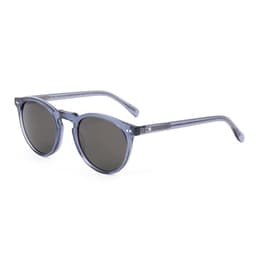
OTIS Omar x Outerknown Eco (Crystal Wave / Neutral Grey)
OTIS states filter category 3 for the Omar, with polarized mineral glass and 100% UVA/UVB, in a genuinely small 47.5 mm round. The mid-price way into a stated category-3 glass lens; the eco-acetate biodegradability claim carries the caveat from our OTIS review.
Price as of September 21, 2026. #ad How we’re funded
Frame material: Eco-acetate (OTIS states it is derived from cotton seeds and plant matter). Specs read from the listing on September 7, 2026.
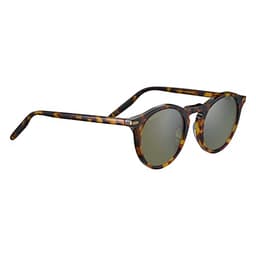
Serengeti Raffaele (Shiny Tortoise, Mineral Polarized 555nm, Cat 3)
The listing title says it outright: Mineral Polarized 555nm, Cat 3 to 3. Italian acetate, a round shape with a keyhole bridge, Corning borosilicate glass per Serengeti, and UV protection to 400 nm on Serengeti's lens page. Premium money, sized Small-Medium.
Price as of September 21, 2026. #ad How we’re funded
Frame material: Italian acetate (per Serengeti). Specs read from the listing on September 21, 2026.
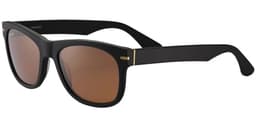
Serengeti Foyt Large (Matte Black, Mineral 555nm Photochromic, Cat 2 to 3)
The photochromic one: Cat 2 to 3 on the listing means the mineral lens darkens from category 2 to category 3 as the light rises. Eco-acetate, cut Large. This variant is not polarized - Serengeti sells the polarized Foyt separately - and it costs premium money.
Price as of September 21, 2026. #ad How we’re funded
Frame material: Eco-friendly acetate (per Serengeti). Specs read from the listing on September 21, 2026.
General guidance, not eye-care advice. Acetate Club is written by an eyewear enthusiast, not an optician or optometrist. Sunglasses are sun protection, not a substitute for an eye exam — if you have a vision or eye-health concern, or need prescription lenses, see a qualified professional.
Frequently asked questions
What does category 3 mean on sunglasses?
Category 3 is a dark tint that lets through 8 to 18 percent of visible light, under the ISO 12312-1 standard for general-use sunglasses. It is the category most ordinary sunglasses are sold in and the one most people want for bright daytime sun, at the beach, and on the water. It is suitable for daytime driving. It says nothing about UV protection, which is a separate property of the lens.
Is category 3 or category 4 better?
Category 3 for almost everyone. Category 4 lets through only 3 to 8 percent of visible light and is meant for extreme glare - glaciers, high altitude, open ocean - and the standard says filters suitable for road use are categories 0 to 3, so a category-4 lens is unsuitable for driving. If you are not going somewhere with snow or sea glare all day, category 4 is simply too dark, and it will be a liability the moment you walk indoors or drive into a tunnel.
What does 'Cat 2 to 3' mean on a sunglasses listing?
A range like 'Cat 2 to 3' marks a photochromic lens that darkens from category 2 (18 to 43 percent transmission) to category 3 (8 to 18 percent) as the light gets brighter. A listing that reads 'Cat 3 to 3' is describing a fixed category-3 lens in the same notation - Serengeti uses it on both kinds. Neither marking says anything about UV protection, which is a separate claim to look for.
Does a higher category mean more UV protection?
No, and this is the mistake that matters. Category measures visible light only - how dark the lens looks. UV protection is an invisible property of the lens material or coating, and a category-1 lens can block all UV while a category-4 lens blocks none. Look for a stated UV400 or 100% UVA/UVB claim, which every frame on this page carries, and treat the category as a comfort setting rather than a safety one.
Can I drive at night in category 1 sunglasses?
The standard's guidance is that filters transmitting less than 75 percent of light are not suitable for road use at twilight or at night, which rules out most of category 1 and all of categories 2, 3 and 4. Category 0 is clear or nearly so. In practice: take sunglasses off at dusk. Yellow 'night driving' lenses are a separate product with doubtful benefit, and no sunglass category is the answer after dark.
Sources
- The College of Optometrists — Tints and driving (BS EN ISO 12312-1 filter categories) — Category bands: 0 = 80-100% transmission, 1 = 43-80%, 2 = 18-43%, 3 = 8-18%, 4 = 3-8%; filters for road use shall be categories 0-3; under 75% transmittance is unsuitable for twilight or night driving (accessed September 21, 2026)
- ISO 12312-1:2022 — Eye and face protection — Sunglasses for general use — The international standard for general-use sunglasses: UV filtering, filter categories and transmittance (accessed July 21, 2026)
- U.S. FDA — Tips to Stay Safe in the Sun: From Sunscreen to Sunglasses — FDA: lens darkness does not indicate UV protection; look for a 100% UV / UV400 label (accessed July 21, 2026)
- American Academy of Ophthalmology — Recommended Types of Sunglasses — AAO on choosing sunglasses that block 99–100% of UV-A and UV-B (UV400) (accessed July 21, 2026)
- Serengeti — Raffaele (acetate collection) — Serengeti's product page: Italian acetate, round, keyhole nose bridge, offered in Shiny Tortoise with the Mineral Polarized 555nm lens in category 3 (accessed September 21, 2026)
- Serengeti — Foyt — Serengeti's product page: handcrafted eco-friendly acetate; category 2 to 3 lenses in polarized and non-polarized mineral versions; photochromic mineral lenses activated in a hydrogen-fueled Lehr furnace (accessed September 21, 2026)
- Serengeti — The Serengeti Lens (lens technology) — Serengeti on its mineral lenses (Corning borosilicate optical glass), the 555 nm tuning, Spectral Control, and UV protection to 400 nm (accessed September 21, 2026)
Keep reading
UV400, explained
The number that actually protects your eyes - and why it is separate from category.
Read the guideLens tint colors, explained
Category is how dark; tint is what color. Both matter.
Read the guideBest acetate sunglasses for driving
Where the category-4 rule bites, and the lens rules for the road.
See the picksBest glass lens sunglasses
The mineral-glass frames, category stated or not.
See the picks