By Face Shape
Which frame shapes flatter your face — round, square, oval or heart — with the fit math behind each recommendation and the shapes to avoid.
The single most useful thing you can know before buying sunglasses is your face shape — because the rule behind every “best frames for you” recommendation is simple: frames flatter by contrast. A round face looks best in angular frames that add definition; an angular square face is softened by round ones. Get that contrast right and a $30 frame can look better on you than a $300 one that fights your features.
Pick your shape below. Each guide explains what to look for, names the specific acetate frames that do the job across budgets, and — just as important — tells you which shapes to avoid. Not sure of your shape? Our five-step measuring guide settles it with a mirror and a tape measure.
Everything in Face Shapes
Best Sunglasses for a Round Face
Angular and wider-than-tall frames add the definition a round face wants. The acetate picks that do it, and the round frames to skip.
Our top pick
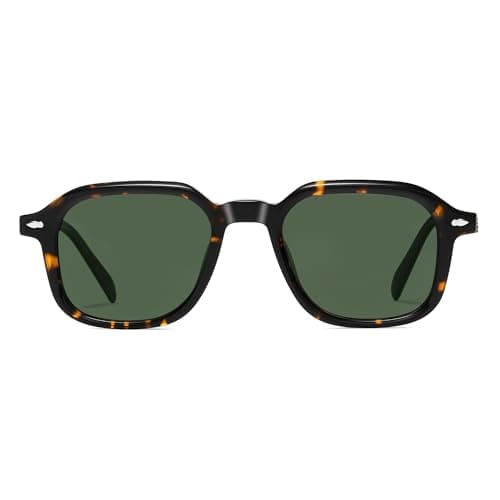
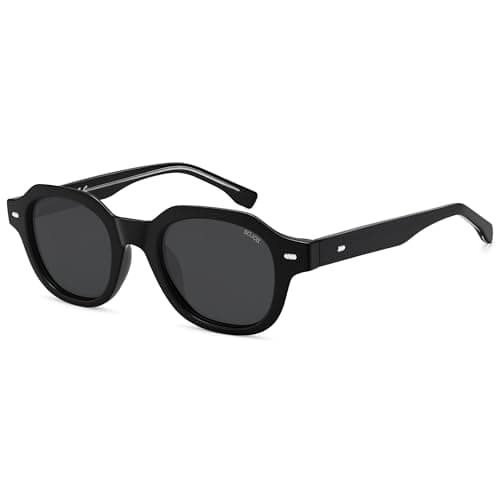
SOJOS Acetate Rectangle (Handmade, Polarized)
$39.99 · View on AmazonPrice as of October 17, 2026. #ad How we’re funded
Best Sunglasses for a Square Face
Round and curved frames soften a strong jaw. The acetate frames that balance a square face, and the boxy shapes to avoid.
Our top pick
SOJOS Retro Polygon Round (Italian Acetate)
Best Sunglasses for an Oval Face
Oval faces suit almost everything — so the game is proportion, not shape. The acetate frames that flatter, and how to not overwhelm your features.
Our top pick
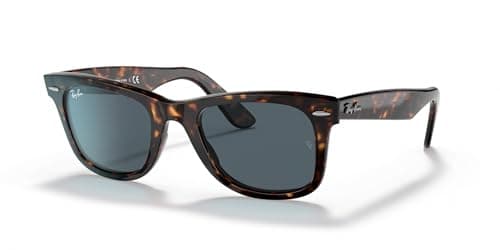
Ray-Ban Original Wayfarer RB2140
$191.00 · View on AmazonPrice as of October 17, 2026. #ad How we’re funded
Best Sunglasses for a Heart-Shaped Face
Bottom-heavy and cat-eye frames balance a wider forehead and narrow chin. The acetate picks for a heart-shaped face, and what to avoid.
Our top pick
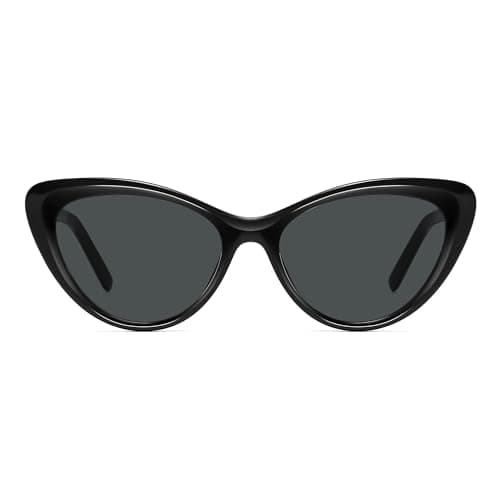
SOJOS Acetate Cat-Eye (Handmade, Polarized)
$39.99 · View on AmazonPrice as of October 17, 2026. #ad How we’re funded
Best Sunglasses for an Oblong (Long) Face
A long face wants frames with height and presence to break up the length. The acetate picks that add width, and the narrow shapes to skip.
Our top pick
SOJOS Audrey Oversize Square (Acetate, Polarized)
$39.99 · View on AmazonPrice as of October 17, 2026. #ad How we’re funded
Best Sunglasses for a Diamond Face
Wide cheekbones with a narrow forehead and chin suit cat-eye, browline and soft round frames. The acetate picks that flatter, and what to avoid.
Our top pick
SOJOS Acetate Cat-Eye (Handmade, Polarized)
$39.99 · View on AmazonPrice as of October 17, 2026. #ad How we’re funded
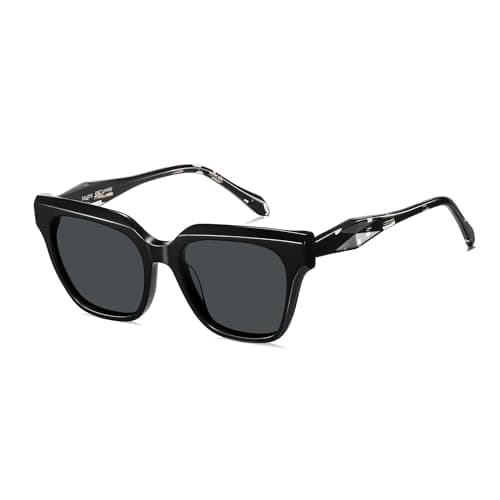
Best Sunglasses for a Triangle Face
A wider jaw and narrower forehead call for frames with weight up top, like cat-eye and browline shapes. The acetate picks that balance a triangle face, and what to avoid.
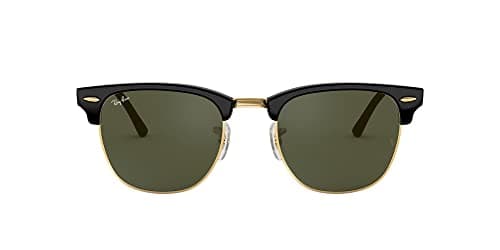
Our top pick
Ray-Ban Clubmaster RB3016
$191.00 · View on AmazonPrice as of October 17, 2026. #ad How we’re funded
How frame-to-face fit actually works
There are two ideas doing all the work. The first is contrast of shape: choose a frame shape that is the opposite of your face’s dominant lines. Round face, angular frame. Square face, round frame. Long face, a taller frame that shortens it. The second is proportion: the frame should roughly match the width of your face at the temples — a frame narrower than your face makes it look wider, and one much wider looks borrowed. Everything else is personal taste.
Why we lead with the “avoid” list
Most guides only tell you what to buy. We also tell you what to skip, because the fastest way to shop is to rule out the shapes that fight your face and then choose from what’s left. A round face in round frames, or a strong square jaw in a boxy frame, doubles down on the feature instead of balancing it. That “more of the same” effect is the most common mistake — and the easiest to avoid once you know to look for it.
Fit beats trend
A frame that’s having a moment is only worth buying if the shape suits your face. Oversized square frames, tiny 90s ovals, bold cat-eyes — each flatters some faces and overwhelms others. Where a trending shape genuinely suits you, we’ll say so; where it doesn’t, we’ll point you to the version that does.
Frequently asked questions
How do I find my face shape?
Pull your hair back, look straight into a mirror, and compare your face's width to its length and the shape of your jaw. Round faces are about as wide as they are long with soft edges; square faces have a strong straight jaw; oval faces are longer than wide with balanced features; heart faces have a wider forehead and narrow chin. Our measuring guide has the full five-step method.
What sunglasses suit every face shape?
A medium, soft-squared frame (a gently rounded rectangle) is the closest thing to universal — it adds a little definition without being boxy. But 'suits everyone' means flattering, not striking. For the best result, match the frame shape to the contrast your specific face wants.
Does frame size matter as much as shape?
Yes. A frame should roughly match the width of your face at the temples. Even the right shape looks off if it's too small (it makes your face look wider) or too large (it looks borrowed). Check the lens and frame width against your face, not just the silhouette.
Can I ignore face-shape rules if I like a frame?
Absolutely — these are guidelines, not laws, and confidence beats a rulebook. But if you're unsure why a pair doesn't look quite right on you, face-shape contrast is usually the reason, and it's a cheap fix to get right.