Bio-Acetate vs Acetate vs Recycled Plastic
Three materials, three completely different environmental arguments - and only one of them is about what happens after you throw the frame away.
How this is funded: we earn a commission if you buy through our links, at no extra cost to you. It never changes which product we recommend, and we’ll tell you when we’d skip one. Full disclosure.
These three materials get shelved together under “sustainable eyewear” and they are not making the same argument. One is about what the frame is made from. One is about what happens after you throw it away. One is about waste that already exists. Those are three separate claims with three separate levels of proof behind them, and a buyer who does not separate them ends up paying for the wrong one.
We do not run biodegradation tests and we do not own a lab, so what follows is built from what the material makers and the brands publish, plus the standards those claims are measured against. Where a claim has no published basis, we say so rather than repeating it.
The short version
| Regular acetate | Cellulose from wood pulp and cotton, petroleum-based plasticizer. Cut from sheet. Serviceable for years. |
|---|---|
| Bio-acetate | Same cellulose, bio-based plasticizer instead. Identical to work with. Biodegrades under industrial composting only. |
| Recycled plastic | Reprocessed waste plastic, injection-molded. Not acetate. Cannot be heat-adjusted or re-polished. |
| Best claim | Bio-acetate: cleanest feedstock. Recycled: diverts existing waste, no conditions attached. |
| Weakest claim | Any “biodegradable in landfill” wording. The test basis is composting, not landfill. |
| What decides it | How long you keep the frame. Longevity beats all three feedstock arguments combined. |
Regular acetate: the baseline, and a better one than people assume
Conventional cellulose acetate starts as wood pulp and cottonrather than crude oil, which is the detail behind every “plant-based frame” line you have read. It is chemically converted and plasticized after that, so it is not a natural material in any meaningful sense, and standard acetate does not meaningfully biodegrade — our is acetate natural guide takes that apart properly.
What acetate does have is the property none of the marketing leads with: it can be repaired. Acetate can be heat-adjusted when the fit drifts, re-polished when the surface goes flat, and re-hingedwhen a hinge pulls. A frame that can be serviced is a frame that stays out of a bin, and that is worth more than any feedstock percentage. It is also cut from solid sheet, so color runs through the full thickness — which is why real tortoise has depth and printed plastic tortoise does not.
Bio-acetate: one ingredient different
Bio-acetate is conventional cellulose acetate with the plasticizer swapped — petroleum-based out, bio-based in. Ray-Ban describes its own version as cellulose acetate from cotton or wood pulp combined with a bio-based plasticizer made from renewable sources such as cereals, beet or sugar cane. That is the entire material difference, and our bio-acetate vs acetate comparison goes through it in detail.
Because it is the same base material, it behaves identically: same weight, same color depth, same machining, same heat-adjustability, same repairs. You cannot tell a bio-acetate frame from a conventional one in the hand, and no honest page will tell you otherwise.
The two claims attached to it are worth keeping separate, because brands routinely merge them.
The feedstock claim is a percentage. Ray-Ban states 67% bio-based carbon content on its bio-based RB2140, calculated to ASTM D6866. That is a measurable, checkable property, and it says precisely nothing about disposal.
The biodegradability claimis a test result. The figure quoted across the industry — exceeding 90% biodegradation in roughly 115 days — is measured to ISO 14855-2, under industrial composting conditions: sustained elevated temperature and managed microbial activity inside a facility. It does not mean a landfill, a garden heap, a hedge or the sea. Any brand promising landfill biodegradation is describing an outcome its own test basis does not support, and we name one that does exactly that in our bio-acetate roundup.
Recycled plastic: the honest one, with a real cost
Recycled-plastic frames are a genuinely different proposition, and in one respect a stronger one. Their claim is about waste that already exists— reprocessed bottles, production scrap, in some ranges discarded fishing nets — and that claim is true at the point of sale with no conditions attached. It needs no composting facility and no consumer behavior to hold up. Compare that with a biodegradability claim, which only pays off if the frame reaches an industrial composter it will almost certainly never reach.
SOJOS is the clearest example on this site because it already has an acetate line we have reviewed and a separate recycled range, so the comparison is not brand-against-brand. On the recycled frames SOJOS states a non-toxic, BPA-free recycled plasticframe, with its own specification field reading “Recycled Materials.” It publishes a full measurement block for the frame — 140 mm frame width, 140 mm temples, a 20 mm bridge, a 54 mm lens and 41.5 mm lens height on the Bloom — which is more detail than either budget bio-acetate frame we found provides. It does not state a recycled-content percentage on the product page, so how much of the frame is recycled is not something you can check.
The cost is the frame itself. A recycled-plastic frame is injection-molded, and that rules out both of acetate’s repairs: it cannot be heat-adjusted to your face, and it cannot be re-polished when the surface dulls. Color sits on the surface rather than running through the material, so there is no depth to it and a deep scratch shows the base plastic underneath. Our acetate vs plastic comparison covers why a molded frame is a different object from a cut one. In footprint terms that matters more than it sounds: a frame you cannot adjust is a frame you are more likely to stop wearing.
The three claims, side by side
Stated plainly, so you can see which one you are actually buying:
Regular acetateclaims a partly plant-derived origin and delivers the longest service life. Weakest on end-of-life — it does not meaningfully biodegrade. Strongest on the thing that dominates footprint, which is how long the frame stays in use.
Bio-acetateclaims a cleaner feedstock and, with the right conditions, biodegradation. Strongest where a figure and a standard are published; near-worthless where the wording is vague, because you have no way to check it. Identical to acetate as an object, so it inherits acetate’s service life.
Recycled plasticclaims diversion of existing waste and is the easiest of the three to believe. Weakest as a frame — no adjustment, no re-polishing, surface color only — and weakest on transparency when the recycled percentage is not published.
What actually decides it
Longevity, and it is not close. A conventional acetate frame worn for eight years and re-polished twice beats three bio-acetate frames bought and discarded over the same period, and it beats a recycled-plastic frame abandoned after one summer because it never sat right and could not be adjusted. Every honest assessment of eyewear ends up here, and it is why our sustainable acetate roundup ranks buy-it-for-a-decade frames alongside the greener feedstocks.
Which reduces to something usefully unglamorous. Get the size right and the shape rightfirst, because a frame that fits is a frame you keep. Then pick the material on the claim you actually care about: cleanest origin, bio-acetate with a published figure; existing waste diverted, recycled plastic; best object and longest life, conventional acetate. And do not pay a large premium for any feedstock claim — at a small premium bio-acetate is a free win, and at three times the price it is a worse use of the money than simply buying a frame you will still want in five years.
One frame per material, to make it concrete
Not a ranking - the three materials are not competing for the same buyer. One honest example of each, all confirmed listed and in stock before this page went up. Live prices are on the cards.
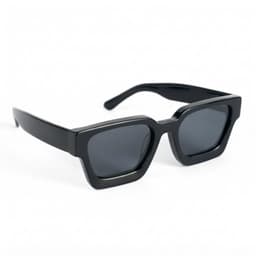
Earthly Ones Polarized Square (Eco Bio-Acetate)
The bio-acetate example, and deliberately a cheap one. Its listing states bio-acetate with polarized UV400 lenses at ordinary budget-acetate money, which is the only price at which the material upgrade is an easy yes. Nothing is quantified and no standard is cited.
Price as of October 17, 2026. #ad How we’re funded
Frame material: Bio-acetate (per the listing: “Eco Bio-Acetate”). Specs read from the listing on September 3, 2026.
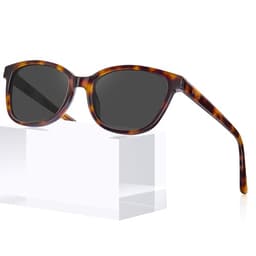
CARFIA Designer Acetate (Women's, Polarized)
The conventional acetate example. Same look, same feel, same heat-adjustability and re-polishability as the bio-acetate frame - the difference is one ingredient you cannot see. Buy this if you would keep it longer than the alternatives.
Price as of October 17, 2026. #ad How we’re funded
Frame material: Cellulose acetate. Specs read from the listing on July 21, 2026.
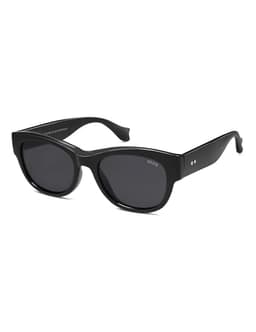
SOJOS Ocean Collection Bloom Square (Recycled Plastic)
The recycled-plastic example, and NOT acetate. SOJOS states a non-toxic, BPA-free recycled plastic frame and publishes a full measurement block. It is the cheapest of the three and the only one whose environmental claim needs no composting facility to be true.
Price as of October 17, 2026. #ad How we’re funded
Frame material: Recycled plastic (SOJOS spec field reads “Recycled Materials”; described as non-toxic, BPA-free recycled plastic). Specs read from the listing on September 3, 2026.
Frequently asked questions
Which is better for the environment: bio-acetate or recycled plastic?
They improve different ends of the same problem, so there is no single winner. Bio-acetate improves the feedstock — it replaces a petroleum-based plasticizer with a bio-based one, so less of the frame originates in crude oil — and under industrial composting it biodegrades. Recycled plastic improves the waste side: it diverts material already in circulation, and that claim needs no facility to be true. If you care most about what a frame is made from, bio-acetate. If you care most about plastic already in the world, recycled. If you care about total footprint, keep whichever frame you buy for a decade.
Is recycled plastic as good as acetate for a sunglasses frame?
Not as a frame, no, and this is the trade-off nobody advertises. Recycled plastic frames are injection-molded, which means they cannot be heat-adjusted to your face by an optician and cannot be re-polished when the surface dulls — the two repairs that keep an acetate frame in service for years. Color is on the surface rather than layered through the sheet, so there is no depth to it. What recycled plastic gives you instead is a lower price, lighter weight and a diversion claim that stands up without any conditions attached.
Is bio-acetate the same as recycled acetate?
No, and the words get mixed up constantly. Bio-acetate is virgin material made with a bio-based plasticizer instead of a petroleum-based one — nothing about it is recycled. Recycled acetate means offcuts and production scrap from acetate manufacturing that get reprocessed into new sheet, which is a genuine circularity claim about waste. Recycled plastic is a third thing again: usually reprocessed PET or similar, injection-molded rather than cut from sheet, and not acetate at all.
Do any of the three protect your eyes better?
No. UV filtering is entirely a property of the lens, so the frame material is irrelevant to how well a pair protects your eyes. All three frames on this page state full UV protection, and a conventional acetate frame at half the price with stated UV400 protects identically. Lens darkness is not an indicator either. Check for a stated UV400 or 100% UV rating and judge the frame material on everything except safety.
Which should I actually buy?
Buy conventional acetate if you want the best frame and intend to keep it, because longevity beats feedstock by a wide margin and acetate is the material you can service. Buy bio-acetate when the premium over conventional is small or nil — it is a free improvement at that point, and a poor use of money when it is not. Buy recycled plastic if diverting existing plastic is the claim you care about and you accept that you cannot adjust or re-polish the frame.
Sources
- Mazzucchelli 1849 — M49 bioplastic (bio-based cellulose acetate) — Manufacturer detail on bio-acetate: 68% bio-based content, >90% biodegradation after 115 days per ISO 14855-2:2018 (accessed July 21, 2026)
- ISO 14855-2:2018 — Aerobic biodegradability of plastics under controlled composting — The industrial-composting biodegradation test method bio-acetate claims are measured against (accessed July 21, 2026)
- Mazzucchelli 1849 — the cellulose-acetate maker for eyewear — Background on cellulose acetate as the traditional material for spectacle and sunglass frames (accessed July 21, 2026)
- U.S. FDA — Tips to Stay Safe in the Sun: From Sunscreen to Sunglasses — FDA: lens darkness does not indicate UV protection; look for a 100% UV / UV400 label (accessed July 21, 2026)
Keep reading
What is bio-acetate?
The definitive explainer on the material, its feedstock and its biodegradability claim.
Read the explainerBio-acetate vs regular acetate
The two-material comparison in depth, including whether the premium is justified.
See the comparisonBest bio-acetate sunglasses
The frames that actually say bio-acetate, ranked by how well each substantiates it.
See the picksAcetate vs plastic sunglasses
Why an injection-molded frame is a different object from a cut-sheet one.
Compare the materialsAre acetate sunglasses eco-friendly?
The honest assessment of the whole category, marketing stripped out.
Read the assessment