Why Are Acetate Sunglasses So Expensive?
Where the money actually goes in an acetate frame - and the exact point on the price curve where you stop buying material and start buying a logo.
How this is funded:we earn a commission if you buy through our links, at no extra cost to you. It never changes which product we recommend, and we’ll tell you when we’d skip one. Full disclosure.
A cellulose acetate frame from a serious maker can cost ten times what a visually similar plastic frame costs, and nothing about holding both makes that multiple obvious. The answer is not exotic materials — acetate is made from wood pulp and cotton. It is that acetate frames are cut, not molded, and cutting is slow.
Where the money actually goes
1. The sheet has to be made and then left alone
Acetate arrives at a frame factory as solid sheet, and that sheet is a manufactured product in its own right: cellulose flake, plasticizers, and pigment layers pressed together to create the pattern that will run through the finished frame. Then it is cured, often for weeks, in temperature-managed conditions. Curing is what stabilizes the material so a frame cut from it does not shift shape later. Weeks of a factory floor holding inventory that is doing nothing is a real cost, and it is the first thing a cheap sheet skips.
2. Cutting throws material away
Frame fronts and temples are milled out of that sheet. Injection molding turns almost all the input into product; milling turns a meaningful share into swarf. You are paying for the material that ended up on the floor as well as the material on your face.
3. Tumbling takes days
A milled frame comes out dull and sharp-edged. The shine everyone associates with acetate is produced by tumbling the frames in rotating drums with polishing media, and it is measured in days rather than minutes. This is the single biggest reason acetate frames take weeks to make. A cheaper frame gets a shorter tumble and a quicker chemical polish, and that difference is exactly what you see when a budget acetate looks slightly flat next to a premium one.
4. Hinges are set into the material
On a genuine acetate frame the metal hinges are pressed into heated acetaterather than molded in place. It is an extra operation with an extra part, and it is one of the reliable ways to tell acetate from injection plastic — covered in our five checks. Better frames use better hinges, sometimes sprung, which is a component cost on top of the labor.
5. Hand-finishing, at the top end
Above a certain price the edges are hand-polished, the pattern is aligned across the front and temples, and someone inspects the frame rather than a machine counting it. This is the least measurable and most visible difference — the depth of an edge polish is why a premium acetate frame reads as expensive from across a room. The full sequence is in how acetate sunglasses are made.
What the price curve looks like
Roughly, and with the honest caveat that these are bands rather than rules:
- Budget.Genuine acetate exists here now, which was not true a decade ago. Expect real cellulose acetate, metal hinges, polarized lenses and UV400 — with simpler patterns, thinner sheet and a machine polish. Nothing about this is a con; it is a lot of frame for the money.
- Middle. This is where the money buys the most per pound. Deeper layered color, better hinges, more careful finishing, and frames from independents doing genuinely interesting shapes. Our brands roundup lives largely here.
- Premium. Italian sheet stock, hand-finishing, an edge polish with visible depth, and a frame designed to be serviced rather than replaced. Real differences, with diminishing returns.
- Licensed designer. Where the curve bends. Many fashion-house frames are produced by the same handful of manufacturers as frames costing far less; what you add is the name. Sometimes the frame is also excellent. The two facts are independent.
The thing the money does not buy
Eye protection.UV filtering is a lens property, it costs almost nothing to include, and a budget frame stating UV400 protects your eyes exactly as well as a premium one. Anyone implying that expensive sunglasses are safer sunglasses is selling something. What you should insist on at every price is a stated UV standard — our UV400 explainer covers what to look for and how to verify it covers what to do when the listing is silent.
So how much should you spend?
Match the spend to how you will use the frame, not to what you think good taste costs. If you lose sunglasses, leave them in cars, or want a summer color you will be bored of next year, budget acetate is genuinely good now and there is no argument for spending more. If this is the pair that lives on your face every day for years, the premium buys finish, hinge quality and a frame worth re-polishing and re-adjusting a decade from now — which is exactly the argument acetate has over molded plastic in the first place.
And the rule that beats all of it: a well-fitting cheap frame beats an ill-fitting expensive one, every time. Get the shape and the fit right first, then decide what the finish is worth to you.
The place the cost difference is most visible is a thick frame, where a cut sheet and a hollow molded shell stop looking alike; our roundup of the best thick frame sunglasses shows why.
The two ends of the price curve
The clearest way to understand what money buys in acetate is to look at both ends at once. These two frames are made from the same class of material and priced roughly eight times apart, and the difference is entirely in the finishing steps described above.
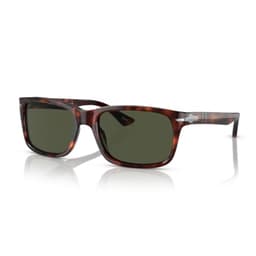
Persol PO3048S Rectangular
What the top of the curve buys: Italian sheet stock, hand-finishing and an edge polish with visible depth. This is the frame the phrase expensive acetate is describing.
Price as of October 7, 2026. #ad How we’re funded
Frame material: Italian cellulose acetate. Specs read from the listing on July 21, 2026.
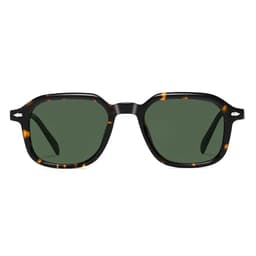
SOJOS Acetate Rectangle (Handmade, Polarized)
What the bottom of the curve buys: genuine cellulose acetate, polarized lenses, metal hinges. Less color depth and a machine finish, at a fraction of the money.
Frame material: Cellulose acetate. Specs read from the listing on July 21, 2026.
Frequently asked questions
Why is acetate more expensive than plastic?
Because it is cut rather than molded, and cutting is slow. An injection-molded frame is squirted into a mold and comes out a finished shape in seconds. An acetate frame starts as a solid sheet that has been cured for weeks, gets milled to shape with real material removed as waste, then gets tumbled - often for days - to polish it. Add hinges pressed into the material rather than molded in, and you have a process measured in weeks per batch instead of seconds per unit. The material itself is a small part of it; the time is the cost.
Are expensive acetate sunglasses worth it?
For daily wear, often yes - but not for the reason people assume. The premium buys finish, color depth, hinge quality and a frame worth servicing for years. It does not buy better eye protection: a $35 frame stating UV400 protects your eyes exactly as well as a $300 one, because UV filtering is a lens property that costs almost nothing to include. Spend more when you will wear the frame every day and want it to age well. Do not spend more believing you are buying safety.
What makes Italian acetate more expensive?
Mostly the sheet stock and the curing. Italian sheet makers - Mazzucchelli 1849 is the name that comes up most - are known for the depth and complexity of their layered patterns and for long, patient curing of the sheet before it is cut, which is what keeps a frame dimensionally stable afterwards. Frames cut from that stock and hand-finished cost more at every stage. The catch is that Italian acetate on a very cheap listing usually refers only to where the sheet was bought, not to how the frame was finished, and the finishing is where most of the visible quality lives.
At what price does acetate stop getting better?
Somewhere in the mid range, on the evidence of the specs. Below roughly the $30 mark you are usually looking at thinner sheet, simpler patterns and a machine polish. Through the middle you gain color depth, better hinges and more careful finishing, and those are real, visible differences. Past the point where a frame carries a fashion house's name under license, the extra money is increasingly brand rather than material - the frame is often made by the same handful of manufacturers as frames costing far less. Our designer roundup is explicit about which is which.
Sources
- Mazzucchelli 1849 — the cellulose-acetate maker for eyewear — Background on cellulose acetate as the traditional material for spectacle and sunglass frames (accessed July 21, 2026)
- Mazzucchelli 1849 — M49 bioplastic (bio-based cellulose acetate) — Manufacturer detail on bio-acetate: 68% bio-based content, >90% biodegradation after 115 days per ISO 14855-2:2018 (accessed July 21, 2026)
Keep reading
How acetate sunglasses are made
The full sheet-to-frame process the cost breakdown below is describing.
See the processWhat Italian acetate means
Mazzucchelli, sheet stock and when the premium is genuinely earned.
Read the explainerAre expensive sunglasses worth it?
The same question across the whole category, not just acetate.
Read the guideBest affordable acetate sunglasses
Genuine acetate under $50, if the premium isn't where you want your money.
See the budget picksBest designer acetate sunglasses
The premium end, and what the designer money actually buys you.
See the designer picks