Why a thick frame has to be acetate
Acetate frames are cut from a solid sheet of material and then tumbled and polished, which is why the edge of a good acetate frame is glossy right through and why a tortoise pattern has depth — the layers run through the whole thickness. Our page on how acetate sunglasses are made walks through the process. A molded plastic frame is formed in a cavity, so a thick one is either heavy for no reason or, more usually, hollowed out and thin-walled to save material, with a printed pattern on the surface and a seam line if you look closely.
On a thin frame that difference is easy to miss. On a thick frame it is the whole frame. The heft that makes a chunky acetate front sit with authority on your face is the same heft a hollow shell lacks, and the color depth that makes a thick tortoise temple look expensive is exactly what a printed pattern cannot do at that scale. If a listing says only “plastic” or says nothing about material, assume the thickness is cosmetic. Our guide to telling real acetate from acetate-look plastic gives the checks, and every frame here passes them on the listing.
How thick is too thick
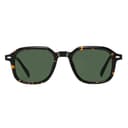
Two things decide it: the size of your face and the height of your nose bridge. On a small or narrow face, a thick frame quickly stops being a frame and becomes a mask, because the acetate takes up proportionally more of the face and the lenses sit wider than the eyes. If that is you, look at the thick round rather than the oversized square, and read our guide to sunglasses for small faces before choosing. A low nose bridge is the other constraint: thick acetate has no adjustable nose pads, so the whole front rests on the bridge, and a chunky frame on a low bridge slides down and sits on the cheeks. A keyhole bridge helps, which is one reason it is on two of the frames here.
Weight is the honest cost of thickness. A thick acetate front is heavier than a wire frame and heavier than a thin acetate one, and that shows up as pressure on the nose over a long day. Acetate can be heat-adjusted by an optician to spread the load, which molded plastic cannot, and our page on adjusting acetate frames covers what is possible. But if frames already leave marks on you, a thick one will not help, and a mid-thickness frame is the better compromise.
The picks, and who each suits
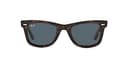
Our best overall is the Ray-Ban Original Wayfarer RB2140, because it is the thick frame — cut in the original 1950s shape from thick cellulose acetate, with the Havana colorway in real layered tortoise rather than a print. The deep fit sits large on a very small face, and the classic variant is not polarized, which are the two honest cons. It is offered in a 50 mm and a 54 mm, and our 50 vs 54 comparison covers which to pick. If you want one thick frame for life, this is still it.
Best oversized flat-top is the Joopin Oversized Flat-Top Square. This is the big, glamorous shape people search for by the thousand, in an acetate body — Joopin sells both TR90 and acetate frames, and this listing specifies acetate — that gives the size the weight it needs to look right. Polarized, cheap enough to be a low-risk experiment, and the coverage is a genuine sun-protection bonus. It will overwhelm a small face; this one is for medium to large, and our Joopin review covers the brand.
The SOJOS Acetate Rectangle is our best value. Stated cellulose acetate, handmade with metal hinges, polarized and UV400, at a budget price, in a rectangle whose straight top line adds the definition a round face wants. It is the most understated frame here — thick enough to have presence, not thick enough to be a statement — which makes it the safe first chunky frame. SOJOS does not publish its width, so check the fit if your face is wide.
Best thick round goes to the CARFIA Vintage Round, a hand-crafted acetate frame with a keyhole bridge and polarized UV400 lenses. It is a substantial frame — heavier than a metal round, and CARFIA’s own listing leans into that — and the round shape is the one that works on a smaller face where a square would be too much. It is the men’s-leaning pick, and it suits square and oval faces best.
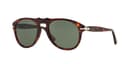
Finally, best premium: the Persol 649. Acetate, crystal lenses and Italian manufacture per Persol’s own spec panel, a keyhole bridge, and a substantial pilot shape offered in three eye sizes so it can be matched to a face rather than imposed on it. The classic green lens is not polarized and it is premium money. It is the thick frame for anyone who has decided the Wayfarer is the floor, not the ceiling.
Black or tortoise?
Thickness makes the colorway question louder. A thick black frame is the strongest line a face can carry, and it reads sharp against pale skin and can look heavy against very dark hair; a thick tortoise frame softens the same shape, and it is the colorway where acetate’s layered construction is actually visible. Our tortoise vs black comparison goes through it by skin tone and wardrobe. For a first thick frame, tortoise is the safer buy; for a second, black is the one that makes the point.