Ray-Ban Wayfarer 50 vs 54
Ray-Ban's two Original Wayfarer sizes are six millimeters apart in lens height, not just four in width. What each number changes on your face, and how to pick without trying them on.
How this is funded:we earn a commission if you buy through our links, at no extra cost to you. It never changes which product we recommend, and we’ll tell you when we’d skip one. Full disclosure.
The Ray-Ban Original Wayfarer RB2140 comes in two sizes, and the names hide how different they are. “50” and “54” sound like a small step — four millimeters of lens width — and if that were the whole story this page would not need to exist. It is not. Ray-Ban’s own listings put the 50 mm frame at a 41 mm lens height and the 54 mm frame at a 47.2 mm lens height. That is a six-millimeter jump in how far the lens reaches down your face, and it is the number that decides whether a Wayfarer looks like a medium classic or a deep, oversized 1950s frame on you.
Below is what each fitting actually is, what changes between them, and a way to choose without trying either on — because most people buy this frame online, and most size regret comes from reading the first number and ignoring the rest. Our Ray-Ban review covers the brand and why the RB2140 is the acetate Wayfarer; this page is only about which of its two sizes to buy.
The short version
| Fitting | 50: 50-22-150. 54: 54-18-150. |
|---|---|
| Lens width | 50 mm vs 54 mm — four millimeters apart. |
| Bridge | 22 mm on the 50, 18 mm on the 54 — the bigger lens borrows from the bridge. |
| Front width (lens + bridge + lens) | Roughly 122 mm vs 126 mm, before the frame’s own rim thickness. |
| Lens height | 41 mm vs 47.2 mm — six millimeters apart, and the difference you see. |
| Temples | 150 mm on both. |
| Material and lens | Acetate frame, G-15 green lens on the classic version, on both. |
| Alternative fit | RB2140F in 52-22 and 54-18 — Ray-Ban’s Low Bridge Fit version. |
What the numbers mean, and which one matters
A fitting like 50-22-150 reads lens width, bridge width, temple length, all in millimeters. Our guide to reading sunglasses sizes covers the whole system; here is the part that matters for the Wayfarer. Because the 54 has a wider lens but a narrower bridge, the two fronts are only about four millimeters apart in total width. If the two frames differed only in width, most people could wear either. What separates them is lens height, which Ray-Ban publishes but does not put in the size name: 41 mm on the 50 and 47.2 mm on the 54.
Six millimeters of height is a lot on a face. It is the difference between a lens that ends around the top of the cheekbone and one that reaches down toward it, and between a frame that reads as a medium classic and one that reads as the deep, top-heavy original that Ray-Ban made in the 1950s. When people say the 54 “looks huge” and the 50 “looks normal,” this is what they are seeing. It is not the width.
Who the 50 is for
The 50-22 is the Wayfarer most people are picturing. Its 41 mm lens height stays within the proportions of an ordinary medium frame, so it flatters small and medium faces and does not dominate a narrow one, and the wider 22 mm bridge sits comfortably on an average nose. It is the size to buy if you are between the two, if you have never owned a Wayfarer, or if your existing frames have a lens height of around 42 mm or under. Our registry records the Amazon listing we link below at a 50 mm lens width, which is why it is the pick for most readers. If even the 50 feels wide, our guide to sunglasses for small faces is the next stop.
Who the 54 is for
The 54-18 is the size for medium-to-large faces, and for anyone who specifically wants the deep original proportion. On a wide face the 41 mm lens of the 50 can look a little mean, and the 47.2 mm lens of the 54 fills the space the way the shape was drawn to. The narrower 18 mm bridge suits a narrower or higher nose. The honest test is a frame you already own: if a pair with a lens 45 mm tall or more sits well on you, the 54 will too. If you have a wide face, our guide to sunglasses for wide faces covers the rest of the fit questions the Wayfarer’s deep front raises.
The third option: the RB2140F
Ray-Ban also lists an RB2140F, which it labels the Low Bridge Fit version of the same frame, in a 52-22 and a 54-18. Ray-Ban describes the fit as the one to choose if eyewear tends to slide down your nose, sit too low or press on your temples or cheeks, and its 52 mm size is a genuine middle option the standard 2140 does not have. If the 50 feels small and the 54 feels tall, or if regular frames slide down your nose, that 52-22 is worth knowing about. Our guide to sunglasses for a low nose bridge explains why an alternative fit changes more than the size.
How to choose without trying them on
Take a frame you already wear comfortably and read the fitting printed inside the temple. If the lens height is not printed, measure the tallest point of the lens with a ruler. Under about 42 mm, buy the 50. Over about 45 mm, buy the 54. In between, buy the 50 unless you specifically want the oversized look, because a frame that is slightly small reads as classic while a frame that is slightly large reads as a costume. Then check the listing’s size selector before you pay, because Amazon often sells both sizes under one page and the default is not always the one you want.
One last thing that has nothing to do with size. The classic RB2140 in either size ships with the green G-15 lens, which is not polarized; Ray-Ban sells polarized versions at a higher price. If you want polarization, choose that variant deliberately rather than assuming it, and read our polarized vs non-polarized guide if you are not sure whether you need it. And if the real question is whether the Wayfarer is worth its price at all, our Wayfarer alternatives page answers that one.
The frames this comes down to
The Original Wayfarer in the size Ray-Ban's own listing pairs with the 50 mm fitting, the bio-based version of the same frame, and a budget acetate rectangle for anyone who wants to test the angular shape on their face before spending Ray-Ban money. Prices are live and dated.
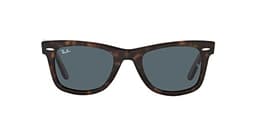
Ray-Ban Original Wayfarer RB2140
The RB2140 in thick cellulose acetate. The registry records this listing at a 50 mm lens width, which is the smaller of the two fittings and the one most medium faces should start with. Check the size selector on the listing before you buy - Amazon often lists both under one page.
Price as of September 17, 2026. #ad How we’re funded
Frame material: Cellulose acetate. Specs read from the listing on July 21, 2026.
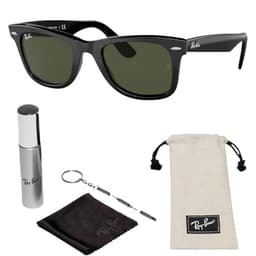
Ray-Ban Original Wayfarer Bio-Based RB2140
The same shape in Ray-Ban's bio-based acetate, with a published 67% bio-based carbon figure under ASTM D6866. Ray-Ban's own pages for this version list a 50-22 fitting; this Amazon listing does not state which size it ships, so confirm before ordering.
Price as of September 17, 2026. #ad How we’re funded
Frame material: Bio-based cellulose acetate (Ray-Ban states 67% bio-based carbon content, ASTM D6866). Specs read from the listing on September 3, 2026.
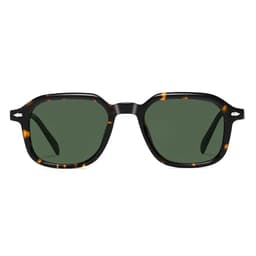
SOJOS Acetate Rectangle (Handmade, Polarized)
Not a Wayfarer and not pretending to be. A stated-acetate, polarized rectangle at a small fraction of the price, useful for finding out whether an angular frame suits you before committing to a size you cannot try on. SOJOS does not publish its width.
Price as of September 17, 2026. #ad How we’re funded
Frame material: Cellulose acetate. Specs read from the listing on July 21, 2026.
Frequently asked questions
Is the Ray-Ban Wayfarer 50 or 54 better?
Neither is better; they fit different faces. Ray-Ban lists the 50 at 50-22 with a 41 mm lens height and the 54 at 54-18 with a 47.2 mm lens height, both on 150 mm temples. The 50 is the medium frame most people expect a Wayfarer to be and suits small-to-medium faces. The 54 is a genuinely large frame - six millimeters taller in the lens, not just four wider - and suits medium-to-large faces and anyone who wants the deep, oversized 1950s look. If you are between them, the 50 is the safer buy.
What does 50-22 and 54-18 mean on a Wayfarer?
The first number is the lens width in millimeters and the second is the bridge width, the gap between the lenses over your nose. So the 50 has narrower lenses and a wider 22 mm bridge, while the 54 has wider lenses and a narrower 18 mm bridge. Add the two lenses and the bridge and the fronts come out at 122 mm and 126 mm - only four millimeters apart in total width, which is why the difference you actually see is in the lens height, not the width.
Does the Wayfarer 54 look too big?
On a small or narrow face, usually yes: the 47.2 mm lens height reaches down toward the cheekbones and the frame reads as oversized. On a medium-to-large face, or on anyone who wants the deep original 1950s proportion, it looks the way the Wayfarer is supposed to. The honest test is a frame you already own. If a pair with a 45 mm or taller lens sits well on you, the 54 will; if your comfortable frames are 42 mm tall or under, buy the 50.
Is the Ray-Ban RB2140F the same as the RB2140?
It is the same Original Wayfarer shape in what Ray-Ban labels its Low Bridge Fit. Ray-Ban lists the RB2140F in a 52-22 and a 54-18, describes it as the fit to choose if eyewear slides down your nose or presses on your temples or cheeks, and it offers a 52 mm middle size the standard 2140 does not. If the 50 feels small and the 54 feels tall, or if regular frames slide down your nose, the 52-22 RB2140F is the third option worth knowing about.
Which Wayfarer size do most people buy?
We do not have Ray-Ban's sales data and will not guess at it. What we can say is that the 50-22 is the size that fits the widest range of faces, because its 41 mm lens height stays within the proportions most people are used to, while the 54-18 is the choice for larger faces and for the deliberately oversized look. Measure a frame you own before deciding rather than following what is popular.
Sources
- Ray-Ban — Original Wayfarer Classic RB2140, Polished Tortoise / G-15 Green (50-22) — Ray-Ban's listing for the 50 mm Original Wayfarer: 50-22 fitting, 41 mm lens height, 150 mm temples, acetate frame, G-15 green lens (accessed September 18, 2026)
- Ray-Ban — Original Wayfarer Classic RB2140, Polished Tortoise / G-15 Green (54-18) — Ray-Ban's listing for the 54 mm Original Wayfarer: 54-18 fitting, 47.2 mm lens height, 150 mm temples, acetate frame, G-15 green lens (accessed September 18, 2026)
- Ray-Ban — Original Wayfarer Classic Low Bridge Fit RB2140F, Polished Black / G-15 Green (52-22) — Ray-Ban's listing for the RB2140F, which Ray-Ban labels its Low Bridge Fit version of the Original Wayfarer, offered in 52-22 and 54-18 (accessed September 18, 2026)
- American Academy of Ophthalmology — Recommended Types of Sunglasses — AAO on choosing sunglasses that block 99–100% of UV-A and UV-B (UV400) (accessed July 21, 2026)
Keep reading
Ray-Ban review
The full brand review, and which Wayfarer is actually acetate.
Read the reviewHow to read sunglasses sizes
What 50-22-150 means, and how to measure a pair you own.
Read the guideSunglasses for small faces
If even the 50 sits wide, start here.
Read the guideBest Ray-Ban Wayfarer alternatives
The same angular idea in acetate for a lot less.
See the picks