What you are actually paying Ray-Ban for
Three things, and it helps to separate them. The first is material and finish: the RB2140 is cut from thick acetate sheet, and on the Havana the tortoise pattern runs through the material in layers, so it has depth a printed pattern cannot fake. Budget acetate is real acetate too — that is the whole point of the picks here — but the color depth is good rather than designer, and if you put a SOJOS next to a Ray-Ban you will see the difference in the edge polish and the pattern. Our breakdown of why acetate sunglasses cost what they do explains where that money goes.
The second is serviceability. Ray-Ban’s reference shapes barely change, so lenses, screws and hinges stay available for years and a good pair is a buy-for-a-decade frame. A budget frame is more likely to be replaced than repaired. The third is the name, which is worth exactly what it is worth to you. What the premium does not buy is eye protection: a stated UV400 lens on a budget frame protects your eyes precisely as well as Ray-Ban’s lens does, because UV protection is a lens treatment, not a price point.
What the alternatives give you that the Wayfarer does not
Polarization, mainly. Every acetate pick on this page is polarized as standard, and the classic RB2140 is not — Ray-Ban charges more for its polarized version. If you drive a lot or spend time near water, that is a real functional advantage the cheaper frame holds over the icon, and our polarized vs non-polarized guide explains when it matters. The other advantage is risk: a frame that costs a fifth as much can be sat on, lost or lent to a teenager without the loss stinging, which changes how you actually wear it.
What they lose, beyond finish, is published sizing. Ray-Ban offers the Original Wayfarer in a 50 mm and a 54 mm, with the fittings printed on the listing, and our 50 vs 54 comparison goes through which to choose. The budget makers here mostly sell one size and often do not publish the width at all, so if your face is notably small or notably wide, the Ray-Ban’s size options are a genuine argument for the extra money.
The picks, and who each suits
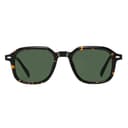
Our best overall alternative is the SOJOS Acetate Rectangle. It is stated cellulose acetate with a straight top line and angular corners — the geometry that does the Wayfarer’s job of defining a round or oval face — handmade with metal hinges, polarized and UV400, and it reads far more expensive than it is. It is deliberately plain, which is both the point and the con: it will not turn heads the way the tortoise Havana does, and SOJOS does not publish the measurements, so check the fit if you have a wide face. As a first serious acetate frame, or a Wayfarer stand-in you will not worry about, it is the easy answer.
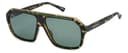
The Privé Revaux Clevelander is our best tortoise alternative, because it is the budget rectangle with a proper tortoise option, polarized with 100% UV stated, and one of the better-finished frames in the budget band. If what you love about the Wayfarer is specifically the Havana look, this gets you closest for the least money. The finish is good for the price rather than designer-grade, and it is a classic rectangle rather than a statement — which is exactly what a Wayfarer buyer usually wants anyway.
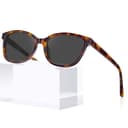
Best for women is the CARFIA Designer Acetate, a hand-crafted acetate soft square that CARFIA pitches as suiting most face shapes and that lives up to the claim better than most. The slightly rounded corners make it more forgiving than a hard-edged frame on a round or heart face, it is polarized, and it runs small-to-medium, which is useful if the Ray-Ban’s deep 1950s fit sits large on you. The con is that “fits most faces” means flattering rather than striking; it plays it safe.
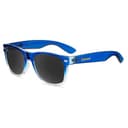
The Knockaround Fort Knocks is the cheapest pick here, and it is not acetate — Knockaround’s frames are injection-molded polycarbonate, and we say so on every page that mentions them. It earns its place because it is a genuinely polarized, UV400, angular square in a larger fit for wider faces, at a price where losing a pair does not matter. If you want the Wayfarer silhouette for a beach bag or a glovebox and do not care about material, this is the one; if the acetate is the reason you wanted a Wayfarer, skip it for any of the three above. Our Knockaround review has the full picture.
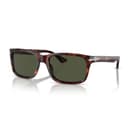
Finally, the upgrade: the Persol PO3048S. It is not cheaper than a Ray-Ban — it costs more — but it is the answer for anyone whose real question is “what beats the Wayfarer?” Italian acetate, hand-finished, with Persol’s crystal lens option and a restrained rectangular shape that suits round and oval faces. It is offered in a single 58 mm eye size, so it is a large frame and a poor match for a small face. Our Ray-Ban vs Persol comparison lays out the whole argument.
How to choose
If you want the material for the least money, the SOJOS. If you want the tortoise look, the Privé Revaux. If you are buying for a smaller or rounder face, the CARFIA. If you want the silhouette and nothing else, the Knockaround. And if you have decided the Ray-Ban is the floor rather than the ceiling, the Persol. Whichever you pick, check that the listing states UV400 or 100% UV protection — every frame here does — and read our guide to telling real acetate from acetate-look plastic before you buy any frame that claims the material at a budget price.