Ray-Ban vs Persol
Two acetate icons owned by the same company and built to different specifications. What the price gap actually buys, and the sizing fact that decides it for most people.
How this is funded:we earn a commission if you buy through our links, at no extra cost to you. It never changes which product we recommend, and we’ll tell you when we’d skip one. Full disclosure.
These are the two frames people mean when they say they want a “proper” pair of acetate sunglasses. Ray-Ban invented the reference shapes and sells more of them than anyone; Persol has been making eyewear near Turin since 1917 and sells the idea that a frame should be built rather than assembled. Both sit inside EssilorLuxottica, which lists them together in its proprietary house-brand portfolio — and that shared ownership is exactly why the comparison gets muddled. If one company owns both, the reasoning goes, you are just paying more for a different logo.
That is not what the published specifications say. We do not own either frame and we do not run lab tests, so what follows is built the same way every brand page here is built: from what each maker publishes, what the listings state, and honest reasoning about fit and value. Read that way, these are two genuinely different frames — and for a lot of people the deciding factor turns out to be a sizing fact neither brand puts in its marketing.
The short version
| Frame material | Both cellulose acetate. Persol states Italian acetate, hand-finished in Italy. |
|---|---|
| Defining feature | Ray-Ban: the reference shape, and size choice. Persol: Meflecto flexible temples and hand-finishing. |
| Sizing | RB2140 comes in 50-22 and 54-18. PO3048S is offered in a 58-19-145 — large only. |
| Lenses | Persol offers crystal glass on many models. Ray-Ban’s classic RB2140 pairs with G-15; polarized costs more. |
| Price | Persol is the more expensive by a clear margin. Live prices are on the cards below. |
| Warranty | 24 months against manufacturing defects on both. Not a differentiator. |
Same parent, different factories
Start with the ownership question, because it is the first thing anyone raises. EssilorLuxottica names Ray-Ban and Persol among its proprietary brands, alongside Oakley and Oliver Peoples. What that buys the group is scale, a shared retail network and shared aftersales terms — which is why the warranty row above is a tie rather than a talking point.
What it does not do is flatten the two production stories into one. Persol states that every frame is made in Italy, still by hand, near Turin where the brand started, and its own craft page describes cellulose acetate passing through roughly thirty manual processes on the way to becoming a frame. Ray-Ban makes no equivalent single-country claim across its line, so if origin matters to you, read the specific listing rather than assuming. That is not a gotcha — it is the difference between a brand that sells volume in reference shapes and one that sells a manufacturing method.
Material: both acetate, two different acetate stories
Both frames are genuine cellulose acetate, and that already puts them in a different category from injection-molded plastic look-alikes. What differs is the sheet stock and what happens to it afterward.
Persol’s claim is Italian acetate, hand-finished. In practice that means denser sheet with more color depth, and a polish applied by a person rather than only by a tumbler — which shows up as an edge that catches light continuously along its length and a layered pattern that flows sensibly across the front. Our explainer on what Italian acetate means covers why that sheet costs what it costs, and the five checks for real acetate covers how to read the finish in your hand.
Ray-Ban’s RB2140 is thick cellulose acetate in the original 1950s cut, and on the Havana colorways that acetate is layered tortoiseshell with real depth rather than a printed pattern. Ray-Ban has also moved parts of the line to a bio-based version of the material: on the Original Wayfarer Bio-based, Ray-Ban states 67 percent bio-based carbon contentmeasured to the ASTM D6866 standard, against an average of about 40 percent for standard acetate. That is a genuine sustainability step and a useful thing to know if you were choosing between variants — our bio-acetate explainer lays out what the number does and does not promise.
The honest caveat on all of this: material does not change eye protection. Both brands state 100 percent UV, and so does a stated-UV400 frame costing a fraction of either. You are choosing between these two on finish, construction and how long you will keep the frame, not on safety.
Construction: Meflecto versus a conventional temple
This is the one place where Persol has something Ray-Ban simply does not offer, and it is worth understanding rather than nodding at.
Meflectois Persol’s flexible-temple system, patented by founder Giuseppe Ratti at the end of the 1930s. Nylon or metal cylinders are set into the acetate temple and intersected with a flexible core of harmonic steel, so the arm flexes along its length and the frame settles onto the head instead of gripping it at two points. Persol states the construction takes over ten additional working steps compared with a normal frame, which is a large part of why the frame costs what it does. The other signature is the metal arrow at the hinge — decorative, and a quick authenticity marker, but not a functional advantage.
Ray-Ban’s temples are conventional acetate over a wire core. They can be heat-adjusted by an optician, which is the standard acetate answer to fit, and the hinges, screws and lenses are all serviceable — a Wayfarer is a frame you maintain rather than replace.
Be clear about what Meflecto is and is not, though. It is a comfort feature, not a fit fix. Flexible arms make a correctly sized frame more comfortable over a long day; they do not make an oversized frame sit properly on a narrow face, and they add a mechanism that a conventional temple does not have. If you want the simplest possible thing that can be repaired anywhere, that counts against Persol rather than for it.
Lenses: crystal glass versus G-15
Persol offers crystal (glass) lensesacross many models, and the PO3048S listing linked on this page is a crystal green. Glass has one clear advantage — it resists scratching far better than plastic over years of use, which matters on a frame you intend to keep. It also has two clear costs: it is heavier on the nose, and it is less impact-resistant than polycarbonate or CR-39. Our lens materials guide compares the three properly.
Ray-Ban’s classic RB2140 is most often sold with the G-15 green lens, the brand’s classic tint, in both polarized and non-polarized variants at different prices. The pair linked below is the non-polarized classic, which is worth noticing before you check out — a lot of people assume every Ray-Ban is polarized and it is not. If glare on roads or water is your actual problem, read polarized vs non-polarized before choosing a variant, because polarization and UV protection are separate properties and only one of them protects your eyes.
Sizing is what actually decides this
Here is the fact that settles the comparison for more readers than any craftsmanship argument. Ray-Ban offers the RB2140 Original Wayfarer in a 50-22 and a 54-18. The Persol PO3048S is offered in a 58-19-145— a large frame, and the only eye size the model is listed in.
That is an eight-millimeter gap in lens width between the small Ray-Ban and the Persol, which is enormous in frame terms. If you have a small or narrow face, the 50 mm Wayfarer is realistically the only one of these two that will sit correctly, and no amount of hand-polished Italian acetate compensates for a frame that is too wide for your temples. If you have a wide face, the calculation inverts and the Persol may be the more comfortable of the two.
Do the measuring before the choosing. Our guide to reading sunglasses sizes explains what the 50-22-150 numbers on the temple actually mean, and sunglasses for small faces and sunglasses for wide faces cover what to look for at either end. Five minutes with a ruler and a frame you already wear is worth more here than any brand comparison, including this one.
What the price gap buys, and what it doesn’t
Persol is the more expensive of the two by a clear margin, and both live prices are on the cards below rather than written into this paragraph, because they move. What the gap buys is real: denser Italian sheet stock, hand-finishing you can see at the edges, the Meflecto construction, and glass lenses on many listings. What it does not buy is better UV protection, a better shape for your face, or a frame that lasts longer because it is expensive — both of these are serviceable frames that reward maintenance.
The framing that helps most is cost per year of wear. Either of these, kept and maintained, is a five-to-ten-year frame, and priced that way the difference between them narrows considerably. That math only works if you actually keep it, which is an argument for choosing whichever shape you will still want in a decade rather than whichever brand carries more weight today. We work through that whole question in are expensive sunglasses worth it.
Where each one wins
Ray-Ban wins on shape and access.The Wayfarer is the reference silhouette, the one every other maker is measured against, and its angular lines add definition to a round or oval face in a way a soft frame cannot. It comes in a small eye size, in far more colorways, from far more sellers, at a lower price. And if the Wayfarer is not your shape, the same brand gives you the Clubmaster browline — acetate brow, metal lower rim — which our browline guide covers, alongside the wayfarer roundup for the shape itself.
Persol wins on material and construction.Hand-finishing in Italy, the Meflecto temples, crystal lenses, and an understated rectangular front that reads as classic rather than iconic — if you would rather people notice the frame than the brand, that is the point of it. It is the better object; whether it is the better purchase depends entirely on whether the 58 mm fits you.
If the Persol you actually have in mind is one of its pilot icons rather than the PO3048S, the sizing story changes: the 649 is offered in eye sizes up to 56 mm, and the folding 714 in 52 and 54. Our Persol 649 vs 714 comparison works through those two frames the same way this page works through these.
Neither wins on eye protection or on warranty, and it is worth saying so plainly. Both state 100 percent UV, both carry the same 24-month manufacturing-defect terms, and on both, scratched lenses count as wear rather than a defect.
The third option worth knowing about
A lot of people arrive at this comparison wanting the Persol argument — Italian acetate, hand-finished, built to keep — without the Persol price. That frame exists. RAEN is a California independent using hand-finished Italian acetate on its higher frames, and the Adin is a soft-round shape that flatters a square or angular face at a mid-range price. The honest trade-offs are real: no Meflecto, no heritage, a smaller brand with fewer colorways in stock at any moment, and a 54 mm eye size that suits medium faces rather than large ones. It is on the cards below for exactly that reason.
And at the other end, if the actual goal is a good-looking acetate frame with stated UV400 for as little money as possible, that is a legitimate goal and this is not the page for it — our affordable acetate roundup is, because genuine cellulose acetate now starts far lower than most people expect.
So which one?
Take the Ray-Ban if you want the reference shape, if you have a small or medium face, or if you want the lower price of entry into real acetate. Check whether the variant you are adding to the cart is polarized, because the classic is not. Full detail in our Ray-Ban review.
Take the Persol if you have a face that carries a 58 mm frame, if hand-finishing and the Meflecto comfort are things you will genuinely notice and value, and if you are buying a frame for the next decade rather than the next season. Full detail in our Persol review.
Take neitherif you have not measured yet. The most expensive mistake on this page is not choosing the wrong brand — it is buying a beautiful frame in the wrong size and quietly not wearing it. Measure first, then come back and pick the one that fits.
And if what you actually want from Persol is the glass rather than the heritage, there is a third brand in that conversation now: Serengeti puts photochromic mineral glass in handmade acetate at similar money, and Serengeti vs Persol sets the two side by side on lenses, published measurements and warranty.
The frames this comes down to
Two icons and one alternative. The Original Wayfarer and the PO3048S are the head-to-head; the RAEN Adin is here because a lot of people reading this page want Italian acetate without either brand's price tag, and it genuinely exists.
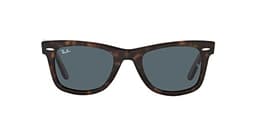
Ray-Ban Original Wayfarer RB2140
The Ray-Ban pick, and the acetate model in the Wayfarer family. Thick cellulose acetate in the reference 1950s shape, offered in a small eye size as well as a larger one - which is why it fits more faces than the Persol does. The pair linked here is the 50 mm Havana, and it is not polarized.
Frame material: Cellulose acetate. Specs read from the listing on July 21, 2026.
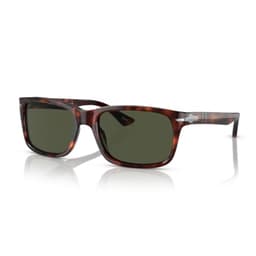
Persol PO3048S Rectangular
The Persol pick. Italian acetate, hand-finished in Italy, with the patented Meflecto flexible temples and crystal green lenses on the listing linked here. It is the more expensive of the two by a clear margin, and it is only offered in a large 58 mm eye size.
Price as of October 8, 2026. #ad How we’re funded
Frame material: Italian cellulose acetate. Specs read from the listing on July 21, 2026.
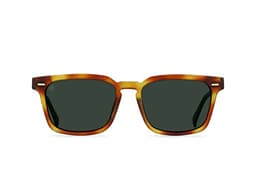
RAEN Adin 54 Round
The alternative. A California independent using hand-finished Italian acetate - the same material argument Persol makes, at a mid-range price, in a softer round shape. No Meflecto, no heritage, and a smaller brand with fewer colorways in stock.
Price as of October 8, 2026. #ad How we’re funded
Frame material: Italian cellulose acetate. Specs read from the listing on July 21, 2026.
Frequently asked questions
Are Ray-Ban and Persol made by the same company?
They are owned by the same company but not built to the same specification. EssilorLuxottica lists both Ray-Ban and Persol among its proprietary house brands, which is why people assume the frames are identical under different logos. They are not. Persol states that every frame is made in Italy, by hand, using its patented Meflecto flexible temples, and its own craft page describes cellulose acetate passing through around thirty manual processes. Ray-Ban builds the RB2140 as a conventional acetate frame in a wider range of sizes and at a lower price. Shared ownership explains the shared warranty terms and the shared retail network, not a shared frame.
Is Persol better quality than Ray-Ban?
Better finished and more elaborately constructed, which is a narrower claim than better overall. Persol's arguments are hand-finishing in Italy, the Meflecto temple system - nylon or metal cylinders set into the acetate around a flexible steel core, which Persol says takes over ten extra working steps - and crystal glass lenses on many models. Those are real. What Persol does not do better is protect your eyes, because that is a lens property both brands already state at 100 percent, and it does not fit you better if the frame is the wrong size. A Ray-Ban in the right eye size beats a Persol in the wrong one every time.
Which is bigger, the Ray-Ban Wayfarer or the Persol PO3048S?
The Persol, and it is not close. Ray-Ban offers the RB2140 Original Wayfarer in a 50-22 and a 54-18, so there is a genuinely small option in the line. The PO3048S is offered in a 58-19-145 eye size, which is a large frame by any measure. If you have a small or narrow face, the 50 mm Ray-Ban is the only one of the two likely to work, and no amount of hand-finishing changes that. Measure a frame you already own and wear comfortably before you commit to either.
Are Persol lenses glass and Ray-Ban lenses plastic?
Often, but check the specific listing rather than assuming. Persol offers crystal glass lenses across many models, including the PO3048S listing linked on this page, and glass resists scratching better than plastic over years of use. It is also heavier and less impact-resistant. Ray-Ban's classic RB2140 is commonly sold with its G-15 green lens, and both polarized and non-polarized variants exist at different prices. Lens material is a per-listing fact on both brands, not a brand-wide rule.
Do Ray-Ban and Persol have the same warranty?
Effectively yes, because both sit under the same parent. Luxottica's stated terms cover manufacturing and material defects for 24 months from delivery on both brands, and scratched lenses count as normal wear rather than a covered defect on both. So warranty is not a reason to choose one over the other. Serviceability is closer to a real difference: both are frames worth repairing rather than replacing, which is most of the argument for buying either instead of a look-alike.
Sources
- Mazzucchelli 1849 — the cellulose-acetate maker for eyewear — Background on cellulose acetate as the traditional material for spectacle and sunglass frames (accessed July 21, 2026)
- ISO 12312-1:2022 — Eye and face protection — Sunglasses for general use — The international standard for general-use sunglasses: UV filtering, filter categories and transmittance (accessed July 21, 2026)
- American Academy of Ophthalmology — Recommended Types of Sunglasses — AAO on choosing sunglasses that block 99–100% of UV-A and UV-B (UV400) (accessed July 21, 2026)
Keep reading
Ray-Ban review
The full brand review, including which Ray-Bans are acetate and which are not.
Read the reviewPersol review
The full brand review, and whether the Italian-acetate premium is defensible.
Read the reviewPersol 649 vs 714
Persol's two acetate pilot icons, fixed and folding, and the size range that separates them.
Read the comparisonWhat Italian acetate actually means
The sheet stock behind Persol's whole argument, explained without the marketing.
Read the explainerAre expensive sunglasses worth it?
The wider version of the question this page answers for two specific brands.
Read the guideBest designer acetate sunglasses
The premium end in full, if neither of these two is quite the shape you want.
See the picksBest affordable acetate sunglasses
Genuine cellulose acetate well below either of these prices.
See the budget picks