Serengeti vs Persol
Two premium brands that put real glass in handmade acetate, for completely different reasons. What each one publishes, where each one goes quiet, and which one to buy.
How this is funded:we earn a commission if you buy through our links, at no extra cost to you. It never changes which product we recommend, and we’ll tell you when we’d skip one. Full disclosure.
The short version
These two brands arrive at the same place — glass lenses in handmade Italian acetate at premium prices — from opposite directions, and that origin story is the whole comparison.
Serengeti is a lens company that ended up making frames. It states the brand began in 1877 with Corning, the optical glass laboratory, that it carries over 140 years of optical heritage from that lineage, and that its signature amber driving lens launched in 1985. Persol is a frame company that ended up specifying lenses. It dates itself to Turin in 1917, describes cellulose acetate passing through thirty manual processes, and patented its Meflecto flexible temple in the 1930s.
So: buy Serengeti for what is in front of your eyes. Buy Persol for what sits on your face.Everything below is the evidence for that sentence, read off each brand’s own pages on the dates in the sources list. We own neither brand’s frames and do not claim to have tested any.
Lenses: Serengeti wins, and it is not close
Serengeti states its mineral lenses are made from borosilicate optical glass from Corning, and that they come out 20 percent thinner and lighter than other lenses. On top of that glass it stacks three separate things, and it names all three.
Photochromic. Serengeti describes the lens as activated by the amount of UV radiation in the atmosphere: in bright light the lens molecules expand and the lens darkens, in dimmer light they shrink and separate and it lightens again, gradually rather than instantly. 555nm. Serengeti explains that 555 nanometers sits at the center of the visible spectrum on the border of yellow and green, and that in low light the lens passes more yellow and green through for a more relaxed view. That is a contrast tint, and it is where the driving reputation comes from. Spectral Control. Serengeti states this filters up to 96 percent of blue light while letting the turquoise band through.
Persol’s lens story is shorter. Its icons are specified with crystal — glass — lenses, and Persol’s product pages state 100 percent UV protection. That is a good lens. It is a fixed lens. The standard Havana and green 649 is not polarized either; Persol charges more for its polarized versions. There is no photochromic equivalent in the icons.
The practical difference is one pair versus two. A Serengeti “Cat 2 to 3” lens sits in the category 2 band — 18 to 43 percent of visible light through — on a gray morning and darkens into category 3, the 8 to 18 percent everyday sunglasses band, in full sun. A Persol crystal lens is whatever it is, all day. Our lens categories guide has the full table, and the photochromic sunglasses guide covers the four real limits of the adaptive version before you get excited about it.
The listing title: Serengeti tells you the category, Persol does not
This is the most underrated difference between the two brands. Serengeti’s Amazon listing titles end with a notation like “Cat 3 to 3” or “Cat 2 to 3.” That is the filter category of the lens, published in the title, before you have clicked anything — and almost no eyewear brand does this. It also tells you which kind of lens you are getting: a repeated number is a fixed tint, a range is the photochromic one.
Persol publishes no filter category anywhere we could find, on its own pages or on its listings. That is normal for the industry, and it is a gap you simply live with. It is also the reason the Raffaele earned a place on this site before any Persol model did when we built the lens-categories guide.
Frames and fit: Persol wins, and that may matter more
Both brands state Italian manufacture. Persol says more about how. It describes cellulose acetate passing through thirty manual processes, names the keyhole bridge and the arrow-shaped hinge, and documents the Meflecto flexible stem it patented in the 1930s — a temple designed to flex to the shape of your head rather than clamp it. Serengeti says its frames are handcrafted in Italy and leaves it there.
The bigger gap is information. Persol publishes complete fittings and multiple sizes. The 649 in Havana and green is listed in 52-20, 54-20 and 56-20. If you have a wide face, that 56 exists and you can buy it on purpose. Serengeti, on most of its range, publishes a size bandand nothing else — the Raffaele is “Small-Medium,” the Foyt is “Large,” and no eye size, bridge or temple length is given. For a frame at this price that is a real problem, because fit is the most common reason a pair of sunglasses goes back in the box.
There is exactly one exception and it is worth knowing about: Serengeti publishes 53-20-140 for the Joan, plus a base curve of 6 and a medium fit. That is a complete fitting, on the one Serengeti frame currently selling at a sensible discount. If you do not know your own numbers yet, our sunglasses sizing guide shows you how to read them off the inside of a temple arm on a pair you already own, and sunglasses for wide faces explains what to do when the number you need is at the top of the range.
Material: acetate both ways, bio-acetate on one side
Both brands are genuinely cellulose acetate, so both can be heat-adjusted by an optician and re-polished when the surface dulls — the practical advantage our acetate versus plastic page is about. Persol states acetate on its spec panels. Serengeti describes the Raffaele as Italian acetate, the Foyt as handcrafted eco-friendly acetate, and the Joan as bio-acetate.
Treat the bio-acetate wording the way we treat it everywhere: it is a statement about feedstock origin, not about what happens to the frame in a landfill. To Serengeti’s credit it does not attach an unsupported biodegradability claim to it, which is more than several brands in our bio-acetate roundup manage. The full distinction is in what bio-acetate actually is.
One caution specific to Serengeti: a large part of its catalog is metal, not acetate. The Melbourne carries the same photochromic Drivers Gradient lens and is described on Serengeti’s own page as a metal construction. If the material is why you are here, read the frame description rather than trusting the silhouette.
Warranty: Serengeti on paper, both with the same hole in it
Serengeti states it guarantees its products against manufacturing defects for the lifetime of the product, with scratches and breakage from abuse or aggressive use excluded. Persol’s coverage runs through Luxottica and guarantees against material and manufacturing defects coming to light over two years from delivery, excluding scratches on sun lenses and damage from accident, abuse, neglect, shock, improper use, unauthorized repair and normal wear and tear.
Lifetime beats two years, clearly. But notice that both exclusions carve out the same thing: the lens surface. Since glass is the reason to buy either brand, read both warranties as covering hinges, frame faults and workmanship rather than the part you are actually paying for. Neither will help you with a chipped lens.
Price and availability
Persol is expensive and consistent. Its icons sit at the top of the market and stay there, which is at least predictable — and the 649 is the cheaper of its two pilot icons, as our 649 versus 714 comparison works through.
Serengeti is expensive and erratic, and that is an opportunity if you shop carefully. Because a lot of Serengeti volume on Amazon goes through third-party sellers, individual colorways swing a long way from Serengeti’s own list. On the day this page was written the Joan — listed at $350 on Serengeti’s own page — was available for a fraction of that, while plenty of other Serengeti listings showed a handful of units left or returned no price at all. That is the whole reason the Joan is the third card above.
The buy buttons show the live Amazon price and the date it was read; we do not store prices, so there is no stale number to anchor you. And do not assume the marketplace always wins — both brands discount their own stores, so opening the brand site in another tab before you spend this much is free. That principle lives on our editorial policy page and the practical version is in how to buy sunglasses online.
So which one?
Buy Serengeti ifyou drive a lot, you want one pair that handles changing light instead of two pairs for two conditions, and you are comfortable buying a frame whose exact measurements are not published — or you buy the Joan, where they are. The lens is the most technically interesting thing in this price bracket and the filter category is stated rather than hidden.
Buy Persol iffit is the thing that has gone wrong for you before, if you want a specific eye size rather than a size band, or if the frame itself — the acetate, the Meflecto temples, the arrow — is what you are paying for. You give up the adaptive lens and you get a frame you can buy in the right size the first time.
Buy neither if you are hard on sunglasses or weight on your nose bothers you. Glass is heavier and more brittle than plastic, and both warranties exclude the lens. A lighter acetate frame with good plastic lenses from our best acetate sunglasses roundup will serve you better for a quarter of the money, and our are expensive sunglasses worth it page makes that argument honestly.
The two frames this comes down to
One frame from each brand, both in a Havana or tortoise colorway, both confirmed In Stock with a live price on October 5, 2026. The third card is for anyone who wants the shape without either brand's money.
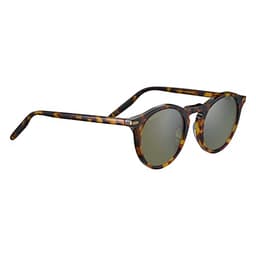
Serengeti Raffaele (Shiny Tortoise, Mineral Polarized 555nm, Cat 3)
The Serengeti side of the argument. A round Italian-acetate frame with a keyhole bridge and Serengeti's polarized Mineral 555nm glass, and a listing title that states the filter category outright - Cat 3 to 3, so this particular lens is a fixed category 3 rather than the photochromic one. No measurements are published for it.
Price as of October 5, 2026. #ad How we’re funded
Frame material: Italian acetate (per Serengeti). Specs read from the listing on September 21, 2026.
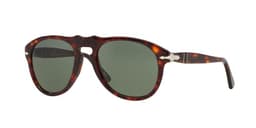
Persol 649 Original PO0649 (Havana / Green, 54 mm)
The Persol side. The 1957 pilot icon in Havana with crystal green lenses, acetate and made in Italy per Persol's own spec panel, with the Meflecto flexible temples and the arrow hinge. Persol publishes the full fitting and offers 52, 54 and 56 mm eye sizes. The standard lens is not polarized.
Price as of October 5, 2026. #ad How we’re funded
Frame material: Acetate, handmade in Italy (per Persol). Specs read from the listing on September 15, 2026.
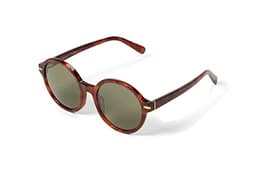
Serengeti Joan (Shiny Classic Havana, Mineral Polarized 555nm)
The cheapest honest way into glass. Serengeti's bio-acetate Joan is the only frame across both brands that is photochromic AND polarized AND glass AND has a published 53-20-140 fitting, and the Havana colorway has been running far below Serengeti's own $350 list. Oversized and cut for women, so it is not a neutral unisex choice.
Price as of October 5, 2026. #ad How we’re funded
Frame material: Bio-acetate, eco-friendly handmade acetate (per Serengeti). Specs read from the listing on October 5, 2026.
Frequently asked questions
Is Serengeti better than Persol?
They are better at different things, and the honest answer depends on which half of the product you care about. Serengeti wins on lens technology: photochromic mineral glass from Corning borosilicate, a stated filter category on the listing, and a lifetime guarantee against manufacturing defects. Persol wins on frame craft and on information: cellulose acetate through thirty manual processes, the patented Meflecto flexible temples, and a published fitting in three eye sizes so you can buy the right size first time. If you drive a lot, buy Serengeti. If fit is your problem, buy Persol.
Do both Serengeti and Persol use real glass lenses?
Both offer glass, with different names for it. Serengeti states its mineral lenses are borosilicate optical glass from Corning, 20 percent thinner and lighter than other lenses, and glass is standard across the mineral range. Persol calls its glass lenses crystal and lists them on the spec panel of its icons, including the 649 and 714 - but Persol also sells models with plastic lenses, so with Persol you have to check the individual product page rather than assume.
Does Persol make photochromic sunglasses?
Not in the way Serengeti does. Photochromic performance is Serengeti's founding technology - it describes the lens as activated by atmospheric UV radiation, darkening as the molecules expand in bright light and lightening as they shrink in dull light, and it encodes the shift in the listing title as a category range like 'Cat 2 to 3'. Persol's icons are sold with fixed-tint crystal lenses, and its published spec panels for the 649 and 714 describe a fixed lens rather than an adaptive one. If you want one pair that covers an overcast morning and full midday sun, that is a Serengeti feature and not a Persol one.
Which brand has the better warranty?
Serengeti, on paper and by a wide margin. Serengeti states it guarantees its products against manufacturing defects for the lifetime of the product, excluding scratches and breakage from abuse. Persol's coverage comes through Luxottica and runs two years from delivery, also excluding scratches on sun lenses and damage from accident, abuse, neglect or normal wear. Both exclude the thing most likely to happen to a glass lens, so read the lifetime claim as covering hinges and frame faults rather than the lens itself.
Are Serengeti and Persol both made in Italy?
Both state Italian manufacture for the frames. Serengeti says its frames are handcrafted in Italy. Persol states its frames are made in Italy and describes cellulose acetate passing through thirty manual processes, which is a more specific claim about how. Neither statement tells you where the lenses are finished - Serengeti's glass originates with Corning borosilicate, and Persol does not publish a lens origin on its product pages.
Which is cheaper, Serengeti or Persol?
Both are premium brands and both can cost a lot, but Serengeti has the bigger discounts and the thinner stock. Persol prices its icons consistently and they hold their price. Serengeti sells through a lot of third-party Amazon sellers, which means individual colorways can run far below Serengeti's own list price - the Joan is listed at $350 on Serengeti's own page and has been available for a fraction of that on Amazon - while other listings show only a handful of units or no price at all. The buy buttons on this page show the live price and the date it was read, because we do not store prices.
Sources
- Serengeti — Frequently Asked Questions (heritage, manufacture, warranty) — Serengeti states the brand began in 1877 with Corning, over 140 years of optical heritage; the amber driving lens launched 1985; frames handcrafted in Italy; products guaranteed against manufacturing defects for the lifetime of the product, with scratches and breakage from abuse excluded (accessed October 5, 2026)
- Serengeti — Our Technologies (photochromic, Spectral Control, 555nm) — Serengeti on photochromic: lenses are activated by atmospheric UV radiation and transition from light to dark gradually - in bright light the molecules expand and darken the lens, in low light they shrink and separate; Spectral Control filters up to 96% of blue light; 555 nm sits at the center of the visible spectrum (accessed October 5, 2026)
- Serengeti — The Serengeti Lens (lens technology) — Serengeti on its mineral lenses (Corning borosilicate optical glass), the 555 nm tuning, Spectral Control, and UV protection to 400 nm (accessed September 21, 2026)
- Serengeti — JOAN — Serengeti's product page: a bold oversized silhouette on a bio-acetate, eco-friendly handmade acetate frame; Ultra-Light Mineral lens listed as anti-reflective, photochromic, polarized and Spectral Control; fitting 53-20-140, medium fit, base curve 6; listed price $350 (accessed October 5, 2026)
- Serengeti — Raffaele (acetate collection) — Serengeti's product page: Italian acetate, round, keyhole nose bridge, offered in Shiny Tortoise with the Mineral Polarized 555nm lens in category 3 (accessed September 21, 2026)
- Persol — Heritage: frame material, bridge, Meflecto and Arrow — Persol on its Turin origins (1917), cellulose acetate passing through thirty manual processes, the Meflecto flexible stem patented in the 1930s, and the arrow-shaped hinge (accessed September 15, 2026)
- Persol — 649 Original, Havana frame with green lenses (PO0649 24/31) — Persol's product page: 52-20, 54-20 and 56-20 sizes; acetate frame, crystal lenses, made in Italy; keyhole bridge, arrow and Meflecto; designed in 1957 for Turin's tram drivers (accessed September 15, 2026)
- Persol — FAQs (warranty) — Luxottica guarantees its sunglasses against material and manufacturing defects coming to light over a two-year period from delivery, excluding scratches on sun lenses and damage from accident, abuse, neglect, shock, improper use, unauthorized repair or normal wear and tear (accessed October 5, 2026)
- The College of Optometrists — Tints and driving (BS EN ISO 12312-1 filter categories) — Category bands: 0 = 80-100% transmission, 1 = 43-80%, 2 = 18-43%, 3 = 8-18%, 4 = 3-8%; filters for road use shall be categories 0-3; under 75% transmittance is unsuitable for twilight or night driving (accessed September 21, 2026)
Keep reading
Serengeti review
The full brand review, including which frames in the range are actually acetate.
Read the reviewPersol review
The full brand review, and whether the Italian-acetate premium holds up at all.
Read the reviewBest glass lens sunglasses
Every brand on this site that ships mineral or crystal glass as standard, ranked.
See the picksPhotochromic sunglasses explained
The self-darkening lens Serengeti has and Persol does not - and its four real limits.
Read the guideRay-Ban vs Persol
The other Persol head-to-head, including how Meflecto is actually built.
Read the comparisonSunglasses lens materials compared
Glass, polycarbonate and CR-39, and what each one is genuinely good at.
Compare the lenses