Persol 649 vs 714
Persol's two acetate pilot icons, one fixed and one folding. What Persol's own numbers say about size, what the fold really costs you, and which one to buy.
How this is funded:we earn a commission if you buy through our links, at no extra cost to you. It never changes which product we recommend, and we’ll tell you when we’d skip one. Full disclosure.
If you have decided on a Persol and you want the shape people picture when they hear the name, it comes down to two model numbers. The 649 is the original, a 1957 acetate pilot frame with a keyhole bridge. The 714 is the same idea with a fold in it, and the one with the film-star story attached. They look close enough in photographs that most comparisons end up being about vibes, and they are far enough apart in price that the choice deserves better than that.
We do not own either frame and we do not run lab tests, so this page is built the way every brand page here is built: from what Persol publishes about each model, what the Amazon listings state, and honest reasoning about fit and value. Read that way, the answer turns out to be refreshingly concrete. On Persol’s own numbers, the two fronts are almost identical at the same eye size, which means you are really choosing between a fold, a size range and a price gap.
The short version
| Construction | 649: fixed front. 714: folding, with ten extra manufacturing steps per Persol. |
|---|---|
| Origin | 649: 1957, for Turin’s tram drivers. 714: the 1960s, as the folding 649. |
| Sizes (Havana / green) | 649: 52-20, 54-20 and 56-20. 714: 52-21 and 54-21 only. |
| At 54 mm | 649: 54-20, 140 mm temples. 714: 54-21, 140 mm temples. Same face-coverage rating. |
| Frame and lenses | Both acetate, handmade in Italy, with crystal lenses, per Persol. |
| Meflecto | Named in the 649’s description. Not mentioned in the 714’s. |
| Price | The 714 costs clearly more. Live prices are on the cards below. |
| Warranty | Persol states two years against material and workmanship defects on both. |
Where each one comes from
Persol dates the 649 to 1957. It was designed to protect the tram drivers of Turin, where the brand started in 1917, from dust and glare, which is where the protective pilot shape comes from. It became a public icon when Marcello Mastroianni wore it in the 1961 film Divorce Italian Style, and Persol calls it the brand’s first icon. The details Persol itself singles out are the keyhole bridge, the arrow on the hinge and the Meflecto flexible temples.
The 714 followed in the 1960s. Persol describes it as a folding version of the 649 and states that it was the first-ever folding glasses, requiring ten additional manufacturing steps compared with a standard frame. Its fame is Steve McQueen’s: Persol says he wore it on set filming The Thomas Crown Affair, and its McQueen editorial credits him with making the 714 unforgettable in 1968. That is why the 714 carries a romance the 649 does not.
None of that history changes how either frame fits your face. It is worth knowing, because it is a real part of what you pay for, but it is the least useful thing on this page for deciding which one to buy.
Same front, one millimeter apart
You will read that the 649 is the bigger, bolder frame and the 714 the sleeker one. Persol’s own measurements at the 54 mm size do not show that. For the Havana frame with green lenses, Persol lists the 649 at 54-20 and the 714 at 54-21, both with 140 mm temples, and it gives both the same “standard” face-coverage rating and the same “best for most faces” label at that size. Lens width is identical. The bridge differs by a single millimeter, and it is the folding 714 that is fractionally wider.
If the 714 reads slimmer in photographs, that is rim profile, and Persol does not publish a number for rim thickness or frame weight on either model. We are not going to invent one. What the published numbers support is narrower and more useful: at the same eye size, these two frames sit on the face in essentially the same place, so fit is not a reason to choose one over the other at 54 mm. Our guide to reading sunglasses sizes explains what each of those three numbers controls, if the notation is new to you.
The size range is the real difference
Where the two models genuinely diverge is how many sizes Persol makes. In the Havana frame with green lenses, the 649 is offered in 52-20, 54-20 and 56-20. The 714 is offered in 52-21 and 54-21, and that is the whole range. Some colorways narrow things further: on the Persol pages we checked, one black 714 was listed in 54-21 only, and two 649 colorways were listed in 54 and 56 without the 52.
That gap matters at the wide end. If your face needs a 56 mm eye size, the 714 simply does not come in one, and the 649 is the only one of the pair that will sit correctly. Buying a frame that is too narrow for your temples to get the fold is the most expensive mistake available on this page. At the small end, the two are even again: both are offered in a 52. Our guides to sunglasses for wide faces and sunglasses for small faces cover what to check at either extreme.
One practical warning. Both Amazon pairs linked on this page are the 54 mm, and on Amazon each eye size carries its own product code, so the size you land on is the size you get unless you change it. Check the millimeter figure in the title before you check out, and measure a frame you already wear comfortably before you choose.
What the fold actually buys you
The fold is the only construction difference Persol describes, so it is worth being precise about what it does for you. A folding frame collapses into a smaller package than a fixed one, which means it travels in a jacket or a bag where a rigid pilot frame needs a full-size case. Persol leans into that on its McQueen edition, which it ships with a case made to fit the pair folded. If you are the kind of person who takes sunglasses off indoors and has nowhere to put them, that convenience is real, and it is the honest argument for the 714.
Now the other side, which is our reasoning rather than a Persol statement. A fold means more hinges than a fixed frame, and every hinge is a moving part that can loosen with use. That is not a defect, and Persol evidently builds the mechanism carefully, given the extra manufacturing steps. But if you wear your sunglasses on your face or keep them in a case in the car, you would be paying a clear premium for a feature you never use, and taking on extra hardware to maintain. Persol’s own care guidance is to leave repairs to its stores rather than attempting them yourself, which applies to both models, and is worth remembering on the one with more joints.
Meflecto: named on one, not the other
Meflecto is Persol’s flexible-temple system. Persol states it was patented in the 1930s as the first flexible stem designed to take pressure off the head, and our Ray-Ban vs Persol comparison explains how the construction works. The 649’s product description on Persol’s site names it directly, alongside the keyhole bridge and the arrow.
The 714’s own model description does not mention Meflecto. It talks about the fold instead. Some 714 product pages do show Persol’s Meflecto feature panel, but that panel is sitewide template copy rather than a model specification: the same set of lens, material, arrow and Meflecto panels, including the text describing acetate, also appears on the page for the 649 Iron, a frame Persol’s own spec panel lists as metal. So the panel cannot tell you what a specific model has.
The 714 may well have flexible temples. But we have not handled a current one, and the only model-specific copy Persol publishes for it does not say so, so we are not going to state it as fact. If flexible temples are part of why you want a Persol, confirm with Persol or the seller before ordering the 714. And keep the feature in proportion either way: Meflecto is a comfort feature on a frame that already fits, not a fix for one that does not.
Material and lenses: a genuine tie
On the Havana frame with green lenses, Persol’s spec panel lists the same three things for both models: an acetate frame, crystal lenses and manufacture in Italy, with both tagged as handmade. Persol describes its acetate as a blend of cotton and powdery pigments that produces variations unique to each frame, and its heritage page describes cellulose acetate passing through thirty manual processes. There is nothing in any of that to separate the 649 from the 714. If you want to understand why the material commands the price it does, our explainer on Italian acetate covers it.
Crystal means glass, and glass has a clear upside on a frame you intend to keep: it resists the surface scratching that ends most sunglasses far better than plastic. It also has two costs, weight on the nose and lower impact resistance, which our lens materials guide sets out properly. Neither of the pairs linked here is polarized. Persol labels its polarized versions of both models separately and charges more for them, so if glare off roads or water is your actual problem, choose that variant deliberately. Both Amazon listings state 100 percent UV protection, and as the U.S. FDA points out, that rating, not how dark or polarized a lens is, is what protects your eyes.
What the price gap buys, and what it doesn’t
The 714 costs clearly more than the 649, both on Persol’s own store and on Amazon, and the live prices sit on the cards below rather than in this paragraph because they move. On everything Persol publishes, the gap buys exactly two things: the folding mechanism with its extra manufacturing steps, and the model’s place in film history. It does not buy better material, better lenses, better UV protection, a longer warranty or a better fit.
That makes the decision unusually clean for a premium purchase. If you would use the fold every week, the premium is paying for something you touch. If you would not, the 649 gives you the same front, the same acetate and the same crystal lens, keeps the difference in your pocket, and adds a larger size the 714 does not offer. Whichever you choose, the math that justifies either is cost per year of wear, and that only works if you buy the eye size that fits. We work through the wider version of that question in are expensive sunglasses worth it.
Warranty and where to buy
Persol states a two-year guarantee against defects in materials and workmanship from the delivery date, and it applies the same terms across its eyewear, so warranty is not a reason to prefer one model. Persol’s US store offers free shipping and returns. The two Amazon pairs linked here were both sold by Amazon.com itself, rather than by a third-party seller, when we checked on September 15, 2026, which puts Amazon’s own returns policy in charge if the fit is wrong. That matters more than usual on a frame where the size you order decides everything.
A note on the Steve McQueen edition
Persol also sells a 714SM Steve McQueen edition, the version with McQueen’s name on it. On the three Persol product pages we checked, it is offered in a single 54-21 size, with polarized green lenses on one colorway and non-polarized lenses on the other two, and it costs more than the standard 714. Persol describes its McQueen series as carrying the Steve McQueen signature as a mark of authenticity, with dedicated packaging and a case made to fit the pair folded. It is the 714 with provenance details added. Buy it if the history is the point; otherwise the standard 714 gives you the same fold for less, and the 649 gives you the same front for less again.
If neither is in the budget
A lot of people reading this page love the look and not the price. The honest answer is that nothing cheap reproduces a Persol pilot frame: the keyhole bridge, the arrow, the crystal lens and the Italian finishing are exactly what the money buys. What does exist is genuine acetate in a pilot shape. The SOJOS square aviator on the cards below states an acetate frame and polarized UV400 lenses at a small fraction of either Persol price. It is a squared reinterpretation rather than a 649, and our acetate aviator guide is candid about the trade-offs. It is also a very low-risk way to find out whether a pilot shape suits your face before you spend real money on one.
So which one?
Take the 649 if you are choosing on fit and value, if your face needs a 56 mm eye size, or if the Meflecto temples are part of why you want a Persol. It is the original, it is the one whose Meflecto temples Persol actually names, and it is the one we would point most people to. Full brand context is in our Persol review.
Take the 714 if you will genuinely carry your sunglasses folded, if a 52 or 54 mm eye size fits you, and if the McQueen history is worth a clear premium to you. It is the same front in the same materials, with a fold that Persol puts real labor into.
Take neither yet if you have not measured. The two frames are close enough that choosing the wrong model costs you some money; choosing the wrong eye size costs you the whole frame. Measure first, then pick.
The frames this comes down to
The two Persol icons in the same Havana and green colorway and the same 54 mm eye size, so the only thing that differs between the cards is the model. Both were confirmed in stock, and sold by Amazon.com itself, on September 15, 2026. The third card is for anyone who wants the acetate pilot look without Persol money.
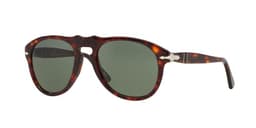
Persol 649 Original PO0649 (Havana / Green, 54 mm)
The pick for most people. The 1957 original with the Meflecto temples Persol names in its own description, offered in a 52, 54 and 56 mm eye size in this colorway. The pair linked here is the 54 mm with Persol's standard crystal green lens, which is not polarized.
Price as of September 15, 2026. #ad How we’re funded
Frame material: Acetate, handmade in Italy (per Persol). Specs read from the listing on September 15, 2026.
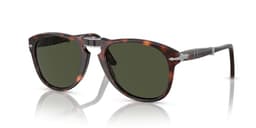
Persol 714 Original PO0714 Folding (Havana / Green, 54 mm)
The folding version. Same acetate, same crystal green lens, and a front Persol measures one millimeter wider at the bridge. It costs clearly more, and the extra money buys the fold and the history. No 56 mm option. The pair linked here is the 54 mm, not polarized.
Price as of September 15, 2026. #ad How we’re funded
Frame material: Acetate, handmade in Italy (per Persol). Specs read from the listing on September 15, 2026.
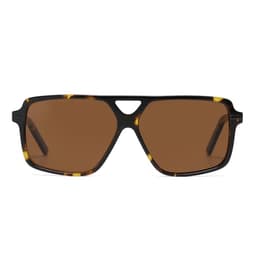
SOJOS Square Aviator (Acetate)
The budget alternative, and not a Persol copy. A squared aviator in stated acetate with polarized UV400 lenses, at a small fraction of either price. No keyhole bridge, no Meflecto, no crystal lens and no fold. Buy it to find out whether the pilot shape suits you before spending Persol money.
Price as of September 15, 2026. #ad How we’re funded
Frame material: Cellulose acetate. Specs read from the listing on July 21, 2026.
Frequently asked questions
What is the difference between the Persol 649 and 714?
The 714 folds and the 649 does not. Persol states the 714 was introduced in the 1960s as a folding version of the 649, and that it needs ten additional manufacturing steps. Beyond the fold, Persol's own pages list the same acetate frame, the same crystal lenses and Italian manufacture for both in the Havana and green colorway, and at the 54 mm size the fronts are one millimeter apart at the bridge. The practical differences are price, where the 714 costs clearly more, and size range, where the 649 is offered up to a 56 mm eye size and the 714 stops at 54.
Is the Persol 714 smaller than the 649?
Not on Persol's published numbers. At the 54 mm size Persol lists the 649 at 54-20 and the 714 at 54-21, both with 140 mm temples, and gives both the same standard face-coverage rating. What differs is the range: in the Havana and green colorway the 649 comes in 52-20, 54-20 and 56-20, while the 714 comes in 52-21 and 54-21. So the 714 is not a smaller frame, but it has no large size, and a wide face that needs a 56 mm eye size only has the 649 to choose from.
Does the Persol 714 have Meflecto temples?
Persol names the Meflecto flexible-temple system in the 649's own product description. Its description of the 714 is about the folding system and does not mention Meflecto. Some 714 product pages show Persol's generic Meflecto feature panel, but the same panel appears on a Persol frame listed as metal, so it is template copy rather than evidence about a specific model. We have not handled a current 714, so we will not tell you either way. If flexible temples are the reason you are buying, confirm with Persol or the seller before you order.
Why is the Persol 714 more expensive than the 649?
Because of the fold. Persol states the 714 requires ten additional manufacturing steps compared with its standard models, and the price reflects that labor. The material, the lenses and the shape are otherwise the same on Persol's own spec panels. That is why the 714 is only worth the extra money if you will actually use the fold, or if the model's history with Steve McQueen matters to you.
Are Persol 649 and 714 lenses polarized?
Not in the standard version. Persol lists crystal lenses for both in the Havana frame with green lenses, and that colorway carries no polarized tag on Persol's pages, while the polarized versions of each model are labeled as such and cost more. Both pairs linked on this page are the standard, non-polarized crystal green. Polarization cuts glare but is a separate property from UV protection, which both Amazon listings state at 100 percent.
Which Persol sunglasses did Steve McQueen wear?
The 714. Persol states that the model owes its fame to Steve McQueen, who wore it on set when filming The Thomas Crown Affair, and its McQueen editorial credits him with making the 714 unforgettable in 1968. Persol now sells a 714SM Steve McQueen edition, which on the product pages we checked is offered in a 54-21 size only and costs more than the standard 714.
Sources
- Persol — 649 Original, Havana frame with green lenses (PO0649 24/31) — Persol's product page: 52-20, 54-20 and 56-20 sizes; acetate frame, crystal lenses, made in Italy; keyhole bridge, arrow and Meflecto; designed in 1957 for Turin's tram drivers (accessed September 15, 2026)
- Persol — 714 Original, Havana frame with green lenses (PO0714 24/31) — Persol's product page: 52-21 and 54-21 sizes; acetate frame, crystal lenses, made in Italy; introduced in the 1960s as the folding 649, with ten additional manufacturing steps (accessed September 15, 2026)
- Persol — 714SM Steve McQueen — Persol's product page for the McQueen edition: offered in 54-21 only; McQueen wore the 714 on set filming The Thomas Crown Affair (accessed September 15, 2026)
- Persol — Heritage: frame material, bridge, Meflecto and Arrow — Persol on its Turin origins (1917), cellulose acetate passing through thirty manual processes, the Meflecto flexible stem patented in the 1930s, and the arrow-shaped hinge (accessed September 15, 2026)
- U.S. FDA — Tips to Stay Safe in the Sun: From Sunscreen to Sunglasses — FDA: lens darkness does not indicate UV protection; look for a 100% UV / UV400 label (accessed July 21, 2026)
Keep reading
Persol review
The full brand review, and whether the Italian-acetate premium holds up at all.
Read the reviewRay-Ban vs Persol
The brand-level head-to-head, including how Meflecto is actually built.
Read the comparisonBest acetate aviator sunglasses
Why the pilot shape is rare in acetate, and who it suits.
Read the guideSunglasses sizes explained
How to read the 54-20-140 on the temple before choosing an eye size.
Read the guideItalian acetate, explained
The material argument both of these frames are built on.
Read the explainerBest designer acetate sunglasses
The premium end in full, if a pilot shape is not the one you want.
See the picks