What a travel pair has to do
Start with polarization, because travel is disproportionately spent around the surfaces that produce glare: water, sand, snow, wet roads, and the glass of a rental car. A polarized lens blocks the horizontal glare bouncing off those surfaces, which is the difference between squinting across a harbor and actually seeing it. Four of the five picks here are polarized as standard; the Persol’s classic crystal lens is not, and we say so on its card. Our polarized vs non-polarized guide covers the one downside worth knowing before a long drive, which is that polarized lenses can dim some dashboard and phone screens at certain angles.
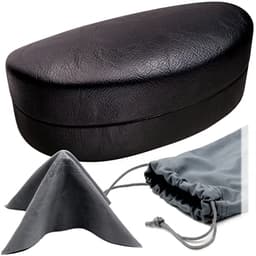
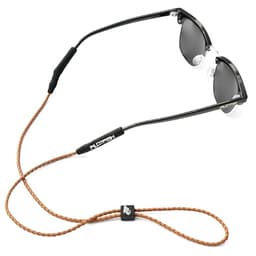
Next, packability. A frame lives in a bag for most of a trip, and acetate fronts are thicker and more curved than wire frames, so they get jammed into cases that do not quite close and come out scratched. That is why the case below is cut oversized, and why the Persol 714 is on this list at all: a frame that folds to roughly half its width fits in a pocket you would not otherwise use, and a pocket is harder to leave behind than a bag. If you tend to lose things, a slim retainer cord is cheaper than any frame on this page and does more to keep it on your face.
Finally, loss risk, which is the honest heart of the decision. A frame you would grieve is a frame you will spend the trip protecting instead of wearing. Decide up front which kind you are packing. A budget acetate pair is the sensible default for most trips; a premium pair makes sense when the trip is the occasion and you will keep it on your face or in its case. Our guide to cleaning sunglasses is worth a read before you leave, because sunscreen and salt spray are hard on both lenses and acetate.
The picks, and which trip each one is for
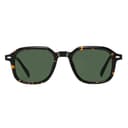
Our best overall for travel is the SOJOS Acetate Rectangle. It is stated cellulose acetate, polarized and UV400, handmade with metal hinges, and it sits at a budget price that makes it the frame to pack without thinking. The rectangular shape is neutral enough to work in photographs on a beach and at a dinner, and unisex enough to be borrowed. The con is that it is deliberately plain and SOJOS does not publish its width, so check the fit if your face is notably wide. For most trips it is the whole answer.
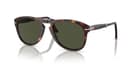
Best folding is the Persol 714, and it is the opposite kind of travel pair: an acetate icon with crystal lenses, made in Italy, that folds at the bridge and the temples into something that fits a shirt or jacket pocket. Persol says the fold adds ten manufacturing steps, and you pay clearly for them. The classic green lens is not polarized, and this is a frame to keep track of, not one to toss in a beach bag. Our Persol 649 vs 714 comparison goes through exactly what the fold buys you and whether the fixed 649 is the better buy for everyone who does not need it.
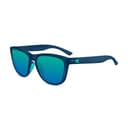
The Knockaround Premiums is our best cheap-to-lose pick, and it is not acetate — Knockaround’s frames are injection-molded polycarbonate, which we say plainly everywhere they appear. That is the point here. Genuinely polarized UV400 lenses in a medium square that suits most faces, in more colors than you will ever need, at a price where a wave taking them is a shrug. It is the frame for the boat, the festival and the glovebox of the rental car. If you want the same idea in real acetate, the SOJOS above is the answer.
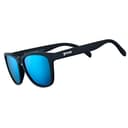
Best for active days is the goodr OG. Also polycarbonate, also not a fashion frame, and reviewed here as exactly what it is: a polarized, UV400 sport pair with a no-slip coating that stays put on a hike, a run along a seafront or a day on a bike. It runs small-to-medium, so larger faces should size up in goodr’s range. Pack it alongside an everyday pair rather than instead of one; it looks like sport kit because it is.
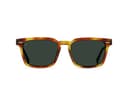
Finally, the RAEN Adin is our best upgrade for a trip where the sunglasses are part of the point. Hand-finished Italian acetate in a soft-round shape with a keyhole bridge, from an independent brand at roughly a third of legacy-designer money, in a 54 mm eye size that suits medium faces. It is the pair to pack for the trip you have planned for a year, and to keep in the case when it is not on your face. RAEN is a smaller-run brand, so colorways come and go — see the live card.
What to leave at home
Anything with glass lenses unless you will baby it — glass scratches far less but can crack under a hit, and travel is where hits happen. Anything mirrored and dark for a driving trip, because a very dark lens is a liability in tunnels and at dusk; our driving roundup has the lens rules. And any frame without a stated UV rating, however cheap: a fake pair from a beach stall may block visible light and let UV straight through, which is worse than no sunglasses at all. Every pick here states UV400 or 100% UV protection on its listing, and that line is the one that matters.