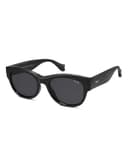
Why polarized is not optional on the beach
Light reflecting off a flat surface — water, wet sand, the roof of a car — comes back mostly horizontally polarized, and that is exactly the orientation a polarized lens is built to block. Inland, that is a nice-to-have. On the beach, where a large share of the light reaching your eyes has bounced off the sea, it is the difference between a hard white glare and being able to see the color of the water and what is in it. Every pick on this page is polarized for that reason, and our polarized vs non-polarized guide explains the physics and the one quirk to know, which is that polarized lenses can dim a phone screen at certain angles.
Polarization is not UV protection, and the beach is where that distinction matters most, because UV exposure is highest where light is reflected. A lens can be polarized and block almost no UV. The number that protects your eyes is a stated UV400 or 100% UVA/UVB rating, and every frame here carries one. Our UV400 explainer covers what it means; the short version is that a dark lens without a UV rating is worse than no sunglasses, because it opens your pupils to light it is not filtering.
Sand, sunscreen and salt
Three things kill beach sunglasses that never touch an office pair. Sand gets into hinges and scratches lenses when you wipe them, so rinse before you wipe — fresh water first, then a cloth, never a towel that has been on the sand. Sunscreen is oily and some formulations can mark acetate over time if left on, so wipe the temples and nose bridge at the end of the day. Salt dries to a crust that abrades both lens and frame the next time they rub against anything, and it is the reason a beach pair should get a rinse every evening. Our guide to cleaning sunglasses has the method, and our acetate frame care page covers what heat and oil do to the material specifically.
The picks, and why a polycarbonate frame is first
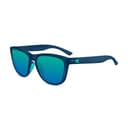
Our best overall for the beach is the Knockaround Premiums, and it is not acetate — Knockaround’s frames are injection-molded polycarbonate, which we say plainly on every page they appear on. Here that is the point. Genuinely polarized UV400 lenses in a medium square that suits most faces, light enough not to leave marks on a hot day, and cheap enough that a wave taking them is a shrug rather than a loss. A polycarbonate frame also shrugs off sand and salt in a way a hand-polished acetate finish does not. Our Knockaround review covers the full range, including the larger Fort Knocks for wider faces.
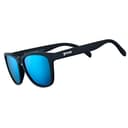
Best for the water is the goodr OG. Also polycarbonate, also a sport frame rather than a style frame, and the one to wear for paddleboarding, beach volleyball or a run along the sand: polarized, UV400, and a no-slip coating that keeps it on your face when you are sweating and moving. It runs small-to-medium, so larger faces should size up. It is not a frame for the beach bar afterward, which is why it is second and not first.
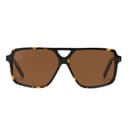
The SOJOS Square Aviator is our best coverage pick, and the first real acetate frame on the list. A squared-off aviator in an acetate body rather than the usual thin metal, polarized and UV400, with a generous lens area that blocks the low side-light you get walking along a shoreline late in the day. It is bolder than a wire aviator and heavier on the nose, and the size overwhelms a small face; for a medium or large face wanting maximum protection in a frame that still looks like a choice, it is hard to beat at the price.
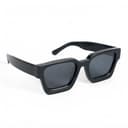
Best bio-acetate is the Earthly Ones Polarized Square. It states bio-acetate on its listing, with polarized UV400 lenses, in a square front that adds definition to a round face and stays neutral enough for every day. Our caveats are the ones we attach to it everywhere: no published measurements, no quantified bio-content and no cited standard, and one size only. At its price it is a reasonable way to get a plant-based acetate frame onto a beach, and our bio-acetate roundup puts the claim in context.
Finally, best recycled: the SOJOS Ocean Collection Bloom. Not acetate either — SOJOS states a non-toxic, BPA-free recycled plastic frame — and it is here because a beach is the one place a recycled-plastic frame makes a kind of sense. Polarized, UV400, the cheapest frame in its cluster, and SOJOS publishes a full measurement block for it, which almost nothing else at the price does. It cannot be heat-adjusted or re-polished the way acetate can, and SOJOS does not state a recycled-content percentage. Buy it as a low-footprint beach pair, not as an acetate frame.
What to leave in the car
Glass lenses, because sand plus a wipe is a scratch on plastic and a chip risk on glass, and because a dropped glass lens on a rock is a cracked lens. Any premium acetate frame you would grieve — our designer acetate picks are for the restaurant on the way home, not the towel. And anything without a stated UV rating, however good it looks, for the reasons above. If you want one pair that does the beach and the rest of the trip, our travel roundup makes the case for a cheap acetate frame plus a hard case, which is the compromise most people end up at.