Acetate Club

Best Costa Sunglasses Alternatives

Costa's whole case is 580G: a mirror encapsulated between two layers of glass, on a co-injected nylon frame. Five frames that answer the lens claim in acetate - and the one thing none of them replaces.

By Stephen V.Last updated How we pick

Our pick is the OTIS Test of Time X Ecoin Havana Brown: polarized mineral glass on a stated eco-acetate frame, published at 55-18-140, which is the closest thing on this site to Costa’s lens argument in a material Costa does not use. If you want the lens technology taken further, the Serengeti Raffaele publishes a Mineral Polarized 555nm lens in filter category 3 on Italian acetate. The budget pick is the Knockaround Premiums at around $28— and we are putting a polycarbonate frame on an acetate site deliberately, because if the honest use is a boat deck and a 30% chance of losing them overboard, that is the rational buy.

Costa is known for one thing above all others, and it is worth stating accurately before substituting anything. Costa’s own pages describe 580G as a glass lens with the mirror encapsulated between two glass layers, finished with a C-WALL molecular bond, and state it is about 20% thinner and 22% lighter than average polarized glass. Its 580P is a polycarbonate lens with the same C-WALL coating. The frames are given as co-injected nylon— described as TR-90 nylon and as bio-resin based — and stated to resist corrosion, heat and cold and to hold up in saltwater and sand. That is a coherent, specific product, and this page does not pretend otherwise.

What it means for a substitute is narrow: you can match the lens in acetate, and you cannot match the frame. Five frames below publish a mineral glass or polarized claim of their own. Where a seller does not publish a measurement, a filter category or a UV figure, the card says not published rather than guessing, and prices are live and dated on every button.

How this is funded: we earn a commission if you buy through our links, at no extra cost to you. It never changes which product we recommend, and we’ll tell you when we’d skip one. Full disclosure.

Quick picks

Ranked on frame material, fit and value. Select a row to jump to the full write-up. We have not handled these frames in person — here is exactly what we do instead.

#ProductBest forPrice
1
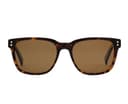
OTIS Test of Time X Eco (Havana Brown)

OTIS Test of Time X Eco (Havana Brown)

A genuinely good frame with a sustainability claim we would not repeat without a caveat. OTIS builds this on its eco-acetate with polarized mineral glass lenses, which is a real specification advantage. But OTIS states the frames are biodegradable in a landfill environment, and it publishes no standard, no figure and no lab to support that.

Best overall
$145.60 · View on Amazon

Price as of November 21, 2026. #ad How we’re funded

2
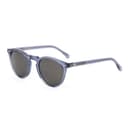
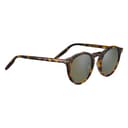
Serengeti Raffaele (Shiny Tortoise, Mineral Polarized 555nm, Cat 3)

Serengeti Raffaele (Shiny Tortoise, Mineral Polarized 555nm, Cat 3)

The rare acetate frame whose listing tells you its filter category outright. Serengeti cuts the Raffaele from Italian acetate in a round shape with a keyhole bridge, and fits it with polarized mineral glass rated category 3 on the listing itself — the first time on this site a frame has stated the number rather than left us to infer it. Premium money, but you know exactly what you are buying.

Best lens technology
$320.00 · View on Amazon

Price as of November 21, 2026. #ad How we’re funded

3
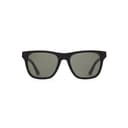
OTIS Guilt Trip X Eco (Black / Grey Polarized)

OTIS Guilt Trip X Eco (Black / Grey Polarized)

The big one in the range, and the only OTIS frame here cut for a genuinely large face. OTIS publishes the whole fitting on this one — 57-19-130 — so for once you can measure a glass-lensed frame against one you already own before committing. Same polarized mineral glass and plain black eco-acetate as the rest of the line, in a squared classic shape that is not chasing a trend.

Best for a wide face
$240.00 · View on Amazon

Price as of November 21, 2026. #ad How we’re funded

4
OTIS Omar x Outerknown Eco (Crystal Wave / Neutral Grey)

OTIS Omar x Outerknown Eco (Crystal Wave / Neutral Grey)

The narrowest frame OTIS makes, and the reason the brand is worth a look if round frames usually swamp you. At a 47.5 mm lens it is genuinely small, which is rare in a mineral-glass frame — most brands reserve glass lenses for large men's shapes. The Outerknown colorway is the same frame in a crystal finish.

Best for a small face
$149.95 · View on Amazon

Price as of November 21, 2026. #ad How we’re funded

5
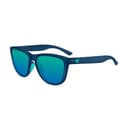
Knockaround Premiums (Polarized)

Knockaround Premiums (Polarized)

The best-value polarized sunglasses most people can name — but be clear-eyed: the Premiums frame is polycarbonate, not acetate. For a $35 knockabout pair you won't cry over losing, that's fine. Just don't buy them expecting the heft or color depth of acetate.

Best budget
$26.13 · View on Amazon

$38.0031% off

Price as of November 21, 2026. #ad How we’re funded

The picks in full

#1Best overall

OTIS Test of Time X Eco (Havana Brown)

A genuinely good frame with a sustainability claim we would not repeat without a caveat. OTIS builds this on its eco-acetate with polarized mineral glass lenses, which is a real specification advantage. But OTIS states the frames are biodegradable in a landfill environment, and it publishes no standard, no figure and no lab to support that.

Strengths

  • Mineral glass lenses, which resist scratching far better than plastic over years of wear
  • Polarized, and OTIS states its lenses block 100% of UVA and UVB
  • 70s-leaning square shape with a genuine point of view, at well under designer money

Who should skip it

  • OTIS claims the eco-acetate is biodegradable in a LANDFILL environment; the published test basis for acetate biodegradation is industrial composting, and OTIS cites no standard, figure or lab
  • Mineral glass is heavier on the nose and less impact-resistant than plastic
  • Sold through third-party sellers, so stock and price move more than a first-party listing
Frame materialEco-acetate (OTIS states it is derived from cotton seeds and plant matter)
Frame shapeSquare
Lens protection100% UVA/UVB (per OTIS)
PolarizedYes
Lens width55 mm
Suits face shapesOval, Round, Heart

Spec note. OTIS lists the Test of Time X at 55-18-140. Its lenses are mineral glass rather than plastic — OTIS's own argument being that glass is sourced from sand and soda ash and is endlessly recyclable, which is a separate sustainability claim from the frame material.

Specs and material read from the product listing, on September 3, 2026. “Not published” means the seller does not state that figure.

#2Best lens technology

Serengeti Raffaele (Shiny Tortoise, Mineral Polarized 555nm, Cat 3)

The rare acetate frame whose listing tells you its filter category outright. Serengeti cuts the Raffaele from Italian acetate in a round shape with a keyhole bridge, and fits it with polarized mineral glass rated category 3 on the listing itself — the first time on this site a frame has stated the number rather than left us to infer it. Premium money, but you know exactly what you are buying.

Strengths

  • Filter category 3 stated in the listing title, with 555 nm polarized mineral glass from Corning per Serengeti
  • Italian acetate with a keyhole bridge, per Serengeti's product page
  • Serengeti states UV protection to 400 nm on its lens-technology page

Who should skip it

  • Premium price — this is Persol money, not budget acetate money
  • No measurements read: Amazon sizes it only as Small-Medium, and Serengeti's own page could not be fetched
  • Mineral glass is heavier on the nose and can crack under impact, as with any glass lens
Frame materialItalian acetate (per Serengeti)
Frame shapeRound
Lens protectionUV protection to 400 nm (per Serengeti); filter category 3 (per listing)
PolarizedYes
Lens widthNot published
Suits face shapesSquare, Oval, Heart

Spec note. Serengeti describes the Raffaele as Italian acetate with a keyhole nose bridge and fits it with its Mineral Polarized 555nm lens — borosilicate optical glass from Corning, tuned to 555 nm at the center of the visible spectrum. The Amazon listing title states 'Cat 3 to 3', the notation Serengeti uses for a fixed (non-photochromic) category-3 lens, and sizes the frame Small-Medium.

Specs and material read from the product listing, on September 21, 2026. “Not published” means the seller does not state that figure.

#3Best for a wide face

OTIS Guilt Trip X Eco (Black / Grey Polarized)

The big one in the range, and the only OTIS frame here cut for a genuinely large face. OTIS publishes the whole fitting on this one — 57-19-130 — so for once you can measure a glass-lensed frame against one you already own before committing. Same polarized mineral glass and plain black eco-acetate as the rest of the line, in a squared classic shape that is not chasing a trend.

Strengths

  • A genuinely large fit — OTIS lists 57-19-130 and calls it a larger-fit frame, which is rare in a glass-lensed acetate
  • Polarized mineral glass rated filter category 3, with 100% UVA/UVB stated by OTIS
  • The full fitting is published, lens to temple, so the size is checkable before you buy

Who should skip it

  • The temples are 130 mm against a 57 mm front, shorter than the 140-145 the rest of the range runs — it fits wide rather than deep
  • OTIS states its eco-acetate is biodegradable but cites no standard, figure or lab that supports it; the published test basis for acetate is industrial composting
  • Mineral glass adds weight, and scratched or cracked lenses are excluded from the lifetime warranty
Frame materialEco-acetate (OTIS states it is derived from cotton seeds and plant matter)
Frame shapeSquare
Lens protection100% UVA/UVB, filter category 3 (per OTIS)
PolarizedYes
Lens width57 mm
Suits face shapesRound, Oval, Heart

Spec note. OTIS lists the Guilt Trip X at 57-19-130 with a 6 base lens curve, Visottica hinges with stainless steel screws, and a category 3 polarized mineral glass lens. It is the widest front of the three OTIS frames here and has the shortest temples, so it suits a wide face rather than a long one.

Specs and material read from the product listing, on September 22, 2026. “Not published” means the seller does not state that figure.

#4Best for a small face

OTIS Omar x Outerknown Eco (Crystal Wave / Neutral Grey)

The narrowest frame OTIS makes, and the reason the brand is worth a look if round frames usually swamp you. At a 47.5 mm lens it is genuinely small, which is rare in a mineral-glass frame — most brands reserve glass lenses for large men's shapes. The Outerknown colorway is the same frame in a crystal finish.

Strengths

  • 47.5 mm lens width makes this a genuinely small round, not a 'small' that measures 52 mm
  • Polarized mineral glass, which resists scratching far better than any plastic lens
  • OTIS publishes a 4 base lens curve — a flatter front that suits a narrow face

Who should skip it

  • OTIS publishes two different sizes for the Omar: 47.5-22.5-140 on its Omar Eco features page and 50-23-140 on a product page for the same model
  • Mineral glass is heavier on the nose and, as OTIS states itself, can crack under impact
  • The eco-acetate biodegradability claim is not supported by the standard OTIS cites — see our review
Frame materialEco-acetate (OTIS states it is derived from cotton seeds and plant matter)
Frame shapeRound
Lens protection100% UVA/UVB, filter category 3 (per OTIS)
PolarizedYes
Lens width47.5 mm
Suits face shapesSquare, Heart, Diamond

Spec note. OTIS lists the Omar at 47.5-22.5-140 on its Omar Eco features page, with a 4 base lens curve and Vissottica barrel hinges. Its own product page for a different Omar colorway lists 50-23-140 instead, so treat the size as approximate and measure a pair you already own before buying.

Specs and material read from the product listing, on September 7, 2026. “Not published” means the seller does not state that figure.

#5Best budget

Knockaround Premiums (Polarized)

The best-value polarized sunglasses most people can name — but be clear-eyed: the Premiums frame is polycarbonate, not acetate. For a $35 knockabout pair you won't cry over losing, that's fine. Just don't buy them expecting the heft or color depth of acetate.

Strengths

  • Genuinely polarized and UV400 at around $35
  • Huge color range and a classic square shape
  • Light and near-disposable in the best way — beach, festival, glovebox

Who should skip it

  • Polycarbonate frame, not acetate — lighter and less premium in the hand
  • The finish is matte plastic; it won't develop the depth acetate does
Frame materialPolycarbonate (not acetate)
Frame shapeSquare
Lens protectionUV400
PolarizedYes
Lens widthNot published
Suits face shapesOval, Heart

Spec note. Knockaround's standard frames (Premiums, Fort Knocks) are injection-molded polycarbonate, not cellulose acetate. That's the honest distinction — it's a value brand, not an acetate brand.

Specs and material read from the product listing, on July 21, 2026. “Not published” means the seller does not state that figure.

The criteria, and why they are in this order

1. Is the lens mineral glass, and does the seller say so?This is the entry requirement, because it is the property Costa built its name on. Glass resists scratching far better than any plastic lens, which matters most in exactly the environment Costa sells into — sand, salt spray and a shirt hem used as a cloth. Four of the five picks here publish a mineral glass lens. The fifth does not, and is on the list for a reason we set out below.

2. Is it polarized, stated rather than implied?On water, polarization is not a comfort feature — reflected glare off a surface is the thing you are trying to see through. Four of the five state polarized lenses in the listing or on the brand page. Our guide to polarized vs non-polarized covers what it does and the two situations where it actively hurts, and how to tell if sunglasses are polarized gives you the check to run when a pair arrives.

3. Is a filter category published?Lens darkness is a standardized 0 to 4 scale: category 0 transmits 80–100% of visible light, 1 transmits 43–80%, 2 transmits 18–43%, 3 transmits 8–18% and 4 transmits 3–8%. Two picks here publish a category; most of the market publishes nothing, and we record that as not published rather than reading a number off a photograph. Our filter-category guide sets out the bands in full.

4. Is the frame material stated? This is an acetate site, so it is the tie-breaker rather than the opener. Where a frame is not acetate, the card says so plainly.

Notice what is not a criterion: a claim about how colors look. We do not run optical tests, nobody in this category publishes a transmission curve, and a page that ranked lenses on vividness would be dressing spec-reading up as testing. Our how we choose page sets out exactly what we do instead.

What a Costa alternative cannot replace

Three things, and they are the reason this page is not a straight swap list.

The frame material is the point of the frame.Co-injected nylon is chosen for saltwater duty: it shrugs off corrosion, it flexes rather than cracking when it gets stepped on in a cockpit, and it does not care about heat. Cellulose acetate is a different material with a different set of virtues — it carries color through its thickness, it can be warmed and adjusted to your head by an optician, and it can be re-polished years later. It is also the material that softens with heat, which means a hot dashboard or a dry deck in August is the one environment where it is the worse choice. Our comparison of acetate vs nylon frames works through that trade honestly, and whether acetate sunglasses are durable covers what the material does and does not survive.

None of these is a wrap.A curved wrap front blocks light and spray from the side, and that geometry is very difficult to cut from a flat acetate sheet — which is the same reason the market has almost no acetate sport frames. If side coverage is the requirement, an acetate frame is the wrong answer and we would rather say that than sell you one.

Glass behaves differently when you drop it.Mineral glass wins on scratching and loses on impact: plastic scuffs where glass can chip. Costa’s own answer to that is its 580P polycarbonate line, and the honest version of this page says the same — if the pair is going to get knocked about, plastic is the sturdier lens. Our guide to sunglasses lens materials compares the three and scratched sunglasses covers what can and cannot be fixed afterwards.

Why three of the five are OTIS

Because that is the finding, not an oversight. OTIS is the only brand we track that puts a polarized mineral glass lens on a stated acetate frame at mid-market money, and it does it across three sizes: 47.5 mm at the Omar, 55 mm at the Test of Time X, 57 mm at the Guilt Trip X. Most of the market reserves glass lenses for large men’s frames, which is precisely why the small Omar is worth knowing about.

One caveat we will not bury: OTIS states that its eco-acetate is derived from cotton seeds and plant matter and that the frames are biodegradable in a landfill environment, and it publishes no standard, no figure and no labto support the biodegradability claim. We rank these frames on the lens and the published fitting, not on the sustainability wording. For contrast, here is what a supported claim looks like: Mazzucchelli publishes its M49 bioplastic as 68% bio-based with more than 90% biodegradation after 115 days under ISO 14855-2:2018 — a figure, a standard and a method. Our bio-acetate explainer separates bio-based content from biodegradability, which are different measurements, and the OTIS review goes through the brand in full.

The lens-technology pick, in Serengeti’s own words

Serengeti sits above OTIS on lens engineering and above Costa on frame material, which is an unusual combination. Its own product page gives the Raffaele as Italian acetate with a Mineral Polarized 555nm lens in filter category 3, in a round shape with a keyhole nose bridge. Serengeti also states that its photochromic mineral lenses pass through a hydrogen-fueled Lehr furnace that activates its Spectral Control treatment.

Two honest notes. It is a round frame, so it will not read as a Costa substitute to anyone who wanted a squared navigator. And it costs more than most Costa models, so this is the upgrade path rather than the cheaper route. If the photochromic behavior is what appeals — one pair that shifts between filter categories as the light changes — the Serengeti Foyt is the frame to look at instead, and our Serengeti review and photochromic guidecover it. For the whole mineral-glass field on this site, including Persol’s crystal lenses, see best glass lens sunglasses.

Why a polycarbonate frame is the budget pick

The Knockaround Premiums is not acetate. Knockaround’s standard frames are injection-molded polycarbonate and we say so on the card. It is here because the question “what instead of Costa” usually comes with a real-world constraint attached: the pair is going on a boat, a paddleboard or a beach, and the probability of losing it is not small.

Under those conditions, a stated-polarized UV400 frame at around $28 is the rational buy, and spending ten times that on hand-finished acetate is not a better decision — it is a worse one. That is the same argument our beach sunglasses roundup makes, which is also topped by a polycarbonate frame on an acetate site, and our Knockaround review is clear-eyed about what the brand is. If you want the cheapest honest acetate option instead, start from acetate sunglasses under $25.

How to decide, in two questions

Is the pair going on the water?If yes, and if it is going to be the only pair you own for that job, buy the nylon frame — Costa’s own, or a polycarbonate budget pair. Acetate is the wrong material for salt, heat and a deck.

Or did you come to Costa for the lens and stay for the look? That is the far more common case, and it is the one this page answers. If you want glass lenses and polarization in a frame you can wear to dinner, warm and adjust to your head, and re-polish in five years, every pick above except the budget one does that and Costa does not. Our polarized acetate roundup is the broader version of that field, and Maui Jim alternatives runs the same method against a different lens brand if that is the one you were comparing.
Frequently asked questions

What are the best alternatives to Costa sunglasses?

The OTIS Test of Time X Eco, if you came to Costa for the glass lens. OTIS publishes it at 55-18-140 with polarized mineral glass lenses on a stated eco-acetate frame, which answers Costa's lens argument in a material Costa does not use. The Serengeti Raffaele is the upgrade - Italian acetate with a Mineral Polarized 555nm lens in filter category 3. The Knockaround Premiums at around $28 is the budget pick, and it is polycarbonate rather than acetate, which is the right call if the pair is going on a boat.

What is Costa known for?

Its 580 lenses. Costa's own pages describe 580G as a glass lens with the mirror encapsulated between two glass layers and a C-WALL molecular bond on the outer surfaces, and state it is about 20% thinner and 22% lighter than average polarized glass. Its 580P is a polycarbonate version with the same C-WALL coating. The frames are given as co-injected nylon, described as TR-90 and as bio-resin based, and stated to resist corrosion, heat and cold and to hold up in saltwater and sand.

Is 580G glass better than acetate-frame glass lenses?

They are different claims about different parts of the sunglasses. 580G describes a LENS - Costa's encapsulated-mirror glass construction with its own coating. OTIS and Serengeti describe a FRAME material plus a mineral glass lens of their own. Costa is the only one of the three publishing a thinness and weight comparison against average polarized glass, so on the lens specification alone Costa publishes more. What it does not offer is a frame cut from acetate sheet.

Can you get acetate sunglasses with glass lenses?

Yes, and it is a small field. On this site the frames that publish a mineral or crystal glass lens are OTIS (Test of Time X Eco, Guilt Trip X Eco, Omar x Outerknown Eco), Serengeti (Raffaele, Foyt) and Persol (649, 714, PO3048S). Our glass-lens roundup ranks that whole category. Glass resists scratching far better than plastic and weighs more, and it chips where plastic scuffs.

Why is a polycarbonate frame recommended on an acetate site?

Because the use case decides the material, not the other way round. If the pair is going on a boat, a paddleboard or a beach and there is a real chance of losing it, a stated-polarized UV400 frame at around $28 is the rational buy and hand-finished acetate is not. Acetate softens with heat and is the worse choice on a hot deck or dashboard. We say which frames are not acetate on the card rather than leaving them off the list.

Will an acetate frame survive saltwater and sand?

Less comfortably than nylon, and that is the honest limit of this page. Co-injected nylon is chosen for corrosion resistance and for flexing rather than cracking under a boot; acetate carries color through its thickness, can be warmed and adjusted by an optician and can be re-polished years later, but it softens with heat. It also cannot be cut into a wraparound front, so if side coverage from spray is the requirement, an acetate frame is the wrong answer.

Sources

  • Costa Del Mar — 580 lenses and frame materials (official pages) — Costa's own lens-technology and product pages. 580G is a GLASS lens with the mirror encapsulated between two glass layers and a C-WALL molecular bond on the outer surfaces; Costa states it is about 20% thinner and 22% lighter than average polarized glass, and lists it as scratch-resistant. 580P is a polycarbonate lens with the same C-WALL coating for scratch resistance, with Trivex used for prescription versions on at least one page read. Frames are given as co-injected nylon, described as TR-90 nylon and as bio-resin based, and stated to resist corrosion, heat and cold and to hold up in saltwater and sand. One inconsistency recorded rather than resolved: product listings for the Brine label 580P as "Lightwave Polycarbonate" in one place and "Polarized Polycarbonate" in another. All of this is Costa's own published marketing and product copy, not independent testing (accessed November 9, 2026)
  • Serengeti — Raffaele (acetate collection) — Serengeti's product page: Italian acetate, round, keyhole nose bridge, offered in Shiny Tortoise with the Mineral Polarized 555nm lens in category 3 (accessed September 21, 2026)
  • Serengeti — The Serengeti Lens (lens technology) — Serengeti on its mineral lenses (Corning borosilicate optical glass), the 555 nm tuning, Spectral Control, and UV protection to 400 nm (accessed September 21, 2026)
  • Serengeti — Our Technologies (photochromic, Spectral Control, 555nm) — Serengeti on photochromic: lenses are activated by atmospheric UV radiation and transition from light to dark gradually - in bright light the molecules expand and darken the lens, in low light they shrink and separate; Spectral Control filters up to 96% of blue light; 555 nm sits at the center of the visible spectrum (accessed October 5, 2026)
  • The College of Optometrists — Tints and driving (BS EN ISO 12312-1 filter categories) — Category bands: 0 = 80-100% transmission, 1 = 43-80%, 2 = 18-43%, 3 = 8-18%, 4 = 3-8%; filters for road use shall be categories 0-3; under 75% transmittance is unsuitable for twilight or night driving (accessed September 21, 2026)
  • ISO 12312-1:2022 — Eye and face protection — Sunglasses for general use — The international standard for general-use sunglasses: UV filtering, filter categories and transmittance (accessed July 21, 2026)
  • Mazzucchelli 1849 — M49 bioplastic (bio-based cellulose acetate) — Manufacturer detail on bio-acetate: 68% bio-based content, >90% biodegradation after 115 days per ISO 14855-2:2018 (accessed July 21, 2026)
  • ISO 14855-2:2018 — Aerobic biodegradability of plastics under controlled composting — The industrial-composting biodegradation test method bio-acetate claims are measured against (accessed July 21, 2026)
  • American Academy of Ophthalmology — Do scratched lenses affect your prescription and/or the blue light coating? — An AAO ophthalmologist's answer: light scratches will not change the prescription or protective features of the lens, although they can be annoying if near your visual axis; extensive scratches or loss of coatings can impair your clarity of vision and possibly decrease protection from UV light. It also notes that lower-quality lenses and coatings scratch more easily and may need replacing, and that lens wipes can cause damage if they are low quality, misused, or used when sand or grit is on the wipe or the lens (accessed October 11, 2026)
  • Specialty Vision — Eyeglass Frame Materials (optometry-practice reference) — On titanium frames: very strong, lightweight and corrosion-resistant, suited to a thin, light profile and small or delicate styles; hypoallergenic, which matters for patients with a nickel allergy; corrosion resistance handles sweat, humidity and daily handling without pitting; a higher cost than basic metals. On blended-nylon frames: commonly used for sports and safety eyewear including wraparound styles, handles impact and motion better than standard plastics, and resists sweat and moisture well. On plastic frames: the most popular choice for affordability and styling, but they break more easily than metal and may fade in color over time, while Italian zyl acetate is known for its quality, hand-polished finishes and multi-layer color effects, and lasts many years with proper care (accessed October 11, 2026)

Keep reading