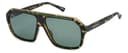
What a Maui Jim claim actually consists of
Three separable claims, and a cheaper frame can match them one at a time.
1. Polarization, stated rather than implied. Maui Jim states 99.9% of horizontal glare blocked. No other brand on this page publishes a glare percentage — what they publish instead is the binary fact that the lens is polarized, which is the claim that matters for whether reflections off water, tarmac and a car hood flatten out. That distinction is worth keeping straight: a polarization percentage and a “polarized” label are not the same evidence. Our guide to polarized vs non-polarized covers what the filter does, and how to tell if a lens is really polarized is the test you can run on a pair you already own.
2. Colour enhancement. The rare-earth claim is Maui Jim’s own and is specific to its lenses. Serengeti makes a structurally similar claim about its 555nm tuning and Spectral Control, which it says filters up to 96% of blue light. Neither claim is something we can test, and neither is something we will pretend to have tested — we own no units and run no lab. What we can tell you is which brand publishes what, which is the honest version of this comparison. Our lens tint colour guide explains what a tint does to contrast without any brand claim attached.
3. The lens substrate. Maui Jim describes SuperThin Glass as its highest-clarity, most scratch-resistant option, with its lighter materials trading clarity for weight and impact resistance. That trade is real and it is not brand-specific: glass is harder and optically flatter, plastic is lighter and will not shatter. Three of the five picks here are mineral glass, which is unusual at these prices, and it is the single biggest reason this list looks the way it does. Our lens materials guide sets out the trade in full, and the glass-lens roundup ranks the field.
Filter category is the number nobody mentions
Whatever brand you buy, the number that decides how dark a lens is in ordinary use is its filter category — a standardised 0 to 4 scale. The College of Optometrists gives the bands as 0 = 80–100% light transmission, 1 = 43–80%, 2 = 18–43%, 3 = 8–18% and 4 = 3–8%, and notes that only categories 0 to 3 are permitted for road use, with anything under 75% transmittance unsuitable for twilight or night driving.
Almost no premium brand prints its category on the product page, which is why two of these picks stand out: Serengeti states category 3 on the Raffaele and a category 2 to 3 range on the photochromic Foyt, and OTIS states category 3 on two of its glass lenses. If you have ever bought an expensive pair that turned out to be darker or lighter than you expected, this is the number you were missing — not the brand.
Who each pick is for
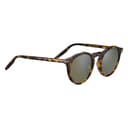
Serengeti Raffaele — best overall alternative. Italian acetate, a keyhole nose bridge, a round front, and the Mineral Polarized 555nm lens in category 3 with UV protection to 400 nm. It is the frame on this page that answers the Maui Jim question most directly: a polarized mineral glass lens with a published contrast rationale, in a frame made of the material this site is about. The costs: glass weight on the nose, a price that is premium rather than cheap, and a warm, contrast-forward lens that not everyone likes. Our Serengeti review covers the brand and its stated lifetime defect guarantee.
OTIS Guilt Trip X Eco — best for a wide face. OTIS publishes the full fitting as 57-19-130 with a 6 base curve, polarized mineral glass, 100% UVA/UVB and category 3. That is a more complete measurement block than any premium brand we track gives you, and 57 mm is genuinely wide. The honest gaps: 130 mm temples are short for a front that size, so a deep head may find them tight, and glass in a large frame is the heaviest combination here. See sunglasses for wide faces for the measurement logic.
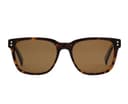
OTIS Test of Time X Eco — best mid-price glass. The cheapest polarized mineral glass lens in an acetate frame we can verify, in a squared Havana front, with OTIS’s eco-acetate stated as derived from cotton seeds and plant matter. It is the value pick of the glass group. It is also a different silhouette from anything Maui Jim sells, so buy it because you want the lens, not because it resembles your old pair. Our OTIS review has the detail.
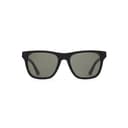
Serengeti Foyt Large — best for changing light. A matte black eco-acetate frame on a non-polarized photochromic mineral 555nm lens that Serengeti states moves between category 2 and category 3 — so one pair covers an overcast morning and full afternoon sun. Two honest limits: it is not polarized in this variant (Serengeti sells polarized Foyt lenses separately, so read the variant name), and the AAO points out that car windows block UV, which can stop photochromic lenses darkening fully behind glass. Our photochromic guide covers that properly.
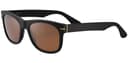
Privé Revaux Clevelander — best budget polarized. A clean polarized acetate rectangle with 100% UV protection stated on the listing, for under a tenth of a premium glass frame. It is the pick for someone who wants the glare control and does not care about the lens pedigree. What you give up is everything in the first section: no published glare figure, no filter category, no mineral glass, and a plastic lens that will scratch faster. Our affordable acetate roundup ranks that band in full.
What we left off, and why
We left off every sport wrap. If you want a frame to fish, cycle or run in, an acetate site is the wrong place to shop and we would rather say so than sell you a fashion frame for a job it cannot do — acetate is heavier than nylon, it has no wraparound geometry, and a saddle bridge is not built to stay put through sweat. Our registry does carry two polycarbonate sport frames and both are honestly labelled as not acetate, but neither is a Maui Jim substitute and neither is on this list.
We also left off the brands people routinely cross-shop against Maui Jim but which we have no listing for. A spec table requires a listing to read it from; we do not assemble one from reputation. And we have made no claim here about how any of these lenses perform against Maui Jim’s in use, because performing that comparison would require owning both and measuring them, which we have not done. What this page does instead is tell you exactly which properties each seller is prepared to put in writing. Our how we choose page sets out that method.