What flatters an oblong face
The instinct with any long face is to reach for something that adds width, and that instinct is right — but width alone isn’t enough. What actually works is a frame with real vertical depth: tall or deep lenses that cover more of the face between the brow and the cheekbone. A shallow, narrow lens leaves a strip of bare face above and below it and draws attention straight to the length you’re trying to downplay. A taller lens does the opposite — it fills that space and shortens the apparent distance from forehead to chin.
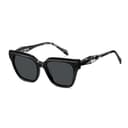
Scale helps too. An oversized framelike the SOJOS Audrey oversize square is close to ideal here, because a big shape reads as width and presence at the same time; that is why an oversized square tops this list rather than sitting as a novelty at the bottom. Its acetate body — the listing states acetate for the frame, not just the temples — gives the big shape the weight it needs to look deliberate instead of costume-y, and the extra coverage is a genuine sun-protection bonus. SOJOS markets it for women, so if you are shopping the men’s side, the browline below is the better lever. If you want to lean into that, our oversized picks go deeper on how far you can push the size before a frame stops flattering and starts overwhelming.
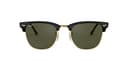
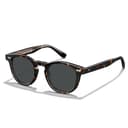
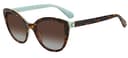
A strong horizontal elementis the other big lever. The heavy top brow of a browline frame like the Ray-Ban Clubmaster draws a bold line straight across the face, and a horizontal line is exactly what a vertical face wants to borrow — the acetate brow does the styling work while the metal lower rim keeps the whole frame light. Decorative or low-set temples are a quieter trick that matters more than people expect: when the arms attach low on the frame and carry some detail, they pull the eye sideways rather than up and down. That is part of why a statement cat-eye like the Kate Spade Amberlee works on a long face — the upswept outer corners widen the top third and the temple detailing keeps the attention horizontal. A round acetate frame such as the CARFIA vintage round adds width a third way, with a curve that interrupts the straight lines of a long face and softens the overall proportion.
Color and finish quietly reinforce all of this. Because acetate holds its color all the way through the material rather than printing it on the surface, a warm tortoise or a deep solid carries more visual weight than a pale, translucent frame — and weight, especially along the top edge, reads as width. It is a small lever, but on a long face every bit of borrowed width helps, so lean toward frames with real depth of color rather than wispy, see-through ones. The same substance also lets a frame hold a strong shape: a thin, flimsy frame can’t carry the bold brow or deep lens a long face wants, where acetate can.
Frames to avoid
The frames that fight an oblong face are the small, narrow and short ones. A tiny frame leaves too much bare face around it and emphasizes the length by contrast. A short, shallow lens— anything with very little top-to-bottom depth — does the same, because it stacks a thin band across a long canvas and leaves the rest of the face exposed. And a frame that is narrower than your face makes the whole face look even longer and thinner, the exact opposite of the goal.
In practice that rules out skinny wire frames, micro-rounds, and low letterbox-shaped lenses. Semi-rimless and rimless styles are worth a second thought too, because a frame with no bottom edge does little to break up the length. If a frame doesn’t reach the outer edges of your face, or has almost no height, it is working against you — no matter how nice it looks in the box.
Getting the proportion right
Adding width and height is the rule, but it is possible to overcorrect. The frame should reach roughly to the outer edge of your faceat the temples — wide enough to add balance, not so wide that it overhangs and slips down your nose. Height is the same story: you want a deep lens, but not one so tall it swallows your cheekbones and starts to look like a mask. Aim for a frame that visibly shortens the face without becoming the only thing anyone sees when they look at you.
Placement matters as much as size. A frame that sits a little lower on the nose, or one with a strong brow that carries the eye horizontally, breaks the vertical line better than a frame perched high and central. Color helps at the margins: a warm, layered tortoise or a bold solid adds visual weight that a pale, translucent frame does not, and weight up top reads as width. Because none of these listings publishes a full frame width, the honest move is to check the numbers you do get — the lens width, where it is stated — against your own measurements, and to treat “oversized” and “wide” as features rather than warnings.
One last calibration: the amount of correction should match how oblong you actually are. If the length is only slight, you have far more freedom and can borrow from neighboring shapes; an oblong face and an oval faceshare most of the same advice, so that guide is a useful second opinion. If your face is strongly long, be deliberate — the further your proportions sit from square, the more width and depth you should ask a frame to add back.
Fit is the part you can fix after you buy. A genuine acetate frame can be gently heat-adjusted by an optician, so if the widest frame that flatters you sits a touch loose at the temples, you can have it snugged rather than sizing down and losing the width you wanted. That flexibility is one more reason acetate suits an oblong face: you can chase the biggest shape that still balances your proportions, knowing the fit can be dialed in afterward rather than settling for a smaller frame that fits out of the box but does less for the length.