Do Acetate Frames Turn Yellow?
Clear and pale acetate can discolor with heat, sunlight and skin oil. What's actually happening, how much of it comes back with a polish, and how to slow it down.
How this is funded:we earn a commission if you buy through our links, at no extra cost to you. It never changes which product we recommend, and we’ll tell you when we’d skip one. Full disclosure.
Yes, acetate can yellow — but the way people ask the question usually assumes it is a defect, and it mostly isn’t. It is a surface change in a surface-finished material, it happens on some colors far more visibly than others, it takes years rather than months when a frame is looked after, and a good deal of it comes back with a polish. Here is what is actually going on and what you can do about it.
What causes it
Three forces do nearly all the work, and they compound rather than add.
- UV exposure. Sunglasses live in sunlight by definition. Over long enough, ultraviolet light slowly alters the surface of the material. This is the slowest of the three and, on its own, not dramatic.
- Heat.The accelerator. Acetate is a thermoplastic — the same property that lets an optician warm a temple and reshape it means sustained heat changes the material. A frame that spends summers on a car dashboard ages more in one season than a cased frame does in five years.
- Skin oil, sweat and product. The underrated one. Sunscreen, hair product, sweat and the natural oil on your skin sit against the frame all day at specific points and soak into the surface. This is why discoloration almost always appears first at the bridge, the temple tips and behind the ears rather than evenly across the frame.
That uneven pattern is the giveaway that this is a surface phenomenon rather than the material rotting from the inside. If a frame has gone warmer only where your face touches it, you are looking at accumulated contact rather than age.
Why clear frames show it and tortoise frames don’t
The material behaves identically; the color decides whether you notice. Acetate holds its color in pigment layers running through the full thickness of the sheet, which is what gives tortoiseshell frames their depth. A slight warm shift at the surface of a brown, amber and honey pattern disappears into a pattern that is already brown, amber and honey.
A clear frame has no pigment to hide behind. Every bit of the same surface change reads as yellowing, because yellow against colorless is a contrast and yellow against tortoise is camouflage. This is the real trade-off of buying clear and transparent frames: they are gorgeous, they are the most honest showcase of good acetate finishing, and they are the least forgiving colorway to own casually.
Dark acetate frames do age — you just see it as the shine going flat rather than the color going warm. Same underlying story, same fix.
What actually reverses it
A polish, for surface discoloration
Acetate’s gloss is a polished surface, and early discoloration usually lives in that same shallow layer. An optician with a polishing wheel removes a whisker of material and takes the frame back toward its original finish. This is genuinely restorative rather than cosmetic covering-up, and it is why acetate is described as a serviceable material in a way injection-molded plastic is not. Many optical shops will do it for a modest fee, and some will do it while you wait.
A gentle clean, for the part that isn’t discoloration at all
A meaningful share of “my frames went yellow” is accumulated film — skin oil and product built up at the bridge and temple tips — that has never been properly washed off. Lukewarm water, a drop of plain dish soap worked around the bridge and hinges with your fingertips, a thorough rinse and a clean microfiber cloth removes more than people expect. Our cleaning guide has the full routine, and frame care covers restoring the shine.
What doesn’t work
Skip every internet fix involving a solvent. Acetone, nail polish remover, alcohol wipes, bleach and household glass cleaner do not lift discoloration out of acetate — they attack the material itself and can leave a frame cloudy, crazed or tacky, which is genuinely irreversible where the original yellowing was not. Toothpaste and abrasive pastes are the other common suggestion; they scratch the polished surface and make the frame look duller, not clearer.
Slowing it down
None of these are fussy, and together they are the difference between a frame that looks tired in two years and one that looks good in ten.
- Case them, and keep the case out of the car. Heat is the accelerator, and a dashboard is the hottest place a frame ever visits.
- Rinse after a sweaty day or a beach day. Sunscreen and salt are the two worst residues to leave sitting on a frame overnight.
- Wash the contact points specifically. The bridge and temple tips collect the most and get cleaned the least.
- Don’t store them on your head. It presses hair product into the temples all day, and it stretches the frame besides.
Should it stop you buying a clear frame?
No — it should just set your expectations. A clear acetate frame is the most demanding colorway to own, in the same way a white shirt is a more demanding shirt. It rewards someone who cases their sunglasses and rinses them occasionally, and it punishes someone who leaves them face-down on a hot dashboard. If that second description is you, buy tortoise and enjoy the fact that acetate’s best-loved colorway is also its most forgiving. If the first is you, a clear frame will look genuinely striking for years, and a polish is there when it eventually needs one.
What slows it down
Nothing here reverses discoloration - only a polish or an optician does that. These are the two things that keep heat and skin oil off the frame in the first place, which is the part you actually control.
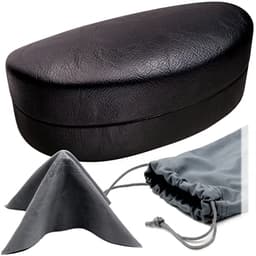
An oversized hard case
Acetate fronts are thicker and more curved than wire frames, which is why so many of them get jammed into a case that doesn't quite close and end up scratched anyway. This one is cut extra-large for exactly that shape, and the microfiber pouch and cloth come with it.
Price as of October 7, 2026. #ad How we’re funded
Listed as “Hard Sunglasses Case - EXTRA LARGE for CURVED FRAMES Black Distressed Leather Like Hard Shell - comes with Microfiber Pouch & Cloth - Oversized XL Large Glasses Case Men and Women (AS517 XL Black)” — read on August 16, 2026.
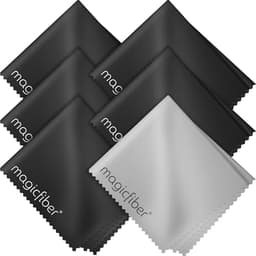
Microfiber cloths, six-pack
The only thing that should ever touch a dry lens. Buying a six-pack rather than one is the actual point: a cloth that has been living in a pocket is carrying grit and has quietly become a scratching tool, so you want a clean one in the case, the car and the bag.
Listed as “MagicFiber Microfiber Cleaning Cloth, Glasses Cleaner, Eyeglass Wipes, 6pk” — read on August 16, 2026.
Frequently asked questions
Why do clear acetate frames turn yellow?
Three things do most of the damage, and they compound. Prolonged UV exposure slowly alters the surface of the material. Heat accelerates it, which is why a frame left on a car dashboard ages faster in one summer than one kept in a case for five years. And skin oil, sweat, sunscreen and hair product soak into the surface at the contact points - the bridge, the temple tips, behind the ears - which is why yellowing so often appears there first rather than evenly across the frame. On a clear or pale frame there is no pigment to hide any of it, so the same amount of change that would be invisible on tortoise is obvious.
Can yellowed acetate frames be restored?
Often, partly. Acetate's shine and clarity live in a surface layer, and a lot of early discoloration lives there too - which is why a proper polish frequently brings back much more than people expect. An optician with a polishing wheel can take a frame that looks tired back to something close to its original finish, because they are removing a whisker of material rather than coating it. What cannot be undone is discoloration that has gone right through the material after years of heat, and any yellowing caused by a solvent that attacked the acetate rather than sitting on it.
Do tortoise acetate frames yellow too?
They age, but you rarely see it as yellowing. Tortoise, havana and other layered colorways carry pigment through the full thickness of the sheet, so a slight warm shift in the surface disappears into a pattern that is already brown, amber and honey. What you notice on a dark acetate frame instead is the shine going flat as the polished surface wears with handling and cleaning. That is a different problem with the same fix - a polish - and it is covered in our frame care guide.
Does a hot car really damage sunglasses?
Yes, and it is the single worst everyday habit for a frame. A parked car in summer can hold heat well above anything a frame meets in normal wear. Acetate is a thermoplastic, so sustained heat both softens it - which is how frames come back warped or with lenses sitting loose - and accelerates the surface change that shows up as yellowing on pale frames. Lens coatings do not enjoy it either. If you take one habit from this page: the frame lives in a case, and the case does not live on the dashboard.
Sources
- Mazzucchelli 1849 — the cellulose-acetate maker for eyewear — Background on cellulose acetate as the traditional material for spectacle and sunglass frames (accessed July 21, 2026)
Keep reading
How to care for acetate frames
The cleaning routine, restoring lost shine, and heat-adjusting the fit.
Read the care guideClear and transparent acetate sunglasses
The frames most prone to visible yellowing, and how to buy them anyway.
See the clear picksCan acetate frames be repaired?
When a re-polish fixes it, and when the damage has gone deeper than the surface.
Read the repair guideAre acetate sunglasses durable?
How the material ages overall, and how long a good frame really lasts.
Read the durability guide