How to Clean Sunglasses Without Scratching Them
The right way to clean lenses and frames, the household habits that scratch them, and a simple routine that keeps a pair clear for years.
How this is funded:we earn a commission if you buy through our links, at no extra cost to you. It never changes which product we recommend, and we’ll tell you when we’d skip one. Full disclosure.
A good pair of sunglasses earns its keep by being clear — and the fastest way to ruin that clarity is to clean them badly. Most of the fine scratches that haze a lens over its life do not come from drops or accidents; they come from the small, well-meaning habit of wiping a dusty lens with whatever is on hand. The good news is that cleaning sunglasses properly takes less than a minute, needs nothing you don’t already own, and is genuinely gentle on both the lenses and the frame.
This guide covers the safe routine step by step, the household habits that quietly destroy lenses, and a couple of storage tweaks that keep a pair looking new for years. The advice here is the standard, boring, correct approach recommended by eye-care authorities: water, a drop of lotion-free dish soap, and a clean microfiber cloth. It is deliberately unglamorous, and it works better than nearly every specialty product marketed at you.
The single most important idea to hold onto is this: dust is abrasive. The gray film that builds up on a lens is made of fine, hard particles, and when you press a cloth or a shirt against it and rub, you are effectively sanding the lens. Everything in the routine below exists to get that grit offthe lens — by floating it away with water — before anything solid ever touches the surface. Master that one habit and you have solved most of the problem. If you are still choosing a pair worth this kind of care, our guide to how to choose sunglasses is a good place to start.
The 30-second routine
Here is the whole method. It works for glass and plastic lenses, coated and uncoated, and for metal or acetate frames alike. Do it over a sink with the water running gently.
- Rinse under lukewarm running water.Hold the sunglasses under a gentle stream for a few seconds so the water floats the dust and grit off the lenses. This step is the whole game — it removes the abrasive particles before you touch the lens, which is why dry-wiping a dusty pair is the number-one cause of scratches. Keep the water lukewarm; very hot water can affect lens coatings and warp acetate over time.
- Add a tiny drop of lotion-free dish soap.Put a small drop on your fingertip or directly onto the wet lens. Ordinary dish soap is a mild, effective degreaser — but reach for a plain, lotion-free formula, because dish soaps with added moisturizer or hand cream leave a stubborn film that you will spend the next five minutes trying to buff off.
- Clean gently with your fingertips.Rub both sides of each lens with your fingers, then work the soap around the nose pads, the temples, and into the hinges, where skin oil and sweat collect. Fingertips are soft enough that they will not scratch, and they let you feel exactly where a smudge is being stubborn. Resist the urge to grab a cloth and scrub here — that comes last, and only when the lens is clean.
- Rinse thoroughly. Run the sunglasses back under lukewarm water until every trace of soap is gone from the lenses and the frame. Leftover soap dries into streaks and haze, so rinse until the water sheets cleanly off the glass.
- Dry and buff with a clean microfiber cloth. Pat the lenses dry and give them a light buff with a clean, dry microfiber cloth. The word clean is doing real work in that sentence: a cloth that has been living in a pocket or a bag is carrying grit of its own and will undo everything you just did. Let the frame air-dry for a moment if water is trapped around the hinges, then put the pair away in its case.
That is it. No special sprays, no lens wipes, no gadgets. Once it becomes a habit, the whole thing takes about half a minute and your lenses stay genuinely clear rather than slowly fogging into a scratched gray haze.
What NOT to do
Just as important as the routine is the short list of things that seem helpful and quietly wreck a pair of sunglasses. Almost every scratched, hazy lens has met at least one of these.
- Don’t dry-wipe dusty lenses. This is the big one. If there is visible dust or film on the lens, do not touch it with a cloth until you have rinsed it. Dry-wiping drags hard particles across the surface and etches fine, permanent scratches. When in doubt, rinse first.
- Don’t use your shirt, a paper towel, or a tissue. The classic move — lifting the hem of a t-shirt to polish a lens — is also one of the worst. Fabric weaves, paper towels, and tissues are far coarser than they feel and hold onto grit; they scratch lenses and coatings. A microfiber cloth is the only thing that should touch a dry lens.
- Don’t use saliva. Breathing on a lens or, worse, using spit to wet it adds nothing but bacteria and a smear, and it does not remove the grit that actually causes damage. Water does the job properly.
- Don’t reach for glass cleaner, ammonia, window spray, alcohol, or acetone.Modern lenses often carry anti-reflective and other coatings, and these harsh household chemicals can strip or craze them — leaving a permanent cloudy, cracked-looking film that no amount of cleaning fixes. Acetone is especially bad news around acetate frames, which it will attack directly. Plain soap and water is the safest choice by a wide margin.
- Don’t use very hot water. Heat can soften lens coatings and, over repeated exposure, warp or distort an acetate frame. Lukewarm is all you need; there is no cleaning benefit to going hotter.
If your lenses are coated for glare or UV, treating them gently matters even more, because those coatings are what you paid the premium for. It is also worth remembering that a scratched or clouded lens can compromise the very protection you bought the sunglasses for — if you want to understand what that protection actually is, see our explainer on what UV400 means.
Cleaning acetate frames
The good news for acetate wearers is that the same routine is ideal for the frame itself. Cellulose acetate loves plain soap and water — a gentle wash lifts the skin oil, sweat, and product residue that build up around the nose bridge and behind the ears, the spots that make a frame feel grubby and start to look dull. Work a little soapy water around the rims, hinges, and temple tips with your fingertips, then rinse and dry.
A few frame-specific cautions. Don’t leave acetate soaking in water for long stretches; a quick wash is fine, but prolonged immersion is not something the material is designed for. Dry the frame well afterward, paying attention to the hinges where water likes to hide, and keep the harsh solvents listed above — acetone above all — well away from it. Over months and years, a frame that is washed gently and dried properly holds its deep shine far better than one that is only ever wiped down dry. For the full picture on keeping the finish rich and the material happy, read our dedicated guide to acetate frame care. And if a clean frame has started to sit crooked or slip down your nose, cleaning won’t fix the fit — our walkthrough on how to adjust acetate frames covers that side of upkeep.
Storage and keeping a cloth clean
Cleaning well is only half of it; how you store a pair between wears decides how often they need cleaning at all — and how many scratches they collect in the meantime. The habit that pays off most is the simplest: when the sunglasses are not on your face, they go in a hard case. A case protects the lenses from the loose keys, coins, and grit at the bottom of a bag, and it keeps a frame from being sat on or crushed. Tossing a bare pair into a purse or a car door pocket is how even carefully cleaned lenses end up scratched. If a hard case is not to hand, a soft pouch is far better than nothing.
One more detail closes the loop: the microfiber cloth itself has to be clean.Every time you buff a lens, the cloth picks up oil and fine grit, and a cloth that has quietly gathered a month’s worth of both is no longer a cleaning tool — it is a scratching tool. Wash your microfiber cloths every so often in plain water or a gentle wash, skip the fabric softener (it leaves a residue that smears), and let them air-dry. Keeping a clean spare in the case means you always have a safe cloth on hand and never fall back on a shirt hem in a pinch.
Put it all together — rinse before you wipe, use soap and water and a clean microfiber cloth, keep the harsh chemicals away, and store the pair in a case — and a good pair of sunglasses stays clear and comfortable for years rather than fading into a scratched haze. It is a small routine with an outsized payoff. If you are shopping for a frame that rewards this kind of care, our roundup of the best acetate sunglasses highlights pairs built to last.
The routine matters most where frames take the most abuse: our roundup of the best sunglasses for travel covers the frames and the case that survive a bag, and our beach roundup covers sand, salt and sunscreen.
The two things worth buying
Everything above runs on water and soap you already own. The only kit that genuinely earns its place is a clean cloth to dry with and a case to stop the grit getting there in the first place.
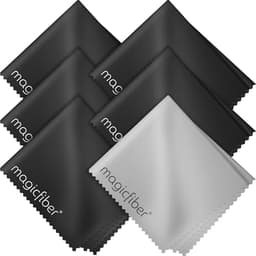
Microfiber cloths, six-pack
The only thing that should ever touch a dry lens. Buying a six-pack rather than one is the actual point: a cloth that has been living in a pocket is carrying grit and has quietly become a scratching tool, so you want a clean one in the case, the car and the bag.
Listed as “MagicFiber Microfiber Cleaning Cloth, Glasses Cleaner, Eyeglass Wipes, 6pk” — read on August 16, 2026.
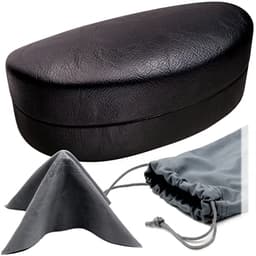
An oversized hard case
Acetate fronts are thicker and more curved than wire frames, which is why so many of them get jammed into a case that doesn't quite close and end up scratched anyway. This one is cut extra-large for exactly that shape, and the microfiber pouch and cloth come with it.
Price as of October 7, 2026. #ad How we’re funded
Listed as “Hard Sunglasses Case - EXTRA LARGE for CURVED FRAMES Black Distressed Leather Like Hard Shell - comes with Microfiber Pouch & Cloth - Oversized XL Large Glasses Case Men and Women (AS517 XL Black)” — read on August 16, 2026.
Frequently asked questions
What is the best way to clean sunglasses?
The safest way is water, a drop of lotion-free dish soap, and a clean microfiber cloth. Rinse the sunglasses under lukewarm running water to float off dust and grit, add a tiny drop of dish soap, gently rub both sides of each lens and the frame with your fingertips, rinse thoroughly, and dry with a clean microfiber cloth. Plain soap and water is gentle on lens coatings and on acetate frames, which is why it beats almost every commercial spray.
Can I clean sunglasses with water?
Yes, and you should start with it. Lukewarm water is the best first step because rinsing floats away the dust and grit that would otherwise scratch the lenses the moment you wiped them dry. Add a small drop of lotion-free dish soap for anything water alone will not lift, then rinse and dry with a clean microfiber cloth. Avoid very hot water, which can affect lens coatings and warp acetate frames over time.
Why do my sunglasses keep getting scratched?
Almost always because they are wiped while still dusty. Dust and grit are abrasive, so dragging them across a lens with a shirt hem, tissue, or paper towel grinds fine scratches into the surface. Rinse first so the grit floats away, use only a clean microfiber cloth, and keep the pair in a hard case when you are not wearing them. A dirty microfiber cloth scratches too, so wash it every so often.
Can I use glass cleaner on sunglasses?
It is best avoided. Household glass cleaner, window spray, ammonia, alcohol, and acetone can strip the anti-reflective and other coatings on modern lenses, and acetone in particular will attack acetate frames. Plain water with a drop of lotion-free dish soap is safer and works just as well. If your lenses came with a maker-approved lens spray, that is fine, but the everyday household cleaners under the sink are not.
Sources
- American Academy of Ophthalmology — Recommended Types of Sunglasses — AAO on choosing sunglasses that block 99–100% of UV-A and UV-B (UV400) (accessed July 21, 2026)
- U.S. FDA — Tips to Stay Safe in the Sun: From Sunscreen to Sunglasses — FDA: lens darkness does not indicate UV protection; look for a 100% UV / UV400 label (accessed July 21, 2026)
Keep reading
Do sunglasses expire?
Whether UV protection wears out, and the signs a pair is genuinely done.
Read the guideHow to care for acetate frames
Frame-specific care and keeping the shine.
Read the guideHow to adjust acetate frames
Fix the fit as well as the finish.
Read the how-toHow to choose sunglasses
Pick a pair worth keeping clean.
Read the guideBest acetate sunglasses
Frames built to last with good care.
See the picks