Scratched Sunglasses: What Can and Cannot Be Fixed
A scratch cannot be removed — it can only be made shallower by removing the lens surface around it, which takes the coatings with it. The useful question is whether the scratch matters, and the AAO draws that line clearly.
How this is funded:we earn a commission if you buy through our links, at no extra cost to you. It never changes which product we recommend, and we’ll tell you when we’d skip one. Full disclosure.
Start with the fact that changes what you should do: a scratch is missing material. Nothing puts it back. Every “scratch removal” method — toothpaste, baking soda, car polish, wax, a buffing wheel — works by abrading the lens surface around the scratch until the scratch is shallower relative to it. On a modern sunglass lens that surface is where the anti-reflective, mirror and hard coatings live, so the trade you are making is one visible line in exchange for a hazier lens with less coating on it. That is a bad trade in nearly every case.
So the question worth asking is not “how do I fix it?” but “does this scratch actually matter?”— and here there is a clear answer from an issuing authority. An American Academy of Ophthalmology ophthalmologist’s answer on scratched lenses states that light scratches will not change the prescription or the protective features of the lens, although they can be annoying if they sit near your visual axis, while extensive scratches or loss of coatings can impair your clarity of vision and possibly decrease protection from UV light. That one sentence pair is the whole decision tree. Light: leave it. Extensive: replace it.
First, check it is actually a scratch
More “scratched” lenses than you would expect are dirty ones, or ones with a coating that has smeared rather than lifted. Rinse the lens under lukewarm running water to float the grit off, add a drop of plain dish soap, rub gently with your fingertips, rinse again and dry with a clean microfiber cloth. If the marks are gone, they were residue.
That same routine is also the main way scratches get prevented, because the single most common cause of lens scratching is dry-wiping a lens that has grit on it — a shirt tail, a paper napkin, the corner of a towel. The AAO answer we cite makes a related point: lens wipes themselves can cause damage if they are low quality, misused, or used when sand or grit is sitting on the wipe or the lens. Our guide to cleaning sunglasses has the full routine and the five things not to do.
Light or extensive? How to tell
Hold the lens at arm’s length against a plain, bright background — a wall or an overcast sky — and look through it rather than at it. Then rotate it slowly.
Light. You can see the marks when you tilt the lens to catch the light, but looking through it the view is clean. A handful of fine lines, none deep enough to catch a fingernail. Per the AAO, nothing is compromised. If it sits right in your line of sight it may still irritate you, and that is a legitimate reason to replace a lens — just not a safety one.
Extensive. Looking through the lens the view is hazy, or there is a visible bloom of scattered light around bright objects. You can catch a fingernail in a gouge. There are cloudy patches, or fine crazing across the whole surface, or areas where a mirror or anti-reflective coating has visibly flaked. This is the category where the AAO says clarity and UV protection can both be affected, and it is the point to stop relying on the pair for sun protection.
There is a specific reason not to keep wearing badly scratched dark lenses, beyond the haze. Pupil size responds to visible light, so a dark lens opens your pupils up. If that lens’s UV performance has degraded, the ultraviolet still gets through a wider aperture — the one genuinely risky combination in eyewear, and the subject of are cheap sunglasses bad for your eyes. The FDA’s point applies here too: you cannot judge a lens’s UV performance by looking at it, which is exactly why an unknowable scratched lens should be retired rather than assessed by eye.
What to do with an extensively scratched pair
Check the warranty, but do not expect much.Lens scratches are excluded almost universally. Persol’s own FAQ states that Luxottica guarantees its sunglasses against material and manufacturing defects for two years from delivery but excludes scratches on sun lenses, along with damage from accident, abuse, neglect, shock, improper use, unauthorised repair and normal wear and tear. OTIS excludes scratched or cracked lenses from its lifetime warranty. Treat lens scratching as a consumable cost.
Ask about a replacement lens, model by model. Some brands supply replacement lenses for some frames, and if the frame itself is good — a well-finished acetate front with metal hinges — re-lensing can be worth it. Our guide to replacing sunglass lenses covers when the economics work, and the one thing a third-party lens cannot give you back: a certified filter category and UV figure for the lens you are fitting.
On a cheap frame, replace the pair. If the sunglasses cost $30, a replacement lens service will cost more than a new pair and will not come with the stated UV figure the original listing carried. This is not a cynical answer: it is the honest arithmetic, and it is one of the arguments for owning an inexpensive everyday pair, made in best everyday sunglasses.
The lens decides this, not the frame
Scratch resistance is a property of the lens material, and the spread is wide. Mineral glass is the hardest option by a long way and is the reason a glass-lensed pair can be clear after a decade; its trade-off is weight and the fact that it can chip from a hard impact. Polycarbonate is the most impact-resistant and among the softest, so it survives being dropped and hazes with time. CR-39 sits between them. Our pages on sunglasses lens materials and best glass lens sunglasses cover the full comparison, and do sunglasses expire covers the related question of when a pair is simply finished.
The frame material is not irrelevant, just irrelevant to this. Where acetate helps is everything around the lens: a frame an optician can re-set means a pair stays comfortable enough to keep in a case rather than shoved in a pocket, and a metal hinge set into acetate means a loose screw is a repair rather than a write-off. See can acetate frames be repaired and acetate frame care.
If the answer is a new pair: three lenses that resist this
Scratching is decided by the lens, not the frame, and mineral glass is meaningfully harder than plastic. These three are the glass-lensed frames we track, named here because the argument above is about lens hardness - not because a scratched pair needs an upgrade. Prices are live and dated.
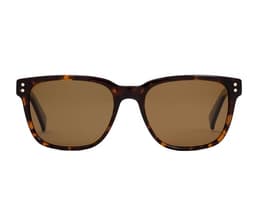
OTIS Test of Time X Eco (Havana Brown)
OTIS states a mineral glass lens with 100% UVA/UVB on an eco-acetate frame, at the most accessible price in the glass category. The honest caveat is in the small print of its own warranty: scratched or cracked lenses are excluded, which tells you glass is hard rather than unbreakable.
Price as of October 10, 2026. #ad How we’re funded
Frame material: Eco-acetate (OTIS states it is derived from cotton seeds and plant matter). Specs read from the listing on September 3, 2026.
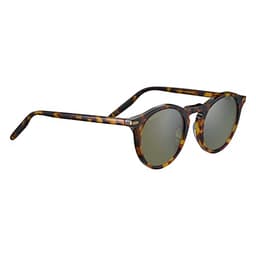
Serengeti Raffaele (Shiny Tortoise, Mineral Polarized 555nm, Cat 3)
Mineral Polarized 555nm glass in filter category 3, per the listing, in Italian acetate with a keyhole bridge. The most specified glass lens here - Serengeti publishes UV protection to 400 nm and the category, so you know exactly what you are replacing a plastic lens with.
Price as of October 10, 2026. #ad How we’re funded
Frame material: Italian acetate (per Serengeti). Specs read from the listing on September 21, 2026.
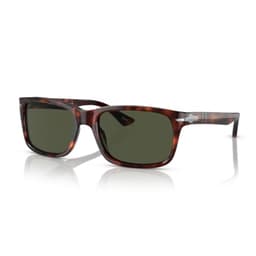
Persol PO3048S Rectangular
Persol's spec panel lists crystal - glass - lenses on a hand-finished Italian acetate frame. Premium money, and the one frame here that pairs a hard lens with a body an optician can re-set to your face for years. Persol's warranty also excludes lens scratches, which is the industry norm.
Price as of October 10, 2026. #ad How we’re funded
Frame material: Italian cellulose acetate. Specs read from the listing on July 21, 2026.
The three things that actually prevent this
Prevention is the only real fix, and all three of these cost less than one replacement lens. Add-ons, not ranked picks.
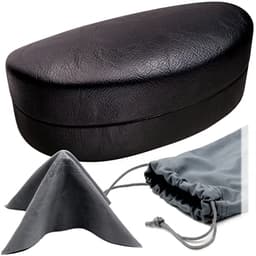
An oversized hard case
Acetate fronts are thicker and more curved than wire frames, which is why so many of them get jammed into a case that doesn't quite close and end up scratched anyway. This one is cut extra-large for exactly that shape, and the microfiber pouch and cloth come with it.
Price as of October 10, 2026. #ad How we’re funded
Listed as “Hard Sunglasses Case - EXTRA LARGE for CURVED FRAMES Black Distressed Leather Like Hard Shell - comes with Microfiber Pouch & Cloth - Oversized XL Large Glasses Case Men and Women (AS517 XL Black)” — read on August 16, 2026.
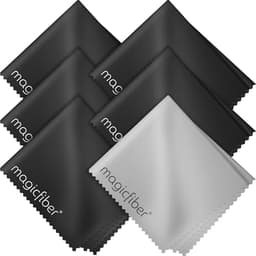
Microfiber cloths, six-pack
The only thing that should ever touch a dry lens. Buying a six-pack rather than one is the actual point: a cloth that has been living in a pocket is carrying grit and has quietly become a scratching tool, so you want a clean one in the case, the car and the bag.
Listed as “MagicFiber Microfiber Cleaning Cloth, Glasses Cleaner, Eyeglass Wipes, 6pk” — read on August 16, 2026.
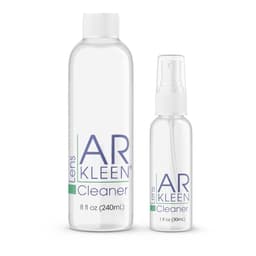
An alcohol-free lens spray
Soap and water is still the best clean there is, so treat this as the away-from-a-sink option. If you do keep a spray, the spec to insist on is the one this one states plainly: no alcohol, no ammonia. Those are the two things in a household glass cleaner that dull acetate and strip lens coatings.
Price as of October 10, 2026. #ad How we’re funded
Listed as “AR Kleen® Lens Cleaner Kit | 9 Ounces | Multi-Purpose Lens Cleaner | No Streaks | Ammonia and Alcohol Free” — read on August 16, 2026.
General guidance, not eye-care advice. Acetate Club is written by an eyewear enthusiast, not an optician or optometrist. Sunglasses are sun protection, not a substitute for an eye exam — if you have a vision or eye-health concern, or need prescription lenses, see a qualified professional.
Frequently asked questions
Can you fix scratched sunglasses?
Not in the sense people mean. A scratch is missing material, so it cannot be filled in - every method that makes a scratch less visible works by abrading away the lens surface around it, and that removes any anti-reflective, mirrored or hard coating with it. The useful question is whether the scratch matters at all. An AAO ophthalmologist's answer is that light scratches will not change the prescription or the protective features of the lens, so the right action for most scratches is nothing.
Does toothpaste remove scratches from sunglasses?
Toothpaste is a mild abrasive, so it polishes the lens surface rather than filling the scratch - and in doing so it takes the coatings off and can leave the lens hazier than the single scratch you were trying to remove. The same applies to baking soda, car polish, brass polish and wax. None of them puts material back. If a scratch genuinely bothers you, replacing the lens is the only method that works.
Do scratched lenses reduce UV protection?
Light ones do not. An AAO ophthalmologist's answer states that light scratches will not change the protective features of the lens, but that extensive scratches or loss of coatings can impair clarity of vision and possibly decrease protection from UV light. So the distinction that matters is severity, not presence: a few fine marks are cosmetic, while a lens with a web of scratching or visibly lifted coating should be treated as no longer providing the protection it was sold with.
Is it bad to wear scratched sunglasses?
Light scratches are a nuisance rather than a hazard, and mostly only when they sit near your line of sight. Extensive scratching is a different matter: it scatters light, which reduces contrast and causes eye strain, and per the AAO it can reduce UV protection. There is also a specific risk worth naming - a dark lens whose UV protection has degraded is the one genuinely bad combination, because your pupils open behind a dark lens while the ultraviolet still gets through.
Does a warranty cover scratched sunglass lenses?
Almost never, and this is consistent across the market. Persol's own FAQ states that Luxottica guarantees its sunglasses against material and manufacturing defects for two years but explicitly excludes scratches on sun lenses, along with damage from accident, abuse, neglect, shock, improper use, unauthorised repair and normal wear. OTIS likewise excludes scratched or cracked lenses from its lifetime warranty. Treat lens scratches as a consumable cost, not a claim.
Which lenses scratch the least?
Mineral glass, by a clear margin - it is considerably harder than any plastic lens and it is the reason a glass-lensed pair can still be clear after years of daily use. The trade-offs are real: glass is heavier, and it can chip or shatter from a hard impact in a way a polycarbonate lens will not. Polycarbonate is the opposite pair of properties - the most impact-resistant and among the softest, so it survives being dropped and hazes over time.
Sources
- American Academy of Ophthalmology — Do scratched lenses affect your prescription and/or the blue light coating? — An AAO ophthalmologist's answer: light scratches will not change the prescription or protective features of the lens, although they can be annoying if near your visual axis; extensive scratches or loss of coatings can impair your clarity of vision and possibly decrease protection from UV light. It also notes that lower-quality lenses and coatings scratch more easily and may need replacing, and that lens wipes can cause damage if they are low quality, misused, or used when sand or grit is on the wipe or the lens (accessed October 11, 2026)
- Persol — FAQs (warranty) — Luxottica guarantees its sunglasses against material and manufacturing defects coming to light over a two-year period from delivery, excluding scratches on sun lenses and damage from accident, abuse, neglect, shock, improper use, unauthorized repair or normal wear and tear (accessed October 5, 2026)
- American Academy of Ophthalmology — Recommended Types of Sunglasses — AAO on choosing sunglasses that block 99–100% of UV-A and UV-B (UV400) (accessed July 21, 2026)
- U.S. FDA — Tips to Stay Safe in the Sun: From Sunscreen to Sunglasses — FDA: lens darkness does not indicate UV protection; look for a 100% UV / UV400 label (accessed July 21, 2026)
- ISO 12312-1:2022 — Eye and face protection — Sunglasses for general use — The international standard for general-use sunglasses: UV filtering, filter categories and transmittance (accessed July 21, 2026)
Keep reading
Can you replace sunglass lenses?
When re-lensing is worth it, and when it is not.
Read the guideHow to clean sunglasses
The routine that stops scratches being made.
Read the guideBest glass lens sunglasses
Why a mineral lens outlives a plastic one.
See the picksSunglasses lens materials
Glass, polycarbonate and CR-39 compared.
Read the guide