Can You Replace Sunglass Lenses?
Physically, yes — a glazing lab has been cutting lenses to frames for a century. The question is whether it is worth it, and there is one cost nobody mentions: a replacement lens does not inherit the filter category or the UV figure the original was sold with.
How this is funded:we earn a commission if you buy through our links, at no extra cost to you. It never changes which product we recommend, and we’ll tell you when we’d skip one. Full disclosure.
The short answer: physically yes, economically almost never. A glazing lab has been cutting lenses to frames for a century and most brands will re-lens their own frames through an authorised service. But the arithmetic only works in a narrow band — roughly, when the frame is worth more than the lens job, the model is still in production, and you actually like the frame enough to keep it. Below about $100 of frame, a new pair is cheaper and comes with a warranty and a stated UV figure that a replacement lens may not.
And there is a cost specific to sunglasses that nobody raises. A sun lens is not just a piece of tinted plastic: the original was sold with a stated UV figure, and on better frames a stated filter category under ISO 12312-1 — the 0-to-4 scale that governs how much visible light it transmits and whether it is suitable for road use. A third-party lens cut to the same shape is a different lens, and it carries whatever its supplier publishes. Sometimes that is a full specification. Often it is nothing. The FDA’s point applies with full force here: you cannot judge a lens’s UV performance by looking at it, so an unstated replacement lens should be treated as unknown rather than as equivalent to what you had.
Before anything else: does the lens actually need replacing?
Most people arrive at this question because of a scratch, and most scratches do not warrant it. An AAO ophthalmologist’s answer states that light scratches will not change the prescription or the protective features of the lens, though they can be annoying near your visual axis, while extensive scratches or loss of coatings can impair clarity of vision and possibly decrease protection from UV light. So: light scratching is a cosmetic matter and re-lensing it is spending money on nothing. Extensive scratching is a genuine reason. Our page on scratched sunglasses walks through how to tell the two apart in about thirty seconds.
The other legitimate reasons are a lens that has popped out intact — which is a re-seating job, not a re-lensing job, and usually free at an optician — a cracked lens, and wanting to put your prescription into a frame you already own.
The three cases where re-lensing is worth it
1. A premium frame still in production.This is the strongest case. If the model still exists, the lens shape is a known quantity rather than a pattern a lab has to trace off your damaged lens, and the brand’s own service can usually supply the correct lens with its original specification. A Persol or a Ray-Ban Original Wayfarer qualifies; a discontinued fashion frame from a brand that no longer services it does not. Ray-Ban publishes the RB2140 in 50-22 and 54-18 and has kept it in production for decades, which is precisely the property that makes a frame re-lensable in ten years’ time.
2. Putting your prescription into a frame you love. Often the best reason of all, because the thing you are buying is not a lens but the end of a search for a frame that fits. The constraints are real: a deeply curved or wraparound front cannot take a strong prescription without distortion, and a very thin rim may not hold a thicker lens. A flat-ish acetate front with decent rim depth is the ideal candidate. See prescription acetate sunglasses for what to ask, and note that we do not supply lenses — this is a job for an optician who will measure your pupillary distance and the frame together.
3. A frame whose fit you cannot replace. If you have a wide nose, a low bridge, a large head or a small face, finding a frame that fits is genuinely hard — see sunglasses for a big nose, wide faces and small faces. A frame that fits is worth keeping alive at a cost that would be absurd on a frame you could simply re-buy. Acetate helps here twice: it can be heat-adjusted to your face in the first place, and it is serviceable at the hinge, as can acetate frames be repaired covers.
When not to bother
Any frame under about $100. The lens job will approach or exceed the cost of the whole pair. Most of the acetate frames we recommend in best affordable acetate sunglasses sit here, and replacing the pair is both cheaper and gives you back a stated UV figure.
A mirrored or heavily coated lens. You are unlikely to match the original coating, and a mismatched pair of lenses looks worse than a scratch did. See mirrored vs gradient lenses.
A photochromic or specialist glass lens.These are the hardest to replicate. A Serengeti photochromic mineral lens is manufactured through a process the brand describes in detail — a lens like that is not something a general glazing lab reproduces, and the correct answer is the brand’s own service or a new pair. Our photochromic guide explains why.
A frame still inside its warranty, before you check.Go through the brand first. Independent work typically voids whatever cover remains: Persol’s FAQ states the two-year guarantee covers material and manufacturing defects but excludes damage from unauthorised repair — and excludes scratches on sun lenses in any case. That is the industry norm rather than a Persol quirk.
Do not do it yourself on an acetate frame
On a full acetate frame the lens is held by the rim tension of the frame itself, and getting a lens in or out means flexing acetate that is rigid when cold. That is how fronts crack and how rim grooves get chewed into uselessness. Opticians warm the frame first, which is the same property that lets them adjust it to your face — see how to adjust acetate frames — and they use a lens press rather than thumbs. ISO 12870 governs how spectacle frames are tested for mechanical durability, which is a reminder that a frame is an engineered part and not a clip.
The one exception: a lens that has popped out cleanly, undamaged, usually because a hinge screw loosened and let the frame relax. Take it to an optician and in most cases they will warm the frame and press it back in while you wait, for nothing or close to it. Tighten the screws afterwards — the kit for that is a few dollars and is covered in acetate frame care.
What to ask before you commit
Three questions, and if a supplier will not answer the third, walk away. What does it cost, including return shipping? Compare it against the live price of the same frame new — which is on our product pages and dated. How long will you be without them? Brand service can run weeks. And what UV figure and filter category does the replacement lens carry? A supplier that publishes “UV400, filter category 3” is selling you a known lens. A supplier that publishes nothing is selling you tinted plastic, and on that basis a new pair with a stated figure is the better buy — the argument made in full in are cheap sunglasses bad for your eyes.
The three frames here that justify re-lensing
Re-lensing is worth it when the FRAME is worth keeping - serviceable, well-finished, and expensive enough that a lens costs less than a replacement pair. These three qualify, and they are named after the test above rather than as a fix for a scratched lens. Prices are live and dated.
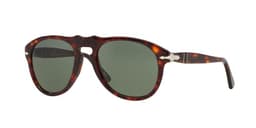
Persol 649 Original PO0649 (Havana / Green, 54 mm)
The clearest case on the site. Acetate handmade in Italy, crystal lenses, a published 54-20-140 fitting in three sizes, Meflecto temples and a keyhole bridge - a frame worth keeping for decades, from a maker with an authorised service network. Persol's warranty excludes lens scratches, so a re-lens is a paid job rather than a claim.
Price as of October 10, 2026. #ad How we’re funded
Frame material: Acetate, handmade in Italy (per Persol). Specs read from the listing on September 15, 2026.
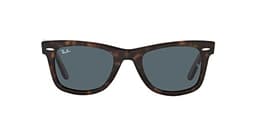
Ray-Ban Original Wayfarer RB2140
Kept in continuous production and published in 50-22 and 54-18, which is exactly what makes a frame re-lensable years later: the model still exists, so the lens shape is a known quantity rather than a one-off pattern a lab has to trace. Thick cellulose acetate with 100% UV stated on the original lens.
Price as of October 10, 2026. #ad How we’re funded
Frame material: Cellulose acetate. Specs read from the listing on July 21, 2026.
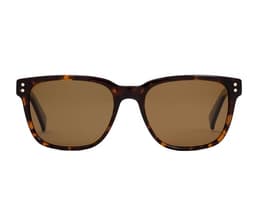
OTIS Test of Time X Eco (Havana Brown)
The honest counter-example on this list. A mineral glass lens is the hardest option and the least likely to need replacing - but glass is also the lens a corner optician is least able to re-cut, and OTIS excludes scratched or cracked lenses from its warranty. Buy it to avoid the problem, not to solve it later.
Price as of October 10, 2026. #ad How we’re funded
Frame material: Eco-acetate (OTIS states it is derived from cotton seeds and plant matter). Specs read from the listing on September 3, 2026.
General guidance, not eye-care advice. Acetate Club is written by an eyewear enthusiast, not an optician or optometrist. Sunglasses are sun protection, not a substitute for an eye exam — if you have a vision or eye-health concern, or need prescription lenses, see a qualified professional.
Frequently asked questions
Can you replace sunglass lenses?
Yes - a glazing lab can cut new lenses to almost any frame, and most brands will re-lens their own frames through an authorised service. Whether it is worth doing is a different question: on a frame under about $100 the lens job usually costs more than a new pair, and the replacement lens does not inherit the filter category or the stated UV figure the original was sold with unless whoever supplies it publishes those numbers.
Can you replace sunglass lenses yourself?
On a full acetate frame we would not. The lens is held by the rim tension of the frame, and getting it in or out means flexing acetate that is rigid when cold - which is how fronts crack and how rim grooves get chewed. Opticians warm the frame first and use a lens press. If a lens has popped out intact, an optician will usually re-seat it in minutes for little or nothing, and that is the version of this job worth doing.
How much does it cost to replace sunglass lenses?
It varies far too widely for us to quote a figure we have not verified, and prices move - so the honest answer is to get a quote from the brand's service department and from a local optician before deciding. What we can tell you is the shape of the decision: get both numbers, compare them with the live price of the same frame new, and remember that a new pair arrives with a stated UV figure and a warranty while a re-lens does not.
Can you put prescription lenses in sunglasses you already own?
Often yes, and it is one of the better reasons to re-lens, but the frame has to suit it: a deeply curved or wraparound front cannot take a strong prescription without distortion, and a very thin rim may not hold a thicker lens. An acetate frame with a flat-ish front and a decent rim depth is the best candidate. This is a job for an optician who will measure your pupillary distance and the frame together - our prescription acetate sunglasses guide covers what to ask.
Do replacement lenses still have UV protection?
Only if the supplier states it. This is the cost of re-lensing that nobody mentions. The original lens was sold with a stated UV figure and, in better frames, a stated filter category under ISO 12312-1; a third-party lens cut to the same shape is a different lens and carries whatever that supplier publishes - which may be a full specification, or may be nothing at all. Treat an unstated replacement lens the way we treat any unstated spec: as unknown, not as equivalent.
Does re-lensing void the warranty?
Typically yes, where the work is done outside the brand's own service. Persol's FAQ is a good example of the industry norm: the two-year guarantee covers material and manufacturing defects but excludes damage from unauthorised repair, as well as scratches on sun lenses in the first place. So if the frame is still inside its warranty period, go through the brand; if it is outside, an independent lab is a reasonable option and there is nothing left to void.
Sources
- ISO 12312-1:2022 — Eye and face protection — Sunglasses for general use — The international standard for general-use sunglasses: UV filtering, filter categories and transmittance (accessed July 21, 2026)
- Persol — FAQs (warranty) — Luxottica guarantees its sunglasses against material and manufacturing defects coming to light over a two-year period from delivery, excluding scratches on sun lenses and damage from accident, abuse, neglect, shock, improper use, unauthorized repair or normal wear and tear (accessed October 5, 2026)
- American Academy of Ophthalmology — Do scratched lenses affect your prescription and/or the blue light coating? — An AAO ophthalmologist's answer: light scratches will not change the prescription or protective features of the lens, although they can be annoying if near your visual axis; extensive scratches or loss of coatings can impair your clarity of vision and possibly decrease protection from UV light. It also notes that lower-quality lenses and coatings scratch more easily and may need replacing, and that lens wipes can cause damage if they are low quality, misused, or used when sand or grit is on the wipe or the lens (accessed October 11, 2026)
- U.S. FDA — Tips to Stay Safe in the Sun: From Sunscreen to Sunglasses — FDA: lens darkness does not indicate UV protection; look for a 100% UV / UV400 label (accessed July 21, 2026)
- American Academy of Ophthalmology — Recommended Types of Sunglasses — AAO on choosing sunglasses that block 99–100% of UV-A and UV-B (UV400) (accessed July 21, 2026)
- ISO 12870:2024 — Ophthalmic optics — Spectacle frames — Requirements and test methods — The spectacle-frame construction and durability standard. Not a biodegradability standard, and not applicable to sunglasses with afocal filters (ISO 12312-1 applies there) (accessed September 7, 2026)
Keep reading
Scratched sunglasses
Whether the scratch matters at all, per the AAO.
Read the guideCan acetate frames be repaired?
The frame half of the same question.
Read the guidePrescription acetate sunglasses
Putting your prescription into an acetate frame.
Read the guideSunglasses lens categories
The 0-4 figure a replacement lens may not carry.
Read the guide