Are Cheap Sunglasses Bad for Your Eyes?
No — and the reason is worth understanding, because the thing that actually puts your eyes at risk is sold at every price. It is not cost, it is an unstated UV figure, and a $20 frame with a label beats a $200 frame without one.
How this is funded:we earn a commission if you buy through our links, at no extra cost to you. It never changes which product we recommend, and we’ll tell you when we’d skip one. Full disclosure.
The short answer: no, cheap sunglasses are not bad for your eyes — unlabelled ones are. Price and UV protection are not connected. The material and coating that block ultraviolet light are inexpensive, which is why a $20 lens stating UV400 and a $300 lens stating 100% UV protection do the same job on the measure that matters for your health. What genuinely puts your eyes at risk is a lens that does not say, and those are sold at every price, including in sunglasses that cost real money.
So the useful version of the question is not “how much should I spend?” but “what one line am I refusing to buy without?” The answer is a stated UV400 or 100% UV protection figure. Everything below explains why that is the only line that counts, what the issuing authorities actually say, and what your money buys instead.
What the authorities actually say
The FDA is explicit that you cannot judge a lens by looking at it.Its consumer guidance tells you to look for a label stating 100% UV protection or UV400, and makes the point that how dark a lens is tells you nothing about how much ultraviolet it blocks. This is the single most useful fact in the whole subject, and it is why the “these look properly dark, they must be fine” instinct is backwards.
The AAO sets the threshold, not a price.The American Academy of Ophthalmology’s advice on choosing sunglasses is to look for lenses blocking 99 to 100% of both UV-A and UV-B — a specification, available at any price, and one that designer branding has no bearing on either way.
The reason it matters is cumulative. The National Eye Institute and the World Health Organization both describe UV eye exposure as something that builds up over a lifetime and is linked to cataract and other damage, and the AAO ties sun exposure to cataracts, growths on the eye and eye cancer. None of that is about one bad afternoon in cheap sunglasses; it is about what you wear for years. Which is an argument for wearing protective lenses often, and that in turn is an argument for owning a pair you are not precious about.
The one combination that genuinely is risky
A dark lens with no UV protection. This is the real mechanism behind the warning, and it is worth understanding rather than just repeating. Your pupil size responds to visible light. Put a dark lens in front of your eye and the pupil opens up to compensate. If that lens is also blocking ultraviolet, fine — nothing extra gets through. If it is not, you have widened the aperture while leaving the UV untouched, and more ultraviolet reaches the back of the eye than if you were wearing nothing.
Note what the fix is not. It is not “buy lighter lenses” and it is not “spend more”. It is: do not buy a lens, at any darkness or any price, that does not state its UV protection. Lens darkness is a separate standardised property — the filter category, a number from 0 to 4 under ISO 12312-1 — and it is chosen for the conditions you are in, not for safety.
So what are you actually paying for?
Plenty, just not UV safety. Four things, in roughly the order you will notice them.
Optical clarity. A cheap lens can be optically uneven — slight variation in thickness or curvature across the lens, which the eye compensates for and which causes fatigue or a mild headache over hours. This is real and it is the most common honest complaint about very cheap sunglasses. If a pair gives you a headache after an hour, that is the likely cause, and no amount of UV labelling fixes it.
Lens hardness. This is where cheap genuinely means shorter-lived. The AAO answer we cite notes that lower-quality lenses and coatings scratch more easily and may need replacing — and once scratches are extensive, the same answer says clarity and UV protection can both be affected. A hard mineral glass lens, as used on the OTIS and Serengeti frames we cover, stays clear for years; a soft plastic one hazes. See what can and cannot be fixed on a scratched lens and best glass lens sunglasses.
Published measurements and fit. Premium makers publish the lens, bridge and temple figures, so you can match a frame to a face you have measured instead of guessing. Almost no budget listing does. That is the compromise we flag most often on our own product cards, and it is the practical reason an expensive frame is more likely to be comfortable. See sunglasses sizing and most comfortable sunglasses.
Material and serviceability.Real cellulose acetate can be heat-adjusted to your face and repaired at the hinge; a thin molded frame cannot. This is this site’s whole subject — see what acetate is and how to tell if a frame is acetate — and it is a durability and comfort argument, not an eye-safety one.
How to buy cheap safely, in four checks
1. Find the stated UV figure.“UV400” or “100% UV protection” or “blocks 99-100% of UVA and UVB”. If the listing does not say, treat the lens as unprotected. Not “probably fine” — unprotected. That is how we record an unstated spec on every product on this site, and it is the right default for a buyer too.
2. Ignore the lens color and darkness.They tell you nothing about UV, which is the FDA’s point. They do affect comfort and contrast, which is a separate and genuine decision covered in lens tint colors and brown vs grey lenses.
3. Ignore the price, in both directions. A high price is not evidence of UV protection and a low one is not evidence against it. The budget frames we recommend all publish the figure; plenty of mid-price fashion sunglasses do not.
4. If you doubt a pair you already own, get it tested. An optician can measure UV transmittance properly on a spectrophotometer in under a minute, usually for free. The home tests circulating online do not measure transmittance across the UVA and UVB bands and can pass a lens that fails — our guide to checking UV protection goes through which ones are worthless and why.
One honest closing note, since this is an affiliate site and you should weigh what we say accordingly: we make money when you buy a frame, and we are telling you that the cheapest acetate frames we list protect your eyes as well as the most expensive ones do. That is simply what the guidance supports. Our how we choose and editorial policy pages set out the rules we work to, and are expensive sunglasses worth it makes the case for spending more on the grounds that genuinely hold up.
Three cheap frames that state what they protect against
These are not here because they are cheap - they are here because each one's listing publishes the figure this page says to look for, at prices well under $50. That is the whole argument: the label, not the price tag. Prices are live and dated.
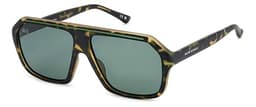
Privé Revaux Clevelander/S Rectangle
States 100% UV protection and polarization on a stated cellulose acetate frame, under $40. The most complete spec sheet in the budget band - material, lens filter and UV figure all published rather than implied.
Price as of October 10, 2026. #ad How we’re funded
Frame material: Cellulose acetate. Specs read from the listing on July 21, 2026.
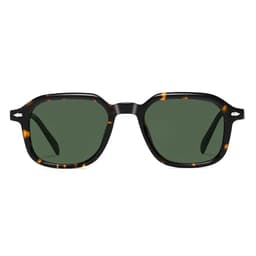
SOJOS Acetate Rectangle (Handmade, Polarized)
States UV400 and polarization on a stated cellulose acetate rectangle with metal hinges. Nothing is published about its measurements, which is the real compromise at this price - but the UV figure, the one that matters for your eyes, is there.
Price as of October 10, 2026. #ad How we’re funded
Frame material: Cellulose acetate. Specs read from the listing on July 21, 2026.
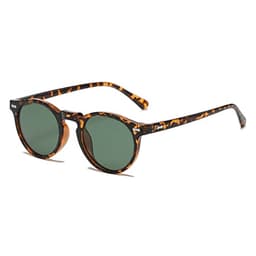
Gleyemor Vintage Round (Tortoise Acetate)
States UV400 and polarization at the very bottom of the price range, in tortoise acetate with a G15 green lens. Proof that a stated UV figure is not a premium feature: it costs a seller nothing to publish and it is the single line worth refusing to buy without.
Price as of October 10, 2026. #ad How we’re funded
Frame material: Cellulose acetate (hand-crafted, per listing). Specs read from the listing on August 19, 2026.
General guidance, not eye-care advice. Acetate Club is written by an eyewear enthusiast, not an optician or optometrist. Sunglasses are sun protection, not a substitute for an eye exam — if you have a vision or eye-health concern, or need prescription lenses, see a qualified professional.
Frequently asked questions
Are cheap sunglasses bad for your eyes?
Cheap sunglasses with a stated UV400 or 100% UV rating are not bad for your eyes - they block the radiation that causes the damage just as a premium lens does. Sunglasses with no stated UV figure are the genuine gamble, and they are sold at every price point, which is why cost is the wrong thing to judge by. The FDA's own guidance is the point to hold on to: lens darkness tells you nothing about UV protection, so read the stated figure instead of looking at the lens.
Can dark sunglasses without UV protection damage your eyes?
That is the one genuinely risky combination, and it is the reason this question keeps being asked. A dark lens reduces visible light, so your pupils open wider behind it. If that lens does not block UV, a wider pupil means more ultraviolet reaching the retina than you would get wearing nothing at all. The fix is not to avoid dark lenses - it is to refuse any lens, dark or light, that does not state its UV protection.
Does a higher price mean better UV protection?
No. UV blocking in a modern lens comes from the material and its coating, both of which are inexpensive, which is why a $20 lens and a $300 lens that both state 100% UV protection are equivalent on this specific measure. What price actually buys is optical clarity, a harder lens that stays clear for years, published measurements so you can check the fit, serviceability and finish - real things, but not UV safety.
Can you test sunglasses for UV protection at home?
Not reliably. The tests circulating online - holding the lens up to a UV torch, checking a banknote's security strip, looking for a reflection - do not measure transmittance across the UVA and UVB bands and can pass a lens that fails. An optician can test a pair properly on a spectrophotometer in under a minute, usually at no charge, and that is the only answer we would rely on for a pair whose label you doubt.
Are scratched cheap sunglasses still safe?
It depends on how badly. An AAO ophthalmologist's answer puts it clearly: light scratches will not change the prescription or the protective features of the lens, though they can be annoying if they sit near your line of sight; extensive scratches or loss of coatings can impair clarity of vision and possibly decrease protection from UV light. The same answer notes that lower-quality lenses and coatings scratch more easily - which is the one place where cheap genuinely does mean shorter-lived.
Are cheap polarized sunglasses worth buying?
Yes, and polarization is one of the better value features at the bottom of the market - most of the budget acetate frames we track include it at no premium. Just keep the two properties separate in your head: polarization is a comfort and glare feature, UV protection is the safety one. A cheap polarized lens with no stated UV figure is still a lens with no stated UV figure.
Sources
- U.S. FDA — Tips to Stay Safe in the Sun: From Sunscreen to Sunglasses — FDA: lens darkness does not indicate UV protection; look for a 100% UV / UV400 label (accessed July 21, 2026)
- American Academy of Ophthalmology — Recommended Types of Sunglasses — AAO on choosing sunglasses that block 99–100% of UV-A and UV-B (UV400) (accessed July 21, 2026)
- American Academy of Ophthalmology — The Sun, UV Light and Your Eyes — AAO on how UV exposure is linked to cataracts, growths and eye cancer (accessed July 21, 2026)
- National Eye Institute — Protecting your eyes from the sun's UV light — NEI on UV eye risks and choosing sunglasses that block UV-A and UV-B (accessed July 21, 2026)
- World Health Organization — The known health effects of ultraviolet radiation — WHO on cumulative UV exposure and its link to cataract and eye damage (accessed July 21, 2026)
- ISO 12312-1:2022 — Eye and face protection — Sunglasses for general use — The international standard for general-use sunglasses: UV filtering, filter categories and transmittance (accessed July 21, 2026)
- American Academy of Ophthalmology — Do scratched lenses affect your prescription and/or the blue light coating? — An AAO ophthalmologist's answer: light scratches will not change the prescription or protective features of the lens, although they can be annoying if near your visual axis; extensive scratches or loss of coatings can impair your clarity of vision and possibly decrease protection from UV light. It also notes that lower-quality lenses and coatings scratch more easily and may need replacing, and that lens wipes can cause damage if they are low quality, misused, or used when sand or grit is on the wipe or the lens (accessed October 11, 2026)
Keep reading
How to check UV protection
What to look for, and the tests that do not work.
Read the guideUV400 explained
What the number means and where it comes from.
Read the guideAre expensive sunglasses worth it?
The other half of this question - value, not safety.
Read the guideBest affordable acetate sunglasses
Real stated acetate under $50, every shape.
See the picks