What comfort actually depends on
Bridge geometry, first and by a distance. A sunglasses frame has three contact points: the nose and the two ears. The nose carries most of the weight, so how the bridge meets it decides almost everything. A saddle bridge is a continuous curve of acetate resting across the top of the nose — simple, and it concentrates the load into one strip. A keyhole bridge is cut away in the middle so the frame rests on the sides of the nose instead, which both spreads the load and lifts the lenses away from your cheeks. A double bridge adds a second bar and a second contact band. Two of the picks below use a keyhole and one uses a double bridge; that is not a coincidence.
Temple length, second. The arm has to reach the bend behind your ear and no further. Too short and it pinches the side of your head; too long and the frame rocks forward and slides. 140 to 145 mm is the common range in acetate. The OTIS pick below runs 130 mm against a 57 mm front, which is unusually short for that width — it fits a wide face rather than a long one, and we flag that on the card because it is exactly the kind of mismatch that makes an otherwise good frame uncomfortable.
Weight distribution, not weight. A heavier frame that spreads its load across two bridge contact points is more comfortable over a day than a lighter one pressing a narrow strip. This is why the lightest frame on a shelf is often not the one you can wear longest, and it is why glass lenses — heavier than plastic — are not automatically disqualifying.
And the one acetate advantage nothing else has: heat. An optician can warm an acetate frame and re-set the bridge angle and the temple bend to your actual head, usually in a few minutes and often for free. A molded nylon or TR90 frame cannot be re-set this way. If a frame is nearly right, that adjustment is worth more than buying a different one — see how to adjust acetate frames.
Measure before you choose
Comfort is the one thing you cannot judge from a photograph, and the fix is a tape measure. Take the frame you already own, read the numbers printed inside the left temple — they are the lens width, the bridge width and the temple length in millimetres — and compare them to the picks below. Our sunglasses sizing guide explains what each figure means and how sunglasses should fit covers the four checks that matter. If your current pair slides, why sunglasses slip down your nose is the page to read first — the fix most people reach for is the one that works least well.
The picks, and who each suits
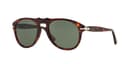
The Persol 649 is our best overall. Acetate handmade in Italy, crystal lenses, a published 54-20 fitting with 140 mm temples, offered in 52-20, 54-20 and 56-20 — and both comfort features named by Persol itself: the keyhole bridge and the Meflecto flexible temples. The 56 is the only size on this list that goes genuinely wide. The compromises are honest: it is premium money, it does not fold, and the standard Havana / Green is not polarized. Our Persol review and 649 vs 714 comparison have the detail.
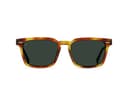
Best mid-price is the RAEN Adin 54, a hand-finished Italian acetate round with a keyhole bridge at roughly a third of legacy-designer money. The 54 mm eye size is published, which is more than most frames in this band manage, and the softened-round shape balances a strong jaw. It suits medium faces; a large face should size up, and the brand runs small so colorways come and go. Our RAEN review covers the brand.
Best for a wide face is the OTIS Guilt Trip X Eco, and it is here because OTIS publishes the entire fitting — 57-19-130 — on a glass-lensed acetate frame, which is rare enough to be the reason to buy it. If standard frames squeeze the sides of your head, a 57 mm front is the fix. The trade-offs are real and we state them: 130 mm temples are short for that width, so it fits wide rather than deep; polarized mineral glass adds weight; and scratched or cracked lenses are excluded from the lifetime warranty. Our OTIS review and sunglasses for wide faces go further.
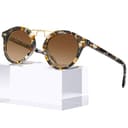
Best for a small face is the CARFIA Small-Face Double-Bridge. Two things make it comfortable: it is genuinely cut small, so it is not bridging a gap it was never designed for, and the double bridge gives a second contact band across the nose instead of one. Polarized real acetate at budget money. No measurements are published, and it will be too small for a medium or large face — the sizing is the whole point. See sunglasses for small faces.
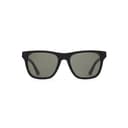
Best budget is the Privé Revaux Clevelander: a stated cellulose acetate rectangle, polarized, 100% UV stated, in a clean unisex shape that is light for an acetate frame and cheap enough to take to an optician for a free heat adjustment without feeling precious about it. Nothing is published about its measurements, which is the compromise at this price, and the finish is good for the money rather than designer-grade.
What we did not rank, and why
No sport wrap is on this list. A polycarbonate wrap with rubber nose pads and a sprung temple is genuinely comfortable and genuinely light, and for running or cycling it is the right answer — our goodr review and Knockaround review cover that category honestly. But it is a different product sold on different terms, and ranking it first on an acetate site would be a bait-and-switch. If all-day wear rather than all-day sport is the problem, the acetate answer is a keyhole bridge and a heat adjustment.