Keyhole Bridge Sunglasses: What It Is and Who It Fits
The notched bridge on vintage acetate frames is a fit feature, not just a look. What it does for a low or wide nose, when a saddle bridge is better, and the frames that have one.
How this is funded:we earn a commission if you buy through our links, at no extra cost to you. It never changes which product we recommend, and we’ll tell you when we’d skip one. Full disclosure.
Look at the middle of a vintage acetate frame and you will often see a notch cut into the bridge — a rounded gap above the nose, with a small pad of acetate on either side, so that from the front the bridge looks like an upside-down keyhole. That is a keyhole bridge, and it is one of the most searched-for details in eyewear because it reads as instantly vintage. What most of the searches miss is that it is a fit feature first and a look second. Here is what it does, who it suits, and the acetate frames in our registry that actually have one.
What a keyhole bridge is
Most modern frames use a saddle bridge: a smooth curve of frame material that follows the top of the nose and rests along it, or, on metal frames, two adjustable nose pads on wire arms. A keyhole bridge does something different. The acetate is cut away above the nose, leaving a rounded gap, and the frame rests on two small pads that sit against the sides of the nose rather than across the top of it. The shape comes from the era when every frame was cut from acetate sheet and there were no adjustable pads to bolt on — the keyhole was how a frame maker fitted a solid front to a range of noses. Persol still names it in the description of its 1957 649, and our page on how acetate sunglasses are made shows where the detail comes from — a cut sheet, not a mold.
What it does for fit
Two things. First, it moves the load. A thick acetate front is heavy, and on a saddle bridge all of that weight rests on a narrow strip across the top of the nose, which is where the pressure mark ends up at the end of the day. A keyhole spreads the same weight across two contact points on either side, which is why it appears on so many substantial frames — the heavier the acetate, the more the keyhole earns its place. Two of the picks in our roundup of thick frame sunglasses carry one for exactly that reason.
Second, it lifts the frame slightly off the nose, and that helps a lower or wider nose bridge. A saddle bridge cut for an average nose sits too low on a low bridge and slides, and pinches on a wide one. Because a keyhole rests on the sides, it tolerates more variation in the height and width of the bridge beneath it. It is not a complete fix — a frame whose bridge is genuinely too narrow will still pinch — but it is a real one, and our guide to sunglasses for a low nose bridge treats the keyhole as one of the few acetate-frame options that helps.
When a saddle bridge is better
On a narrow, high nose bridge. There, a saddle sits evenly along the top of the nose and distributes the weight well on its own, while a keyhole’s side pads can end up gripping the nose rather than resting against it, and the gap above can look like a frame that does not quite touch. If frames have never slid on you and never marked the top of your nose, a saddle is doing its job and you are choosing a keyhole for the look alone — which is a perfectly good reason, as long as you know that is the reason. Our guide to how sunglasses should fit covers the rest of the checklist beyond the bridge.
The shapes it belongs to
Round, panto and pilot shapes, mostly, because those are the vintage silhouettes the keyhole came from. A round acetate frame with a keyhole bridge is the archetypal 1940s-to-60s look; the Persol 649 is a pilot with one; and a great deal of what sells as “vintage acetate” today carries it. It is rarer on a wayfarer or a cat-eye, where the frame’s top line runs straight across and a notch would interrupt it. Our pages on round acetate sunglasses and vintage acetate sunglasses cover those shapes, and the vintage roundup in particular names the keyhole on several of its picks.
How to check a listing
Look at the front-on product photograph and at the bridge specifically: a keyhole is visible as a rounded gap with a flat or slightly rounded top, rather than a smooth curve. Listings that have one usually say so, because it is a selling point; the frames below each name it on their own listing or spec panel, which is the standard we hold every frame to. If a listing does not mention it and the photograph is ambiguous, assume a saddle. And whatever the bridge, check the two lines that matter more than either: a stated frame material — cellulose acetate, not just “plastic” — and a stated UV400 or 100% UV rating. Our guide to telling real acetate from acetate-look plastic covers the first, because a keyhole cut into molded plastic is a shape without the substance that made it worth having.
Three acetate frames with a keyhole bridge
Each of these names the keyhole bridge on its own listing or maker spec panel, which is the only way a frame qualifies here. One budget, one independent, one icon, so the feature is available at every price. Prices are live and dated.
CARFIA Vintage Round (Hand-Crafted Acetate)
Hand-crafted acetate with a keyhole bridge and polarized UV400 lenses at a budget price. A substantial round for square and oval faces - CARFIA’s own listing leans into the weight, which is exactly the frame a keyhole helps carry.
Frame material: Cellulose acetate. Specs read from the listing on July 21, 2026.
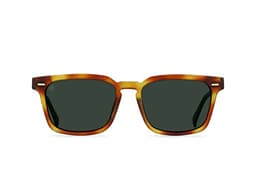
RAEN Adin 54 Round
Hand-finished Italian acetate from an independent brand, in a soft-round shape with a keyhole bridge that flatters a square or angular face. A 54 mm eye size that suits medium faces; roughly a third of legacy-designer money.
Price as of September 17, 2026. #ad How we’re funded
Frame material: Italian cellulose acetate. Specs read from the listing on July 21, 2026.
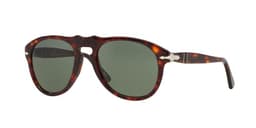
Persol 649 Original PO0649 (Havana / Green, 54 mm)
The 1957 icon. Persol names the keyhole bridge, the Meflecto temples and the arrow in the model’s own description, and lists it in a 52, 54 and 56 mm eye size. Acetate and crystal lenses per Persol’s spec panel; the classic green lens is not polarized.
Price as of September 17, 2026. #ad How we’re funded
Frame material: Acetate, handmade in Italy (per Persol). Specs read from the listing on September 15, 2026.
Frequently asked questions
What is a keyhole bridge on sunglasses?
A bridge shaped like an upside-down keyhole: instead of a smooth saddle that curves over the nose, the acetate is cut with a notch that leaves a rounded gap above the nose and two small pads that rest on either side of it. It is a heritage detail from the era when all frames were cut from acetate sheet, and it is still found on vintage-style rounds, pilots and panto shapes, including the Persol 649, which names it in its own description.
Who does a keyhole bridge suit?
People whose nose is wider or lower at the bridge than a saddle bridge is cut for, and anyone wearing a heavy acetate frame. The two pads spread the frame's weight to either side of the nose instead of concentrating it on top, which sits more comfortably on a lower bridge and leaves fewer pressure marks under a thick frame. It also lifts the frame slightly, which some people simply find more comfortable. A narrow, high nose bridge is usually better served by a saddle.
Is a keyhole bridge better than a saddle bridge?
Neither is better; they suit different noses. A saddle bridge follows the top of the nose in one smooth curve and works well on a narrow or high bridge where it can sit evenly. A keyhole bridge rests on the sides of the nose and suits a wider or lower bridge, and it handles the weight of a thick acetate front better. If frames tend to slide down your nose or leave a mark on top of it, try a keyhole; if they pinch the sides, try a saddle.
Can a keyhole bridge be adjusted?
Within limits. Acetate has no nose pads to bend, so the bridge itself cannot be reshaped at home, but an optician can heat-adjust an acetate frame to change how the front sits, and a keyhole's two contact points give them a little more to work with than a saddle does. If a keyhole frame still sits too low, stick-on nose pads are the cheap fix. If it sits too high or pinches, the frame is too narrow at the bridge and no adjustment will make it right.
Sources
- Persol — 649 Original, Havana frame with green lenses (PO0649 24/31) — Persol's product page: 52-20, 54-20 and 56-20 sizes; acetate frame, crystal lenses, made in Italy; keyhole bridge, arrow and Meflecto; designed in 1957 for Turin's tram drivers (accessed September 15, 2026)
- Persol — Heritage: frame material, bridge, Meflecto and Arrow — Persol on its Turin origins (1917), cellulose acetate passing through thirty manual processes, the Meflecto flexible stem patented in the 1930s, and the arrow-shaped hinge (accessed September 15, 2026)
- American Academy of Ophthalmology — Recommended Types of Sunglasses — AAO on choosing sunglasses that block 99–100% of UV-A and UV-B (UV400) (accessed July 21, 2026)
- Mazzucchelli 1849 — the cellulose-acetate maker for eyewear — Background on cellulose acetate as the traditional material for spectacle and sunglass frames (accessed July 21, 2026)
Keep reading
Sunglasses for a low nose bridge
The fit problem a keyhole partly solves, in full.
Read the guideHow should sunglasses fit?
Bridge, temples and width: the whole fit checklist.
Read the guidePersol 649 vs 714
The keyhole icon against its folding twin.
Read the comparisonBest vintage acetate sunglasses
The shapes the keyhole bridge belongs to.
See the picks