Sunglasses Keep Slipping Down Your Nose?
Nine times out of ten it is the bridge, not the temples - and the fix most people reach for first is the one that works least well. Here are the five fixes in order of cost, and the frame designs that stop it happening at all.
How this is funded:we earn a commission if you buy through our links, at no extra cost to you. It never changes which product we recommend, and we’ll tell you when we’d skip one. Full disclosure.
The verdict first, because it saves most people a purchase: if your sunglasses slide, the part to fix is the bridge, and the fix to try first is a temple bend behind the ear followed by stick-on nose pads. Squeezing the arms tighter — the thing almost everyone tries first — treats a symptom and creates a new problem. If every frame you have ever owned slides, the answer is a different bridge design, not a different frame in the same design, and the three that work are a keyhole bridge, a double bridge, or simply a narrower bridge measurement.
What is actually happening
A pair of sunglasses is held up by two things: the bridge resting on your nose, and the temples hooking behind your ears. The bridge does most of the work. If it is cut wider than the top of your nose, it cannot rest against the sides of the nose and instead balances on the ridge — and anything balanced slides. If it is cut shallower than the height of your bridge, the frame sits proud and the same thing happens. Neither is a fault in the frame; it is a mismatch between two shapes.
Three things make it worse. Weight: a thick acetate front with a glass lens presses harder on whatever is holding it, which is why a frame can be perfect in a shop and tiring by the afternoon. Skin oil and sunscreen: the inside of the bridge is the one part of a frame nobody cleans, and a greasy bridge has almost no friction. Heat: an acetate frame left in a hot car relaxes slightly and the fit it was adjusted to is gone — our page on adjusting acetate frames explains why that is also what makes acetate fixable.
The five fixes, cheapest first
1. Diagnose before you touch anything. Push the frame up to where it should sit, let go, and watch what moves. If the front drops while the temples stay where they are, it is the bridge. If the whole frame creeps forward, it is the temples. Those two problems have different fixes and doing the wrong one makes the frame less comfortable rather than more.
2. Clean the bridge. Lukewarm water, a drop of dish soap, rinse, dry with a microfiber cloth. Not alcohol — it dulls acetate — and not your shirt. Our guide to cleaning sunglasses has the method, and it is worth doing before you conclude anything, because a surprising number of “slipping” frames are simply greasy.
3. Get the temples bent behind the ear. This is the adjustment that actually works, and on an acetate frame it takes an optician about thirty seconds with a warm-air blower. The aim is for the temple to follow the back of your ear and hook, rather than lying along it. Most optical shops do it free, including for frames you did not buy from them. Do not try to reshape the bridge itself at home: acetate needs more heat than a hairdryer delivers evenly, and a cracked bridge is not repairable.
4. Add stick-on nose pads. Clear adhesive pads reduce the effective width of the bridge and add grip, which is exactly the right fix for a frame that fits everywhere except the nose. They are reversible and cost very little, which is why they come before replacing anything. Replace them when the adhesive gives up — sunscreen shortens their life considerably.
5. Use a retainer cord when it matters. Not a fix for daily wear, but the right answer on a boat, at the beach or on a bike, where the consequence of a slip is losing the frame rather than pushing it back up. A slim leather cord looks far less apologetic than a sports strap.
The bridge designs that stop it happening
If you have replaced frames twice and they all slide, buy for the bridge next time. There are three designs worth knowing, and the fitting on the listing tells you which you are getting.
A keyhole bridge is cut with a notch so the frame rests on two pads against the sides of the nose instead of across the top. It tolerates a lower or wider bridge far better than a smooth saddle, and it spreads the weight of a heavy front — which is why it appears on so many substantial vintage frames. Our keyhole bridge guide covers who it suits and when a saddle is the better choice.
A double bridge adds a second bar across the top of the frame. On small-face frames it does the same job as a keyhole from the opposite direction, giving two contact points rather than one, and it tends to appear on narrower frames generally — which helps if the real problem is that standard frames are too wide for you. Our guide to sunglasses for small faces covers that case.
And then there is simply the number. The middle figure in a fitting like 54-18-145 is the bridge width in millimeters. If your current frame slides and its bridge is 20 mm, a frame with an 18 mm bridge is a smaller gap to span. That is the least glamorous and most reliable way to solve this, and it only works if the seller publishes the measurement — many budget brands do not. Our guide to reading sunglasses sizes explains how to measure a frame you already own so you have a target number to shop against.
When it is not the frame
Two cases worth naming. If every frame sits low on your face and the bridge seems to touch nothing at all, you may have what eyewear makers call a low nose bridge, and some brands publish dedicated fits for it — Ray-Ban’s F-suffix models, for instance. Our guide to sunglasses for a low nose bridge is the right starting point and covers the alternatives honestly.
And if the complaint is pain rather than movement — a mark that does not fade, a sore spot on the bridge of the nose, numbness behind the ears — that is worth raising with an optician rather than solving with pads. This site is written by an enthusiast rather than an eye-care professional, and a frame pressing hard enough to leave lasting marks is a fit problem a professional should look at.
Three bridge designs that do not slide
Each of these addresses slipping by a different mechanism - weight spread across two contact points, a narrower bridge built for a smaller nose, or temples that grip rather than rest. One budget, one mid, one icon. Prices are live and dated.
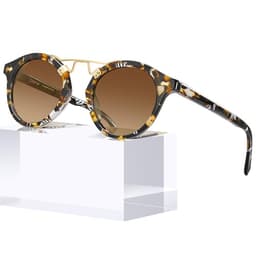
CARFIA Small-Face Double-Bridge (Acetate)
A double-bridge acetate frame built narrow for a genuinely small face rather than scaled down from a larger one. Two bridge contact points spread the weight instead of concentrating it on one strip, which is exactly what helps when a frame slides and leaves a mark. The cheapest fix here.
Frame material: Cellulose acetate. Specs read from the listing on July 21, 2026.
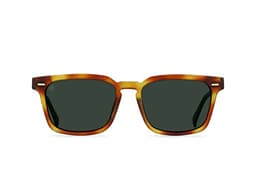
RAEN Adin 54 Round
Hand-finished Italian acetate with a keyhole bridge, which rests against the sides of the nose rather than across the top of it - the design answer to a low or wide bridge. A published 54 mm eye size, so you can check it against a frame you already own.
Price as of October 5, 2026. #ad How we’re funded
Frame material: Italian cellulose acetate. Specs read from the listing on July 21, 2026.
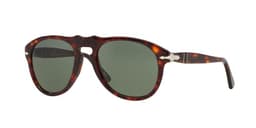
Persol 649 Original PO0649 (Havana / Green, 54 mm)
The frame that attacks the problem from both ends: a keyhole bridge plus Persol’s Meflecto flexible temple system, which the brand has used since the 1930s to let the temples flex against the head rather than sit loosely on it. Acetate handmade in Italy; the classic green lens is not polarized.
Price as of October 5, 2026. #ad How we’re funded
Frame material: Acetate, handmade in Italy (per Persol). Specs read from the listing on September 15, 2026.
The two cheap fixes, before you replace the frame
Both are reversible, both cost less than a lens cloth multipack, and between them they solve most slipping on a frame that otherwise fits. Add-ons, not ranked picks.
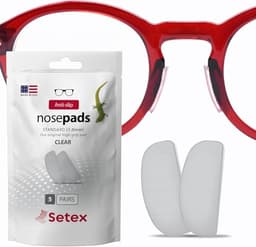
Stick-on anti-slip nose pads
An acetate frame has a molded saddle bridge and no adjustable pads, so when it slides down your nose there is nothing to bend. Thin stick-on pads add grip and lift the lenses a little — the same cheap fix an optician reaches for on a low bridge.
Price as of October 5, 2026. #ad How we’re funded
Listed as “Setex Gecko Grip 1.0mm Anti Slip Nose Pads for Glasses, 5 Pair, Clear” — read on August 16, 2026.
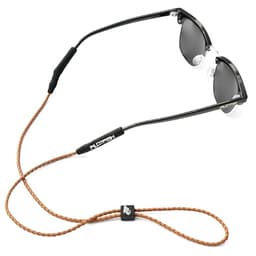
A slim leather retainer cord
Acetate is heavier than wire, which is how a good frame ends up shoved on top of your head and, eventually, on the floor. A slim leather cord in tortoise reads like part of the frame rather than sports kit, which is the difference between wearing one and not.
Price as of October 5, 2026. #ad How we’re funded
Listed as “Pilotfish Leather Sunglasses Strap - Glasses Retainer Cord for Men or Women, Secure Chain Eyeglass or Sunglass Holder (Tortoise)” — read on August 16, 2026.
Frequently asked questions
Why do my sunglasses keep slipping down my nose?
Usually because the bridge is too wide or too shallow for your nose, so the frame has nothing to sit against and gravity wins. The second most common cause is temples that are too long or not bent enough behind the ear, so the frame rests rather than hooks. Weight makes both worse - a thick acetate front presses harder on whatever is holding it - and skin oil or sunscreen on the inside of the bridge removes the friction that was just about keeping it up.
How do I stop sunglasses sliding down without buying new ones?
Three things, in this order. Clean the bridge properly, because oil and sunscreen genuinely cause slipping and it costs nothing to rule out. Then have an optician increase the bend where the temple goes behind your ear - on an acetate frame that is a quick warm-air adjustment, usually free, and it converts a frame that rests into one that hooks. Then add clear stick-on nose pads, which reduce the effective bridge width and add grip, and are completely reversible.
Why do my sunglasses leave red marks on my nose?
Because the whole weight of the frame is landing on one narrow strip of skin. That happens when a saddle bridge is slightly too wide, so instead of resting along the sides of the nose it perches on top of it, and it is worse with a thick, heavy front. The fixes are the same as for slipping: spread the load across two contact points with a keyhole or double bridge, reduce the effective width with stick-on pads, or move to a lighter frame. Persistent soreness or a mark that does not fade is worth mentioning to an optician.
Will tightening the arms stop sunglasses slipping?
Rarely, and it is the fix most people try first. Squeezing the temples inward makes a frame grip the sides of your head, which causes pressure behind the ears and at the temples without addressing the bridge that is actually failing to hold the front up. The adjustment that does work is the bend where the temple passes behind the ear, so the frame hooks on. If the front of the frame is simply too wide for your face, no temple adjustment will fix it.
Do nose pads work on acetate sunglasses?
Yes - stick-on silicone or vinyl pads adhere to the inside of an acetate bridge and are the standard fix when a frame fits everywhere else. They have two limits worth knowing. They reduce the bridge width, so they help a narrow nose in a wide bridge but do nothing for a frame that is too tight. And the adhesive gives up eventually, especially with sunscreen, so treat them as a consumable rather than a repair.
Sources
- American Academy of Ophthalmology — Recommended Types of Sunglasses — AAO on choosing sunglasses that block 99–100% of UV-A and UV-B (UV400) (accessed July 21, 2026)
- ISO 12312-1:2022 — Eye and face protection — Sunglasses for general use — The international standard for general-use sunglasses: UV filtering, filter categories and transmittance (accessed July 21, 2026)
- Persol — Heritage: frame material, bridge, Meflecto and Arrow — Persol on its Turin origins (1917), cellulose acetate passing through thirty manual processes, the Meflecto flexible stem patented in the 1930s, and the arrow-shaped hinge (accessed September 15, 2026)
- Persol — 649 Original, Havana frame with green lenses (PO0649 24/31) — Persol's product page: 52-20, 54-20 and 56-20 sizes; acetate frame, crystal lenses, made in Italy; keyhole bridge, arrow and Meflecto; designed in 1957 for Turin's tram drivers (accessed September 15, 2026)
- ISO 12870:2024 — Ophthalmic optics — Spectacle frames — Requirements and test methods — The spectacle-frame construction and durability standard. Not a biodegradability standard, and not applicable to sunglasses with afocal filters (ISO 12312-1 applies there) (accessed September 7, 2026)
Keep reading
How should sunglasses fit?
The full checklist: width, bridge, temples, lens height.
Read the guideKeyhole bridge sunglasses
The bridge design built for a low or wide nose.
Read the guideSunglasses for a low nose bridge
If frames have slid on you your whole life, start here.
Read the guideHow to adjust acetate frames
What heat can fix, and what you should not try at home.
Read the guide