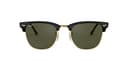
What makes a frame “browline”
A browline frame is defined by its construction, not its lens shape. The top rim is heavy and prominent — on our pick, that brow is acetate— while the lower half of the frame is either light metal or left rimless, so the eye is drawn upward to that strong horizontal line. The Clubmaster is the archetype of the style: acetate where it shows, at the brow, and metal for the lower rim. That mix is the entire point of the design.
As a piece of design history, the browline is a mid-century classic that has stayed in rotation ever since — a shape strongly associated with a certain intellectual, put-together look, and one that keeps coming back precisely because it never feels tied to a single moment. That durability is why it is worth thinking of as a long-term frame rather than a passing trend.
Within that construction, the lens shape can vary — from a squared-off lens to a softer, rounder one — but the identity always comes from the brow rather than the lenses. That is a useful thing to grasp when you shop: two browline frames can look quite different at the lens and still read as the same family, because the eye keys on that heavy top line. It is also why the shape is so forgiving to pair with — the brow is the signature, and everything below it is supporting cast.
Who browline frames suit
Browline frames are at their best on round and heart faces. On a round face, the strong horizontal brow adds the angle and structure that soft, curved features lack — the bold top line breaks up the roundness and adds balance in a way a thin, curvy frame can’t. On a heart face, the weight sits up top, which draws attention to the brow and suits a face that is wider there and narrower toward the chin. An oval face carries the shape comfortably too.
Because the browline puts so much visual weight along the top, the faces to think twice on are those that are already broadest across the brow with a heavy forehead, where a top-heavy frame can double down rather than balance. As with any strong shape, keep the frame width within the width of your face so the brow line lands as a feature, not as something that overpowers everything below it.
The acetate-and-metal trade-off
The two-material build is what gives the browline its character, but it comes with an honest catch. The point where the acetate brow joins the metal lower rim is a long-term wear point— any frame that marries two different materials has a seam that sees more stress over years of wear than a single-piece frame does. It is not a reason to avoid the style, but it is the part to inspect if you are buying to keep for a long time.
The other difference is fit. A browline frame typically rests on adjustable metal nose padsrather than the molded bridge of a full acetate frame, so it sits differently on the nose — some people find the pads more adjustable, others find them fiddly. If you have only ever worn all-acetate frames, expect the browline to feel a little different on the face, and give it a moment before you judge the fit.
Caring for a two-material frame
Because the brow and the lower rim are different materials, a browline frame rewards a little more care than a single-piece one. Keep it in a case rather than loose in a bag, so the join isn’t stressed by being knocked around, and let an optician handle any tightening at the hinge or the nose pads rather than forcing it yourself — the seam between acetate and metal is the last place you want to apply blunt pressure. None of this is onerous, and a well-made browline will last for years; it simply pays to treat the two-material construction as the one thing to look after over the long run.
How to wear a browline frame
The browline is a confident shape, so let it be the statement and keep everything else simple. Because the brow does the work, a classic tortoise or black-brow colorway is the most versatile choice — it leans into the retro, put-together character the style is known for and pairs with almost anything. Match the frame width to your face so the brow reads as a clean line just below your own eyebrows, roughly following them rather than sitting far above or below.
Think about the lens as well as the frame. A classic browline suits a warm brown or a neutral gray-green tint that keeps the retro feel intact; a heavily mirrored or brightly colored lens pulls the frame toward a sportier register that fights the studious character of the shape. Whatever tint you choose, confirm it is rated UV400 or 100% UV — the American Academy of Ophthalmology and the U.S. FDA both stress that the UV filter, not the color or darkness of the lens, is what actually protects your eyes. Our pick states full UV protection, so you get the heritage look without giving anything up on the health side.
If the two-tone browline look turns out to be more frame than you want, the natural step is a softer, single-material classic. A full-acetate wayfarerkeeps the same era and the same instant recognizability, but in one continuous piece of acetate with a simpler fit and no two-material seam — a gentler version of the same idea.
The browline also plays well across a range of looks precisely because it carries a hint of formality. It dresses up a casual outfit and sharpens a smart one, which is part of why it has never really dated. If you want to dial the statement down, a slimmer brow in a neutral tortoise reads quieter; if you want to lean in, a thicker black brow makes that horizontal line the loudest thing on your face. Either way, let the brow set the tone and keep the rest of the frame understated — the shape works because one bold element does the talking, not because everything competes for attention.
One practical note if you are shopping at the budget end: the browline’s two-material join is the expensive part to build well, and it is where cheap versions fail. We went through the alternatives properly in best Ray-Ban Clubmaster alternatives, and the short conclusion is that a single-material acetate frame with a heavy top line is usually the better buy under $50 than a browline at the same money.