Brown vs Grey Sunglass Lenses
Grey is the neutral one: it dims the world without changing its colors. Brown and amber cut more of the blue end, which raises apparent contrast and makes depth easier to read. Both are correct answers to different questions — and neither one says anything about UV.
How this is funded:we earn a commission if you buy through our links, at no extra cost to you. It never changes which product we recommend, and we’ll tell you when we’d skip one. Full disclosure.
The short answer: grey if you want colors to look the way they really are, brown or amber if you want more contrast and easier depth perception. Grey is the right default for very bright, flat light — a beach at noon, snow, open water — because it dims the whole spectrum fairly evenly and nothing shifts. Brown is the right default for light that keeps changing and for anything where judging distance or picking an edge out of a surface matters, which is why so many drivers and golfers prefer it.
Before either, the part that gets skipped: tint color tells you nothing about protection. UV is invisible, and whether a lens blocks it is a property of the material and coating, not of the color you can see. The FDA is explicit that you cannot judge a lens by how it looks — so pick the color for comfort and the lens for a stated UV400 or 100% UV figure, and keep the two decisions separate. Our guides to checking UV protection and UV400 cover that half.
Three independent properties, routinely confused
Almost every argument about lens color is actually an argument about one of the other two properties. Keeping them apart makes the whole subject simple.
Color is how the lens distributes its dimming across the visible spectrum. Darkness is the filter category: a standardised figure from 0 to 4 describing how much visible light gets through, with the bands set out by the College of Optometrists as category 0 transmitting 80-100%, category 1 43-80%, category 2 18-43%, category 3 8-18% and category 4 3-8%. Polarization is a separate filter that cuts light reflected off flat surfaces, covered in polarized vs non-polarized.
These combine freely. A category 3 grey lens and a category 3 brown lens transmit the same amount of light — one is not darker than the other. Either can be polarized or not. So “should I get brown or grey?” is only ever a question about color fidelity versus contrast, and never about how dark, how protective or how glare-free the lens is.
The case for grey
Color fidelity. A neutral grey lens takes all wavelengths down by roughly the same proportion, so the scene behind it looks like the scene in front of it, only dimmer. If you care what color something actually is — paint, fabric, food, a traffic light — grey is the lens that will not lie to you.
Very bright, flat light. On open water, snow or sand at midday there is no contrast problem to solve; there is a brightness problem. Grey addresses it without adding a cast you then have to see past, and it is why most category 3 lenses sold for the beach are grey. Our roundups for the beach and travel lean this way for exactly that reason.
Long sessions. A non-neutral tint takes a few minutes to stop noticing and a few minutes to stop noticing its absence when you take the glasses off. Over a full day a neutral lens is the less tiring choice for most people, though this is genuinely individual.
It looks like nothing. A plain smoke grey lens is visually quiet, which is part of why the classics use it and why it does not date. That is an aesthetic observation rather than an optical one, and we say so — it is also the subject of cheap sunglasses that look expensive.
The case for brown and amber
Apparent contrast. Shorter-wavelength blue light scatters more than longer wavelengths, both in the atmosphere and inside the eye, and that scattering is a significant part of what reads as haze. A lens that cuts more of the blue end removes some of that scatter, and the result is a scene with crisper edges and more separation between tones. This is why brown lenses are a standing recommendation for golf, for fishing in shallow water and for driving: the thing you are trying to see is a subtle difference between two mid-tones, and brown exaggerates it.
Depth perception. Same mechanism, different payoff. Sharper edges make distance easier to judge, which matters when you are reading a green, a kerb or a wave.
Variable and low light. Because brown lifts contrast rather than only dimming, a brown lens at a lower filter category remains useful in overcast conditions where a grey lens of the same category just feels murky.
The engineered version.Serengeti’s Mineral 555nm lenses are the clearest commercial example of this idea taken seriously: the brand describes tuning the lens around 555 nanometres, the wavelength in the green part of the spectrum the human eye is most sensitive to, and pairs it with its Spectral Control treatment. That is the brown-lens argument made by engineering rather than by picking a color, and it is covered in our Serengeti review.
The honest cost. Brown shifts color, and sometimes that matters. Blues go muddy, and some people find a warm cast genuinely unpleasant over hours. If you work with color, grey.
Driving: pick the category before the color
This is where readers most often choose wrongly, because they optimise the color and ignore the number that actually governs road use. The College of Optometrists states that filters for road use shall be categories 0 to 3, and that a filter transmitting under 75% of light is unsuitable for twilight or night driving. That rules category 4 out of a car entirely, and it rules every real sunglass lens — category 2 transmits 18-43%, category 3 only 8-18% — out of driving after dark, whatever its color. We cover that in full in sunglasses for night driving.
Within the legal range, brown is a defensible preference for daytime driving on the contrast argument above, and plenty of drivers report exactly that. Two further notes worth more than the color choice. A polarized lens can make some LCD dashboards and infotainment screens look patchy or black at certain angles — see best non-polarized sunglasses. And a photochromic lens will not darken fully behind a windscreen, because car glass blocks much of the UV the lens reacts to. Our driving roundup works through all of this with picks.
So which should you buy?
One pair, mostly bright sun, you want it to look right: grey, category 3. One pair, mixed light, you drive a lot: brown, amber or a 555nm lens, category 2 to 3. You genuinely cannot decide: a G15 grey-green, the Ray-Ban standard, which splits the difference and is the reason it has outlasted every trend. Two pairs: grey for the beach and the car in summer, brown for everything else.
And regardless of color, read two lines on the listing: a stated UV400 or 100% UV figure, and a stated filter category if the seller publishes one — only a handful do, which is why we record it as not published rather than guessing on every product page here. The full palette beyond these two, including yellow, rose and green, is in lens tint colors, and mirrored vs gradient lenses covers the coatings that sit on top of whichever tint you choose.
One of each, and the classic in between
Named after the argument above, so each pick illustrates a specific tint decision rather than topping a ranking. All three publish what their lens actually is, which is unusual - most listings describe a tint by name and nothing else. Prices are live and dated.
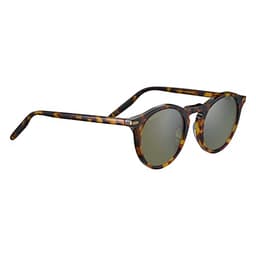
Serengeti Raffaele (Shiny Tortoise, Mineral Polarized 555nm, Cat 3)
The contrast case, and the most specified lens here: a Mineral Polarized 555nm glass lens in filter category 3, per the listing, with UV protection to 400 nm per Serengeti. The 555nm tuning is the brown-lens argument made deliberately - the lens is engineered around the wavelength the eye is most sensitive to rather than treating all colors equally.
Price as of October 10, 2026. #ad How we’re funded
Frame material: Italian acetate (per Serengeti). Specs read from the listing on September 21, 2026.
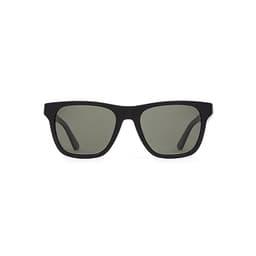
OTIS Guilt Trip X Eco (Black / Grey Polarized)
The neutral case. OTIS lists a grey polarized mineral glass lens in filter category 3 with 100% UVA/UVB, on a black eco-acetate frame published at 57-19-130. Grey plus a dark neutral frame is the setup to pick when you want colors to look the way they actually are - and the large fitting is rare in glass.
Price as of October 10, 2026. #ad How we’re funded
Frame material: Eco-acetate (OTIS states it is derived from cotton seeds and plant matter). Specs read from the listing on September 22, 2026.
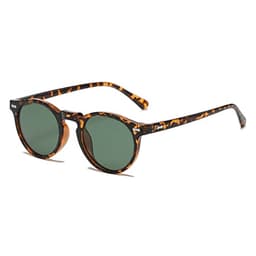
Gleyemor Vintage Round (Tortoise Acetate)
The classic compromise, at the bottom of the price range. A G15 lens is the grey-green tint Ray-Ban made standard: it sits between the two camps, darkening the scene without shifting colors much, which is why it has paired with tortoise acetate for seventy years. States UV400 and polarization.
Price as of October 10, 2026. #ad How we’re funded
Frame material: Cellulose acetate (hand-crafted, per listing). Specs read from the listing on August 19, 2026.
General guidance, not eye-care advice. Acetate Club is written by an eyewear enthusiast, not an optician or optometrist. Sunglasses are sun protection, not a substitute for an eye exam — if you have a vision or eye-health concern, or need prescription lenses, see a qualified professional.
Frequently asked questions
Is brown or grey better for sunglasses?
Grey if you want the world to look the way it actually is - it dims all wavelengths fairly evenly, so colors stay true. Brown or amber if you want more apparent contrast and easier depth perception, because cutting the blue end of the spectrum sharpens edges and makes a green or grey surface stand out from what is on it. Grey is the better default for very bright, flat light; brown is the better default for variable light, driving and anything involving judging distance.
Are brown lenses better for driving?
Many drivers prefer them, for a reason that is about contrast rather than comfort: brown and amber tints make road markings, kerb edges and brake lights separate more clearly from grey tarmac. What matters more than the color, though, is the filter category - the standardised darkness figure. The College of Optometrists states that filters for road use shall be categories 0 to 3, and that a filter transmitting under 75% of light is unsuitable for twilight or night driving. Pick the category first, the color second.
Do grey lenses make things darker than brown?
Not inherently - darkness is the filter category, a separate standardised number from 0 to 4, and a category 3 grey lens and a category 3 brown lens transmit the same amount of visible light. What differs is how they distribute the dimming across the spectrum: grey takes all wavelengths down fairly evenly, which is why it reads as neutral, while brown takes more off the blue end, which is why it reads warmer and more contrasty at identical darkness.
Which lens color is best for your eyes?
None of them, in the sense that matters - tint color has no bearing on eye safety. Protection comes from the lens blocking ultraviolet, which is invisible, and the FDA is explicit that you cannot judge UV protection by how a lens looks. So choose the color for comfort and contrast in the light you are actually in, and choose the lens on a stated UV400 or 100% UV figure. The two decisions are independent of each other.
What is a G15 lens?
A grey-green tint, originally Ray-Ban's and now a de facto standard. It sits deliberately between the two camps on this page: enough green to warm the image and lift contrast a little, enough grey to keep colors broadly honest. That balance is why it has been the default partner for tortoise and havana acetate for seventy years, and why it is a safe choice if you cannot decide - it is nobody's optimum and almost nobody's mistake.
Is a 555nm lens the same as a brown lens?
Not quite, though it belongs to the same family of ideas. Serengeti describes its Mineral 555nm lenses as tuned around 555 nanometres - the wavelength in the green part of the spectrum the human eye is most sensitive to - so the lens is deliberately not neutral: it shapes the spectrum rather than dimming it evenly. The practical result is similar to what a brown or amber tint delivers, higher apparent contrast, but arrived at by engineering rather than by picking a color.
Sources
- The College of Optometrists — Tints and driving (BS EN ISO 12312-1 filter categories) — Category bands: 0 = 80-100% transmission, 1 = 43-80%, 2 = 18-43%, 3 = 8-18%, 4 = 3-8%; filters for road use shall be categories 0-3; under 75% transmittance is unsuitable for twilight or night driving (accessed September 21, 2026)
- Serengeti — The Serengeti Lens (lens technology) — Serengeti on its mineral lenses (Corning borosilicate optical glass), the 555 nm tuning, Spectral Control, and UV protection to 400 nm (accessed September 21, 2026)
- Serengeti — Raffaele (acetate collection) — Serengeti's product page: Italian acetate, round, keyhole nose bridge, offered in Shiny Tortoise with the Mineral Polarized 555nm lens in category 3 (accessed September 21, 2026)
- U.S. FDA — Tips to Stay Safe in the Sun: From Sunscreen to Sunglasses — FDA: lens darkness does not indicate UV protection; look for a 100% UV / UV400 label (accessed July 21, 2026)
- American Academy of Ophthalmology — Recommended Types of Sunglasses — AAO on choosing sunglasses that block 99–100% of UV-A and UV-B (UV400) (accessed July 21, 2026)
- MD Anderson Cancer Center — 9 things to know about sunglasses, eye protection and cancer — On UV protection over lens darkness, wraparound coverage and polarization vs UV (accessed July 21, 2026)
Keep reading
Lens tint colors explained
The full palette, including yellow, rose and green.
Read the guideSunglasses lens categories
The darkness scale, which is separate from color.
Read the guidePolarized vs non-polarized
A third, independent lens property.
Read the guideBest acetate sunglasses for driving
Where the brown-versus-grey choice matters most.
See the picks