The five details that read as expensive
1. Pattern that runs through the material, not across it. This is the big one. A premium acetate frame is cut from a sheet in which the tortoise or havana pattern is built up in layers, so when you look at the cut edge of the temple the pattern continues into the thickness. A cheap imitation prints or films the pattern onto a molded surface, and at the edge the pattern simply stops. You can see the difference from two feet away without knowing what you are looking at — it is why a genuine budget acetate frame outperforms a more expensive molded one on this particular test. Our page on telling real acetate from acetate-look plastic is the full method, and Italian acetate explains why the cut-sheet process costs what it does.
2. A warm colorway rather than flat black. Gloss black is the hardest colorway to make look expensive, because black hides the one thing you are paying for: depth. It also shows every fine scuff. Tortoise, havana, crystal and smoke all carry visible variation, which reads as material quality even when the frame is cheap. Our tortoise vs black comparison argues this out properly, and frame color for your skin tone covers picking between the warm options.
3. A green, G15 or smoke lens instead of a mirror. A mirrored or heavily colored lens is the single fastest way to make a frame look cheap, because mirrors are what the bottom of the market uses to hide a poor lens. A grey-green G15 or a plain smoke lens is what the classics use. Our guides to lens tint colors and mirrored vs gradient lenses cover the trade-offs; for this page the rule is simply that restraint reads as money.
4. Metal hinges and, ideally, rivets. Look at the join where the temple meets the front. A metal hinge set into the acetate, with a visible rivet or two on the face of the frame, is the construction premium frames use and it is inexpensive enough that good budget frames use it too. A molded plastic pin hinge is the tell at the very bottom of the market, and it is also where cheap frames fail.
5. No visible logo on the temple face. Loud branding on the outside of the arm reads as a frame trying to borrow status. The frames here carry their branding small and inside, which is what actual designer acetate mostly does.
The picks, and who each suits
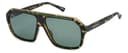
The Privé Revaux Clevelander is our best overall. Stated cellulose acetate, polarized, 100% UV protection stated, and a proper tortoise option on a clean unisex rectangle — it is one of the better-finished frames in the budget band and the shape is deliberately understated, which is exactly the point of this page. It flatters round and oval faces. The honest compromise: the finish is good for the price, not designer-grade, and it is a classic rather than a statement. Our Privé Revaux review covers what the brand publishes.
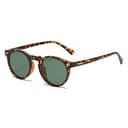
Best vintage look is the Gleyemor Vintage Round in tortoise, for anyone who wants the frame to look older than it is. Stated hand-crafted acetate in tortoise with a G15 green lens — the most classic pairing in eyewear, and the one most $300 frames use. Polarized and UV400 both stated, at the very bottom of the price range. The compromise is real: color depth looks flat next to mid or premium acetate, and nothing is published about measurements, so check the fit if your face is narrow. It softens a square or angular face. Our Gleyemor review has the brand.
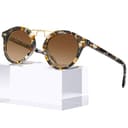
Best detail is the CARFIA Small-Face Double-Bridge. A double bridge — the second bar across the top of the nose — is a detail borrowed straight from classic aviator and round frames, and almost nothing at this price attempts it. Paired with warm tortoise acetate and a polarized UV400 lens, it reads considered rather than cheap. It is cut for a genuinely small face, which is rare in acetate at any price, and that is also its limit: it will be too small for a medium or large face. Our CARFIA review and sunglasses for small faces cover the sizing.
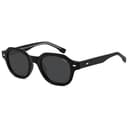
Best round shape is the SOJOS Retro Polygon Round, listed as Italian acetate and polarized in a soft polygon-round. The slightly faceted shape is the interesting part — a perfect circle looks costume, a softened polygon looks designed — and it flatters square, oval and heart faces. At this money the finish is basic and no measurements are published. A good way to test whether you like a rounder shape before spending on one. Our SOJOS review covers the line and round frames the shape.
Best statement frame is the SOJOS Audrey Oversize Square, and oversized is the one category where cheap can genuinely outperform expensive, because the look depends on scale rather than on finish. Stated cellulose acetate in the frame and the temples, polarized and UV400, under $50. It suits anyone who wants drama and coverage; it is a women’s cut and it is unapologetically large. Our oversized frames guide has the shape in full.
Two things that will give a cheap frame away anyway
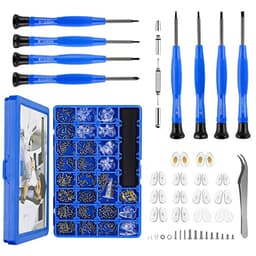
A frame that no longer fits. Nothing looks cheaper than sunglasses sitting crooked or sliding down a nose, and that is a fit problem rather than a price one. A budget acetate frame has one real advantage here: acetate can be heat-adjusted by an optician, which molded plastic cannot. Our pages on adjusting acetate frames, how sunglasses should fit and frames that slip are worth more than the next $20 of frame budget.
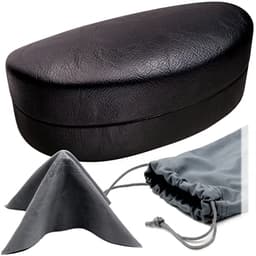
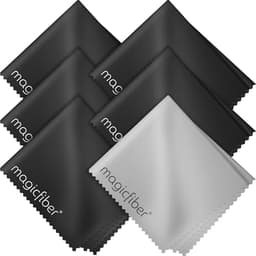
A hazy lens. Budget lenses are plastic and plastic scratches, and a micro-scratched lens is the thing people actually notice. A case and a proper cloth are the cheapest way to keep a cheap frame looking expensive; see what can and cannot be fixed on a scratched lens for why prevention is the only real answer, and how to clean sunglasses for the routine.
Whatever you buy at this money, check the two lines that matter: a stated frame material — cellulose acetate, not just “plastic” — and a stated UV400 or 100% UV rating. Price tells you nothing about either, which is the subject of are cheap sunglasses bad for your eyes.