What designer money actually buys
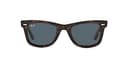
The first thing a designer budget buys is the material itself, done properly. Genuine cellulose acetate carries its color throughthe frame, because the sheet the frame is cut from is built up in layers before a single temple is shaped. That’s why a real Havana tortoise on a Ray-Ban Original Wayfarer glows and shifts in the light — the pattern has depth — while a cheap frame with a printed tortoise pattern looks flat and dead the moment you tilt it. The Wayfarer’s Havana is real layered tortoise, not a surface print, and once you’ve seen the difference in person it’s very hard to unsee. This is the single most important thing a premium actually delivers, and it’s the reason a genuine designer acetate frame reads as the real article rather than a look-alike.
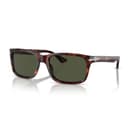
The next thing is finish and hand-work, and this is where a splurge frame separates itself. The Persol PO3048S is the clearest example we cover: an Italian cellulose acetate frame that is hand-finished to a depth of polish most brands never attempt, with crystal (glass) lenses on many models and Persol’s Meflecto flexible temples, which flex slightly to spread the frame’s grip rather than clamping at two points. You feel that hand-work in the way the edges are rounded, the way the surface catches light, and the way the frame settles on. It is, plainly, the most beautifully finished acetate in this roundup, and if that’s what you’re paying for, it delivers. Our Persol review goes deeper on the finish and the trade-offs, and if you want to understand the raw material, our Italian acetate explainer covers why the Mazzucchelli-style sheet stock is treated as the benchmark.
Then there’s the hardware and the build. Better designer frames tend to use better hinges — often riveted or seven-barrel constructions that open and close cleanly for years instead of loosening into a wobble — and they’re assembled and polished so seams and rivet heads sit flush rather than catching a fingernail. This is quietly important, because the hinge is the part most likely to fail on any pair of glasses. It’s also the difference between a frame that can be tightened, adjusted and re-fitted at an optician and one that’s effectively disposable. Acetate itself is a serviceable material: a good optician can heat it and gently re-shape the fit, swap lenses, or tighten hinges, which means a well-made acetate frame is genuinely repairable. That serviceability is a real, if unglamorous, part of what the premium buys, and it’s central to the buy-for-life case for a frame like the Wayfarer.
Longevity follows from all of the above. A frame with honest layered color won’t reveal a worn-through print, a hand-polished surface resists looking tired, and good hinges don’t sag. None of this makes a designer frame indestructible — acetate can still snap if you sit on it, and it can dry out over many years — but it does mean a good one is built to be kept and maintained rather than churned through. That’s the honest longevity argument, and it’s why we weigh it heavily. For a fuller reckoning of whether that adds up to real-world value, our guide on whether expensive sunglasses are worth it works through the same trade-off across the whole market.
One thing a designer budget does not buy is better eye protection, and this is worth being blunt about because the marketing rarely is. UV protection is a property of the lens and its coating, not the frame, not the brand, and not the price. A well-made pair of inexpensive sunglasses with lenses rated to block UV protects your eyes exactly as well as a luxury frame with the same rating. According to eye-health guidance from bodies like the American Academy of Ophthalmology and the FDA, what matters is that the lenses block close to 100% of UVA and UVB, and that has nothing to do with how the acetate was finished. So enjoy a designer frame for the material, the finish, the fit and the longevity — but never pay a premium believing it protects your eyes better than a cheaper pair with equivalent lenses. It doesn’t.
Where the premium is and isn’t worth it
The premium is most clearly worth it at the top of the finish scale, if that’s specifically what you care about. The Persol PO3048S is our splurge pick precisely because it does one thing better than anything else here — it looks and feels hand-made — and for a certain buyer that hand-finished Italian acetate is worth every bit of the outlay. The honest cons: it sits at the top of the price band, it runs narrow, so it doesn’t suit wider faces, and its restrained rectangular shape is deliberately understated rather than attention-grabbing. If you want a statement, this isn’t it; if you want the best-finished frame we cover, it is.
The premium is alsoworth it in a different way at the icon tier, which is why the Ray-Ban Original Wayfarer RB2140 is our best overall. It is the reference acetate frame — genuine thick acetate, real layered Havana, a shape that half the market imitates — and it’s the accessible end of designer, which makes it the sensible first serious frame and a genuine buy-for-life candidate. The honest con is that the classic variant is not polarized, so if glare on water or roads is your main concern you’ll want to check for a polarized version rather than assume it. It suits oval, round and heart-shaped faces best. Our Ray-Ban review covers the range and the small differences between variants.
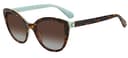
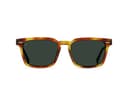
Where the premium is leastnecessary is the middle, and that’s good news. The RAEN Adin 54 is our best indie value for a simple reason: it’s Italian cellulose acetate, hand-finished, from a California independent, offering designer-level finish for roughly a third of a legacy brand’s price. Its soft, squared round with a keyhole bridge suits square, oval and heart faces. The trade-off is brand recognition and resale cachet rather than quality — you’re not buying a household name — but if the material and finish are what you’re after, this is where the money goes furthest. The Kate Spade Amberlee makes a parallel case for the designer cat-eye: a softened cat-eye in cellulose acetate, polarized, made under license by Safilo, it gets you the designer look and a genuinely useful polarized lens without a luxury budget, and it flatters heart, square and round faces. Its honest con is that “made under license” means it’s built to a mid-tier standard rather than an in-house luxury one — you’re buying the design and the polarization, not top-tier hand-work. You can read more on both makers in our RAEN review and Kate Spade review.
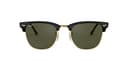
The browline sits in its own bracket. The Ray-Ban Clubmaster RB3016 is our best browline, and it’s worth understanding what you’re paying for: an acetate brow paired with a metal lower rim. That mixed construction makes it lighter than an all-acetate frame and gives it a distinctly retro, mid-century character that suits round, heart and oval faces. The trade-off is that it’s not a pure showcase for acetate the way an all-acetate frame is — the metal does half the work — and some people find the brow-heavy shape more of a commitment than a plain rectangle. If the browline is the shape you love, it’s the archetype; our browline guide covers who the shape suits and how to wear it.
How to choose a designer frame
Choose the shape first, always. A designer frame is only worth the money if you’ll actually wear it, and that comes down to whether it suits your face far more than which logo is on the arm. As a rough starting point from the picks here: the Wayfarer suits oval, round and heart faces; the Persol suits oval, round and square; the Clubmaster browline flatters round, heart and oval; the Kate Spade cat-eye favors heart, square and round; and the RAEN Adin’s soft round suits square, oval and heart. Angular faces tend to look best in softer, rounder frames and vice versa — the frame that balances your features is the one that will earn its keep, no matter how it’s finished.
Only once the shape is right does finish become the deciding factor. This is where you decide how much of the premium you actually want to pay for. If flawless hand-finished Italian acetate genuinely matters to you, the Persol justifies the splurge. If you want the honest layered material and the icon status without the top-tier outlay, the Wayfarer is the answer. And if you want most of the finish for a fraction of the price and don’t need a household name, the RAEN Adin is the value play. There’s no wrong answer here — just be honest with yourself about which of those things you’re really buying, so you don’t overpay for finish you won’t notice or underpay past the point where the material stops being honest.
Check the fit and width before you commit, because it’s the most common expensive mistake. The Persol famously runs narrow, so a wider face may find it pinches; the Clubmaster’s mixed-material build makes it lighter but changes how it grips; and any acetate frame should sit level, rest on the bridge without sliding, and not dig at the temples. The advantage of buying acetate is that a good optician can heat and adjust the frame slightly for a better fit, so a near-miss on width is often fixable — but a frame that’s badly wrong for your face isn’t worth “fixing.” Try before you buy where you can, and if you’re ordering online, compare the frame’s measurements against a pair you already own and like.
Finally, buy a shape you’ll keep. The whole argument for spending on designer acetate — the material, the finish, the serviceability — only pays off over years, which means the smart designer purchase is a classic you won’t tire of rather than a trend that dates. All five picks here are enduring shapes for that reason. If you want to widen the field beyond this designer-focused list, our best acetate sunglasses overall roundup spans every budget, and our best acetate brandsguide compares the houses head to head. Spend on a shape you’ll still reach for in five years, and a designer frame becomes an investment; spend on a fad, and even the best material in the world won’t save it.