The three things $200 buys that $100 does not
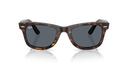
1. The icon.This is not a specification and it is not irrational. If what you want is a Wayfarer, no quantity of published millimeters at $80 makes a frame a Wayfarer, and the RB2140 is the one with the acetate front. The RB2132 New Wayfarer is the model most people actually end up with, and Ray-Ban lists it as nylon — so if the material is the point, read the model number before the shape. Our Original vs New Wayfarer comparison is the page that settles it, and the 50 mm vs 54 mm comparison settles which size.
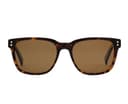
2. Mineral glass. OTIS builds the Test of Time X on polarized mineral glass lenses, and that is a real optical and durability difference rather than a marketing one: glass resists scratching far better than any plastic lens, and it weighs more. At 55-18-140 the weight is manageable; on a 57 mm front it is noticeable by evening. Our glass-lens roundup ranks that category properly, and lens materials sets out what each type gives up.
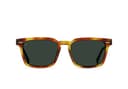
3. Italian acetate, hand-finished. RAEN's Adin is given as Italian cellulose acetate from a California independent, which is the closest this band comes to Persol's finish at a third of Persol's price. The material claim is the sheet stock; the finishing is the labor. Our Italian acetate roundup separates those two claims, which marketing copy routinely merges.
What you still cannot have under $200
Three things, and it is worth knowing which before you decide this band is enough.
Polarization on the icon.The classic RB2140 variants here are not polarized — Ray-Ban sells polarized G-15 and polarized grey versions of the same frame under their own names, at a higher price. That is the single most common surprise in this band. The OTIS and the Kate Spade both state polarized; the RAEN does not state it either way, so its card reads not published.
Thirty manual processes. Persol's own heritage page describes acetate passing through around thirty manual stages, and its frames sit well above this band for that reason. What separates a $190 acetate frame from a $350 one is almost entirely finishing labor: edge polish, tumbling time, nose-pad shaping, hinge engineering. Our explainer on why acetate sunglasses are expensive breaks that down by cost line.
A photochromic or 555nm mineral lens.Serengeti's photochromic mineral lenses — which shift filter category as the light changes — start above this band. If one pair for overcast mornings and full sun is the requirement, that is the technology to look at, and our photochromic guide covers it.
Who each pick is for
Someone buying one pair to keep:the Ray-Ban. It is the most serviceable frame on the page, parts and lenses are available everywhere, and the shape has outlasted every trend since the 1950s. Check the eye size against your face first — the 50 mm and 54 mm fit meaningfully differently.
Someone who scratches lenses: the OTIS. Mineral glass is the answer to that specific complaint, and our page on scratched sunglasses explains why plastic lenses lose this fight.
A square or angular face wanting a round frame with real material quality: the RAEN Adin. A soft-round is more forgiving on an angular face than a perfect circle, and the keyhole bridge lifts it slightly off the nose. See sunglasses for a square face.
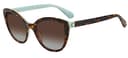
A designer cat-eye without a designer budget:the Kate Spade Amberlee in the polarized version — made under license by Safilo, acetate, and the polarized variant is the one worth buying. Our cat-eye roundup ranks the shape, and acetate sunglasses for women is the broader page.
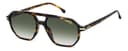
Anyone who wants the most specification per dollar:the Carrera. It is a combination frame — acetate front and temples with a metal insert running to the arms — and it publishes a full fitting, which under $100 is rare. Read the under $100 page if that is the band you actually want.
How to decide, in one question
Ask how long you intend to keep the frame. If the answer is a decade, the icon and the glass lens both make sense, because the cost per year collapses and both are serviceable. If the answer is two or three summers, this band is more frame than you need and the sub-$50 pickswill do the same job. And if the honest answer is “until I lose them”, buy the cheapest frame that states UV protection and spend the difference on a case — our page on storing sunglasses is more useful to you than this one.
One practical note on timing: this band is where seasonal discounting bites hardest, because the list prices are high enough for a 20–30% cut to be real money. Our Black Friday sunglasses page covers what a struck-through price legally has to mean before you treat it as a saving.