When Black Friday and Cyber Monday 2026 fall
Black Friday is always the Friday after US Thanksgiving, which puts it on Friday, November 27, 2026, with Cyber Monday on Monday, November 30, 2026. The dates that actually matter to a shopper, though, are the ones the retailers choose around them, and those are wider than the two days suggest. In 2025 Amazon ran its Black Friday Week from November 20 through December 1 — a twelve-day window with Black Friday itself on November 28 and Cyber Monday on December 1. If 2026 follows the same shape, the useful window opens in the week of November 20 rather than on the Friday.
There is also an earlier door. Amazon has run an October deal event for Prime members in recent years — Prime Big Deal Days ran October 7–8 in 2025 and the company itself framed it as the start of the holiday shopping season. For anyone buying a gift, that matters: it means the first genuine discount window of the season has historically landed in October, not November.
One honest caveat on all of the above. As of September 12, 2026, Amazon has not announced its 2026 Black Friday or Cyber Monday event dates. Everything in this section is the 2025 pattern, cited from Amazon’s own announcements, offered as precedent rather than as a promise. We will update this page when the real dates are published.
What actually discounts in sunglasses — and what does not
This is where most seasonal deal pages start inventing. We can avoid that, because we have been recording the data. Since July 21, 2026 this site has pulled the live price of every frame it covers once a day and stored it. As of September 11 that is 54 daily snapshots across 29 frames. What it shows, plainly:
- Most of this category does not move at all. 18 of the 29 frames did not change price on a single day of their recorded run. Six of them held the identical price across all 54 snapshots without exception — including a premium browline icon, an independent-brand round in Italian acetate, and three of the budget marketplace acetate frames we recommend most often.
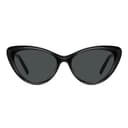
- The movement is concentrated in the mid and designer band. The most volatile listing we track is a designer polarized cat-eye, which changed price 19 times across those 54 days. A premium Italian-acetate rectangle moved twice, but by a meaningful amount each time. If you are watching anything for a discount, it is this band that rewards watching.
- Some “% off” labels are the listing’s permanent state, not an event. Four of the frames we track displayed a struck-through list price and a percentage off on every single snapshot — one of them on all 54 days. A discount that has been running since July is not a Black Friday discount, and it will very likely still be there in December.
- And fifteen frames never showed a discount badge at all. No strike-through, no percentage, for their entire run. For those, a November markdown would be genuinely unusual rather than routine.
The limit of that dataset is worth stating too: our window runs July to September 2026, so it contains no Black Friday. It is a baseline of normal behaviour, not a prediction of November behaviour. What it can honestly tell you is which listings are in the habit of moving and which are not, and that is most of what the buy-now-or-wait decision actually turns on.
Buy now or wait? A read by product class
Budget marketplace acetate — mostly buy now
The sub-$50 acetate frames from the big marketplace brands are the flattest thing we track. Several held one price for every day of the run, and several others carried a permanent strike-through that makes them look discounted every day of the year. Waiting on these mostly buys you stock risk rather than savings: colorways sell out in December and the popular tortoise and black options are the first to go. If a budget frame is the gift, buy it when you see it. The full field is in our under-$50 roundup, and the gifter-facing version is gifts under $50.
Mid-tier designer and independent brands — worth watching
This is where the movement lives. Designer licensed eyewear sold through marketplace sellers reprices constantly, which is exactly why our most volatile listing sits in this band. If your budget is roughly $50–$150 and you are not in a hurry, this is the one class where checking back through November is a reasonable use of your time. Our under-$150 gift guide covers the frames in question, and every one of them carries a live, dated price you can compare against whatever you see elsewhere.
Premium icons — discounts happen, but shallowly and rarely
The premium frames on this site moved on only a handful of days in our window, and one of the best-known browline models did not move at all across 54 days. Legacy designer eyewear is not a category that collapses in price on the last Friday of November, and a frame you intend to keep for a decade is a poor candidate for waiting on a discount that may not arrive. If a premium frame is the right frame, the more useful strategy is to watch the specific listing through the November window rather than to assume the category will move. Our designer roundup sets out what the premium actually buys.
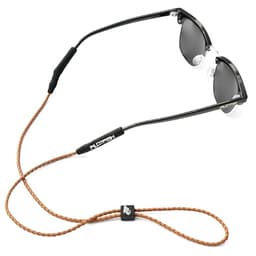
Cases, cords and cleaning kit — percentages flatter, dollars do not
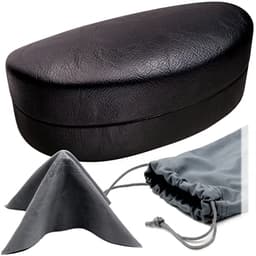
Low-ticket accessories carry some of the largest percentage discounts in this whole dataset, and they are also where a percentage means least: a big percentage off a small number is still a small number. Buy the case because a thick acetate front deserves one, not because it is on sale.
How to tell a real deal from a decorated one
The most useful skill in a Black Friday week is reading a struck-through price. Under the FTC’s Guides Against Deceptive Pricing, a former-price comparison is supposed to reference a price at which the item was actually offered openly, in good faith, for a reasonably substantial period — not a figure invented to make a discount look bigger. That is the standard. It is also why a strike-through that has sat on a listing unchanged since the summer deserves more scepticism than one that appeared last week.
Three practical checks, none of which takes long:
- Ask how long the “was” price has been the was price. If a listing has shown the same percentage off for months, the sale price is the real price and November will not change it.
- Price the whole order, not the frame. The FTC’s own consumer guidance is to work out the total cost including shipping, handling and fees before comparing — a lower headline with slower or paid delivery is often the worse deal in December, when delivery dates matter.
- Read the terms of the offer. Bundle conditions, membership requirements and whether the seller will refund the difference if the price drops again next week are all things worth knowing before, not after.
And the check specific to this category: confirm the frame material and the UV claim before the price. A discounted frame that turns out to be acetate-look injection plastic is not a bargain — here are the five ways to tell the difference — and a dark lens with no stated UV400 protection is a worse buy at any discount, for the reasons in our UV400 explainer.
What we will and will not publish on this page
We will publish real discounts, from the live feed, when they exist. Every price on this site comes from a daily retailer check and carries the date it was pulled; if that check stops, the numbers disappear and the buttons fall back to “Check price on Amazon” rather than showing you a stale figure. That is a deliberate design choice and it applies here exactly as it applies everywhere else.
We will not publish predicted percentages, “expected” discounts, or a countdown to a sale we have no knowledge of. We have no advance information about November pricing, and pretending otherwise would be the one thing this site exists not to do. Check back in the week of November 20 — if the frames we recommend are genuinely discounted then, this page will say so, with the live number attached and the date on it.