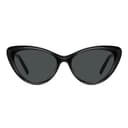
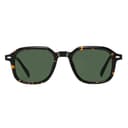
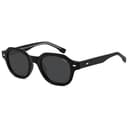
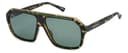
Why these six, in gifter terms
The SOJOS acetate cat-eye is the safest gift on this page for a woman. Real cellulose acetate, polarized lenses, and a softened cat-eye shape — upswept enough to feel chosen, restrained enough that it never reads as costume. That combination at this price is the reason it sits first. Who it suits: heart and square faces particularly, most oval ones. What to check: colour only — tortoise is the safest of the neutral options.
The SOJOS acetate rectangle is the same idea for a man, or for anyone. A clean rectangular front in genuine acetate with polarized lenses, about as close to universally wearable as this category gets. It is the frame to pick when you know almost nothing about the person’s taste, because there is nothing in it to dislike. Who it suits: rounder and softer faces especially, where the angular lines add definition. What to check: nothing — that is the appeal.
The SOJOS retro polygon round is the most interesting frame here for the money. It is a soft round with a faintly polygonal cut, in acetate, polarized, and it is the one on this list most likely to draw a “where’s that from?”. Who it suits: square and angular faces, where a rounder shape softens a strong jaw. What to check: if the person you are buying for wears exclusively plain, classic things, take the rectangle instead — this one has a little more personality.
The Privé Revaux Clevelander is the one with a name on the box. There is an honest, slightly unfashionable point to make here: for some recipients, a recognisable brand on the case genuinely adds to the gift. The Clevelander is a polarized acetate rectangle with 100% UV protection stated, from a value-focused label, and it is among the better-finished frames in this band. Who it suits: round and oval faces, and anyone who likes a brand they have heard of. What to check: it is deliberately understated — a classic rectangle, not a statement frame.
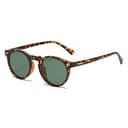
The Gleyemor vintage round is the true stocking filler. It is the cheapest frame we are willing to recommend, and it earns the spot by stating hand-crafted acetate, polarization and UV400 — three things most frames at this price do not state at all. The tortoise-with-G15-green-lens combination is the most classic pairing in eyewear. Who it suits: square and oval faces. What to check: be realistic about what the money buys — the colour depth looks flat beside a mid-priced acetate, and no measurements are published, so it is a gamble on a very narrow face.
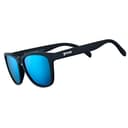
The goodr OG is here for a specific person, and it is not acetate. We will not pretend otherwise: the goodr OG is a polycarbonate sport frame, not a fashion acetate one. But if the person you are buying for runs, cycles or hikes, it is a genuinely better gift than any frame above — polarized, UV400, no-slip and light, at a price that makes it easy to give. Who it suits: active people, small-to-medium faces. What to check: do not buy it as a style frame. It is an equipment gift, and an excellent one.
How to spot a bad frame at this price
The sub-$50 band is full of listings that use the word acetate without meaning it. Three tells are worth knowing before you order. First, the material line: a genuine acetate listing usually says cellulose acetate or hand-crafted acetate somewhere in the specification, while a lookalike says “acetate style”, “PC”, or nothing at all. Second, the UV claim: UV400 or 100% UV should be stated plainly. If a listing talks about how dark the lens is but never states UV protection, that is a finding, not an oversight. Third, the hinge: acetate frames are usually built around a metal hinge core, and product photos that avoid showing the hinge at all are avoiding it for a reason. Our full guide to telling real acetate from lookalikes has the other two checks.
One more thing specific to this price band, and it is the awkward one: a permanent discount is not a discount. A good number of budget listings carry a struck-through “was” price and a percentage off every day of the year. In our own daily price records — 54 snapshots between July 21 and September 11, 2026 — four of the frames we track showed a percentage off on every single snapshot, one of them on all 54 days. That does not make them bad frames. It does mean the “40% off” on the listing is the normal price, not a window closing, so there is no reason to rush and no reason to wait. Our Black Friday hub sets out what does and does not actually move in this category.
What $50 does and does not buy
It buys genuine cellulose acetate, polarized lenses and stated UV protection. That is not a small list — it covers everything that affects whether the frame is comfortable, whether it cuts glare, and whether it protects the eyes. The lens performance gap between a $40 polarized UV400 frame and a $300 one is far smaller than most people assume, and our guide to whether expensive sunglasses are worth it goes through where the money actually goes.
What it does not buy is colour depth, edge polish and longevity. Premium acetate is cut from a thicker, richer sheet and hand-polished, which is why a Persol tortoise looks like it has depth and a budget tortoise looks printed. Hinges are simpler, so a frame at this price is less likely to survive being sat on twice. None of that stops a well-chosen $40 frame being an excellent present — it just means you should give it as what it is rather than as a small designer frame. If the occasion calls for more, our under-$150 guide is the next step up, and the affordable roundup ranks this whole band for someone buying for themselves.